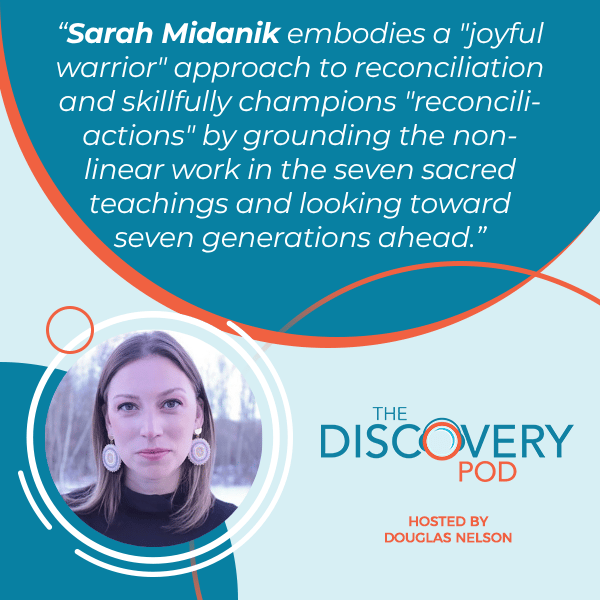
Building a just future requires commitment, not just a single moment. In this special episode, we sit down with Sarah Midanik, President and CEO of The Gord Downie & Chanie Wenjack Fund, to explore the crucial work of reconciliation in Canada. As a proud member of the Métis Nation of Alberta, Sarah is deeply committed to bridging cultural understanding. She discusses the legacy of The Secret Path, the non-linear nature of this work, and how her organization continues building momentum for reconciliation—from classrooms to boardrooms—by providing vital educational tools and fostering “reconcili-actions”. Tune in for a powerful exercise in optimism, hope, and systemic change.
—
Listen to the podcast here
Building Momentum For Reconciliation With Sarah Midanik, President & CEO, The Gord Downie & Chanie Wenjack Fund
In honor of Indigenous History Month, we’re sharing conversations that amplify indigenous leadership and celebrate the work being done to strengthen communities, reclaim stories, and build a more just future. In this episode, I’m joined by Sarah Midanik, President and CEO of The Gord Downie & Chanie Wenjack Fund. A proud member of the Métis Nation of Alberta from the historic community of St. Albert, Sarah is deeply committed to building cultural understanding and creating paths toward reconciliation between indigenous and non-indigenous peoples in Canada.
In our conversation, she talks about the ten-year anniversary of The Secret Path, what that means for the organization and how they plan to roll it out across the country in celebration, the non-linearity of reconciliation work and what it means to lead an organization that manages its work through the ebbs and flows of public attention. It is an exercise in optimism and hope. The joy of the work comes through. I hope you enjoy my conversation with Sarah Midanik.
—
Welcome to the show, Sarah.
Thank you so much for having me.
It is really great to have you on the show. Getting ready for this, of course I listened to several Hip albums. I’m ready to rock. I know that we’re not going to do a history of the band. We’re going to talk about something in many ways far more important. It is so great to have you on and it has been just a pleasure getting ready for our conversation.
As we jump into this, one of the great hallmarks of Canadian philanthropy is often these celebrity foundations that start and are closely identified with individuals and yours is no different. The Gord Downie & Chanie Wenjack Fund is a prominent organization connected in many different ways to different generations in Canada. Tell us more about your work.
The Downie Wenjack Fund’s Founding And Mission To Build Understanding
Sure. The Gord Downie & Chanie Wenjack Fund really came together I think organically as the best way to describe it. Mike Downie had shared Chanie Wenjack’s residential school story with his brother Gord who was so moved not just by Chanie’s story but what it represents, the story of over 150,000 indigenous children that were taken from their families and homes and forced to experience the residential school system in this country.
Gord was the kind of poet and artist and musician that really told stories of Canadian identity of Canadian history and this was one that he was ashamed to admit he was not familiar with and he thought, “If I’m not, who else isn’t?” That’s a big problem and this was all happening in a pocket of time where you know there was the Truth and Reconciliation Commission that was underway.
Gord was inspired to write ten poems which became the Secret Path album which became the graphic novel he did with Jeff Lemire and the animated film with Justin Stephenson and ultimately, when your brother who’s also a documentary filmmaker became Finding the Secret Path which was done in partnership with the Wenjack family to tell the story of the Downie and Wenjack families coming together.
Gord knew enough to know that “he’s not telling Chanie’s story without the blessing and consent of the Wenjack family.” That’s what they did. They went up to Ogoki Post and met with the family. There’s a really cute story that Mike Downie will tell about Gord calling Pearl Wenjack for the first time and she was convinced that it was Oprah because she watched Oprah. She was like, “Okay, Gord Downie, yeah. Do you know Oprah?” That’s the big break.
That’s a very high bar. If you know Oprah, I’m in, if not, maybe not.
I think that’s where we should be thinking. Pearl’s on it. She knows where we need to be and where at what level the conversation needs to be happening. The Downie and Wenjack families came together to share Chanie’s residential school story and to really create that pathway to build cultural understanding and a path towards reconciliation between indigenous and non-indigenous people in Canada.
Keep in mind, back in 2017 and when they did the Secret Path shows in 2016, the Truth and Reconciliation Commission had just released the 94 calls to action. There was this moment where Canadians were trying to figure out what reconciliation is, what is my role in reconciliation? This is a part of our history that was intentionally not taught to us in school.
‘Reconcili-actions’ are meaningful actions that move reconciliation forward. Share on XThere was a big education gap about the true history and continued colonial practices including residential schools, the ‘60s scoop, you name it, that Canadians were not taught. Our programming at DWF provides those education opportunities. We provide free educational tools and resources for educators throughout Canada to be better equipped to teach the true history of Canada, including the lasting impacts of residential schools and other colonial practices.
Also, the strength and beauty and resilience of indigenous peoples and cultures. Of course, we get to work with a lot of incredible indigenous artists through our Artist Ambassador program which is super fun because you get to bring music and arts and mentorship and leadership and just really cool experiences back into classrooms.
We provide those same education opportunities for what I like to refer to as the bigs through our legacy space programs which primarily works with corporate partners to teach the same education through legacy spaces and indigenous placemaking. Here we are years later from our humble beginnings with a conversation between the Downie and Wenjack families to really be continuing to push the importance of reconciliation and to push that understanding that it’s not a moment or a milestone, it’s not a destination, it’s ongoing, it’s non-linear. It’s okay that you don’t understand what it means or what you should be doing, it just requires that you have that willingness to participate and you’re committed.
The action is the participation. There’s no finish line here.
Absolutely and we fondly refer to them as reconcili-actions, any meaningful actions that drive reconciliation forward.
You’ve got your marketer’s hat on right away. Sarah, one of the things in our work here at The Discovery Group we’ve had the opportunity to work with a number of indigenous organizations both in governance and to help support fundraising for their purposes and their mission. A lot of organizations adjacent to indigenous communities use a phrase that I’m hoping you can define for us, which is that they say our work is grounded in indigenous knowledge and perspectives.There’s probably few organizations that were started out of seeking to understand as much as the Downie Wenjack Fund. How does that being grounded in indigenous knowledge and perspectives show up on a day-to-day basis in your work?
Grounding The Work In Indigenous Knowledge And Addressing Racism
It’s everything from starting from our very foundation. Being guided by not just the Wenjack family but indigenous elders and knowledge keepers and leaders across the country that really helped us figure out our place and our role within this space. That work continues now through our education advisory circle and our knowledge keeper sharing circles.
When you think about being grounded, it starts from our board being pretty much all indigenous except for the Downie family members which makes a lot of sense. Having an indigenous leadership team within Downie Wenjack and within our policies in terms of something as simple as like you think about like an HR policy and how can that have been created to be grounded in indigenous ways of knowing and being. When we talk about our values as an organization, they’re grounded in the seven sacred teachings as opposed to organizational commitments.
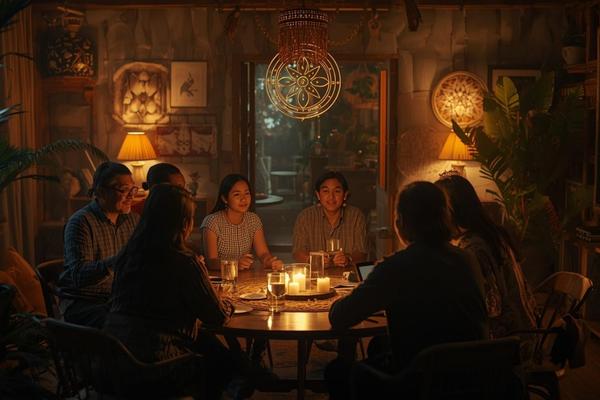
Reconciliation: When we talk about our organizational values, they are grounded in the Seven Sacred Teachings rather than traditional corporate commitments.
That sounds great.
It is. Something I’m really proud to share is Downie Wenjack is not even 10 years old and over half of our team have been here over 5 years. That’s something that I’m really proud of but I think speaks to the work that we do because it’s not a job, it’s a passion, it’s a commitment. It’s a great privilege and responsibility to be at a place like Downie Wenjack that’s creating these opportunities and pathways to really mobilize systemic change and to break down systemic racism in this country.
Sarah, how did you come to be at the Downie Wenjack Fund?
I had met Gord when he got the Order of Canada. I participated in this thing called the Governor General’s Leadership Conference and it culminated in that ceremony and I knew the headhunter. He is a friend of mine that was recruiting for this position. Frankly, it was a bit daunting because not only are you taking responsibility for the legacy of a beloved Canadian icon. Gord was still alive, of course, but just had concluded like the totally miraculous feat of the final tour.
The grief bubble had started and the Wenjack family, of course, it’s really delicate and important that Chanie’s legacy and spirit is honored in the exact same intention as Gord’s and at the exact same I guess like weighting or however you want to look at it. I was the Executive Director of the Native Women’s Resource Center at the time. It’s a high-profile job and me and my friends would joke like, “What kind of sucker is going to take on that role? That’s a big task and a complicated build and a really complex space in a really heightened time of sensitivity.” I guess it was me.
It’s about creating safe spaces to have difficult, uncomfortable conversations—unlearning racism and beliefs that are not rooted in fact, not aligned with Indigenous ways of knowing, and that distort the true history of this country. That’s essential… Share on X“Who would ever do that? I guess I’ll do it.” I wish our readers could see your smile when you said that. It turns out you were right, it was crazy, but here you are.
In the very best way. I think with all heart-centered work, it feels crazy at the time and then you look back and you say it was worth it. It made that difference.” Something we’re really proud of with our work at Downie Wenjack is it’s changing hearts and minds in classrooms and boardrooms across the country.
Okay, I am so curious about this. Classrooms, boardrooms. How different are the conversations in those two respective rooms?
They’re not. They’re the same which is the coolest part. I make the joke about we’re educating the littles in the classrooms and the bigs in the boardrooms and in the middle of the sandwich we get to do all the fun stuff like the Walk for Wenjack and the indigenous music and arts festivals and the Artist Ambassador program that brings everything together.
Fundamentally, the conversations are the same and it’s really about creating safe spaces to lean into hard, uncomfortable conversations about unlearning racism, unlearning things that are not rooted in fact, they’re not rooted in indigenous ways of knowing and being and that do not accurately portray the true history of this country, which is what we have to do to be able to look towards healing.
Managing The Ebb And Flow Of Public Attention And The Hope In Non-Linear Work
Looking towards maintaining momentum, one of the things I’m really curious about is as an organization you talked about the founding being a culmination of work for Gord Downie, the Secret Path, the 94 calls to action, all coming out. We’ve had a number of moments over the last number of years where attention has been on residential schools and on reconciliation in particular. It seems to come and go. What do you think about that ebb and flow and how do you manage through that as the leader of the organization?
It’s always going to be an ebb and flow when you think about systemic change and systems change and what that takes and how much time that actually takes. I think we find ourselves in a bit of a backswing of momentum right now and that’s when it’s most important to dig your heels in and fight to protect the integrity of the work and the progress that’s been made so far.
I think one of the moments in time where everyone can agree there was like a national pause or a-ha moment as horrific as it is to look at it like that is when there was the recovery of unmarked graves at the former Kamloops residential school site and subsequent residential schools across the country. There was a national reckoning around the reality of what happened in residential school systems and the idea of children just being tossed in graves.
It was horrific and there was a ton of support and people reaching out and wanting to figure out what they can do and then a year or two later, you hear the residential school denialists creeping in and “These ground searches they’re just finding a root,” or whatever. The fact of the matter is indigenous people have been telling these stories about what happened to their children, to their family members for decades and no one was willing to listen.
I think it’s easy to lose sight of what is so critically important, that this happened and that we have to acknowledge that and work needs to be done for communities to be able to find their loved ones and bring them home. That’s not an insane thing to want. Communities are going to approach that in different ways and this work doesn’t happen overnight.
It takes time because you’re also in mourning, it’s a collective grieving. There’s this national moment of reflection and an outpouring of support and then it just starts to trickle off as there’s a new media cycle or there’s a new thing. I think in the landscape that we’re in, people are just totally inundated with chaos.
They don’t know what to feel. There’s like a numbness that’s eking the way in because when everything is horrific what do you do? Where do you begin? That’s something I think that you become accustomed to in this work. There’s going to be moments of time where you have a lot of attention and people are willing to listen and have hearts and minds open. You need to be prepared when some of that engagement pulls back but you need to still be there because the pendulum will swing back the other way.
It’s like, “We’re looking at these major projects and we need to figure out what reconciliation looks like in this country.” I think that’s one thing that’s never going to go away. This is going to be a conversation we continue to have in our lifetime, in our children’s lifetimes and it’s something we have to figure out to work through together.
Downie Wenjack, if we can be a tool or a vehicle to help create those safe spaces to have those hard conversations, to make sure that people are properly educated so they’re acting from an informed position instead of an ignorant one. If that’s what we can say we’ve accomplished, then we’re doing okay.
One of the phrases you’ve used a couple of times in our conversation so far is non-linear. In the non-linear social profit sector broadly defined, I think it encapsulates a lot of work. It’s not how other leaders I’ve heard characterize it. When you say non-linear, what do you mean?
There’s going to be setbacks and bumps and roadblocks and there’s going to be horrific racist vitriol that you have to mute on the comments. Sometimes you have to look and engage in look at whatever might be happening and look at that as an opportunity to educate or reframe or reshare that information in a way that people can better understand. When you say it’s non-linear, it’s in motion, it’s fluid, it’s changing.
What communities may define as reconciliation is going to change too and that’s okay because this isn’t a static process. This is something that’s going to change and evolve over time as the conditions of how we interact and live as a society continue to change. It’s not like we’re working with a checklist here and we’re going to cross off numbers 1 to 10 and then our work here is done. This is a reciprocal relationship that we need to remain engaged and committed to.
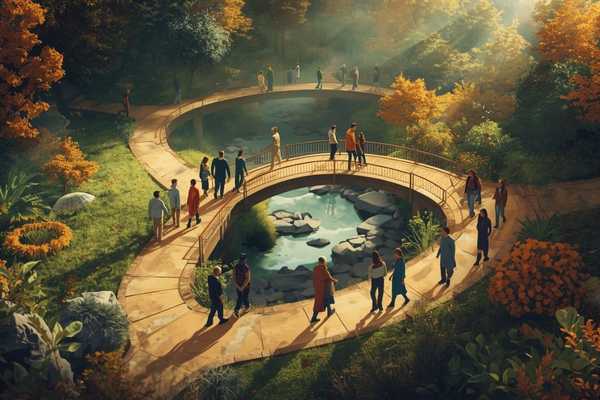
Reconciliation: What communities define as reconciliation may change over time, and that’s okay—because reconciliation is not a static process.
When you say it, it seems so straightforward. How do you keep that present? What I hear from you in that answer and in our conversation so far is a joyful warrior on a journey and willing to bring others along and looking to bring people along with you. I’m sure there are days that are more challenging than others. How do you stay as a leader anchored in that idea of non-linearity and understanding that this isn’t straightforward and there are going to be bad days? When those bad days happen, how do you show up the next day?
Our work is rooted in trauma. That’s just the fact of the matter. I think one of the I guess maybe like the magic or sauce or the secret power of Downie Wenjack is being able to find the levity or the lightness of operating within this space. It’s okay to celebrate the joy of a classroom of kindergarten kids connecting with Chanie’s story.
They’re six years old and they can understand the concept of being taken from your home and your family and not being able to speak your language or engage in cultural practice. A six-year-old can get that. Everyone else can too and seeing that moment, that a-ha moment, I think really reaffirms the importance of the work that we’re engaged in. Yeah, some days are hard and that’s just the cost of operating I guess.
We get to see the hope and the joy and the learning and we get to see the passion in educators and students and legacy space partners for the change that they see happening in front of them. Those a-ha moments where they connect and they say, “We’ve lived in this community for 30 years,” or “Our family are second generation Canadians,” or whatever and that piece finally comes together. The indigenous history in this country, our indigenous relations next door, that’s critical to our identity in this country and there’s so much to be gained from understanding and appreciating and respecting that relationship.
That’s really powerful. As we were getting ready to record, I shared that my teenage children were not so impressed that I got to talk to somebody that worked at The Gord Downie Foundation or The Downie Wenjack Fund. They both knew and they knew the story and they told me the story of the Secret Path and 2026 is the 10th anniversary of the Secret Path.
I think you mentioned those six-year-olds in the kindergarten getting the story. It is part of a generational change of understanding as you say that reconciliation, that residential schools are a fundamental part of Canadian history and something that we need to come to terms with and understand what that’s going to mean and in the future. What are you doing to celebrate the 10th anniversary of Secret Path?
Celebrating The 10th Anniversary And Committing To Seven Generations Ahead
I think it’s this moment where we want to celebrate what we’ve been able to accomplish. We’ve been able to reach over 10,000 educators and 7,500-plus schools in every province and territory. We’ve been working with almost 100 legacy space partners across the country, 2.4 million reconcili-actions coast to coast.
I think it’s just a moment to really reflect on the work and the impact and to share those stories. I think it’s easy especially right now to get caught up in despair or has enough progress been made or is it really making a difference? I think it is and it’s really important that we share that. The stories that are coming out of Oshki Wupoane, which is our partnership with Canadian Tire and our granting stream, you hear some of the impact that it’s having in communities across the country and you’re just like, “This is making a difference.”
We’re going to look at this in twenty years from now and we’re going to say, “This was the catalyst.” It’s really cool to be able to have the opportunity to share those stories in a bigger way. Obviously, we want to do some fun things too so we’re supporting a bunch of indigenous music and arts festivals across the country. We’re having a big event here in Toronto in October during Secret Path Week, there’s Walk for Wenjacks.
There’s a ton of events and programming which will all be on our website that will be starting in June for National Indigenous History Month and People’s Day. I would just really encourage everyone, if you don’t already, to follow us on socials or to visit our site and to join us because it’s critical that people come together and stay committed on this path. If you’ve never been engaged in our work, if you’ve never heard of us, that’s totally cool. There’s no time like the present and there’s a ton of fun stuff to engage and to learn from and instead of doom scrolling how about you learn to scroll instead?
Instead of doomscrolling, try learning to scroll with intention. Share on XThat’s good advice. Sarah, as we come to the end of our conversation, what are you looking forward to?
I think very practically, 2026 is a big one for us in terms of being really intentional with the reflection on our programs and our impact and where we go for the next ten years and the impact that we want to make. If you’re looking seven generations ahead, is this work the most important if we’re thinking of improving the lives of indigenous people being our North star?
I think there’s just so much opportunity and hope that we see in the work every day that we just want to make sure that we can invite as many people as possible into this journey with us because it’s really critical to our collective future as Canadians, as people living together in this country and figuring out a path forward that we can all be proud of.
Really cerebrally, I think that’s what I’m looking forward to, the continued generations of work. There was so much work that happened so that an organization like Downie Wenjack could even exist now. That we’re a conduit to bring communities together to care about reconciliation, to be an entry point for people to join us in this critical work.
I used to be a bit more naive and a bit greener I think and people would be like “Where do you see Downie Wenjack in ten years?” I’d say “Hopefully, like in every province and territory, curriculum will be reformed and there’ll be no point for legacy schools to exist because everyone will just be doing it so we can pivot and figure out the next thing whether it’s child welfare or drinking water or justice or healthcare. We can lean into another big, hairy problem and you know see what we can mobilize to get done collectively.” Here we are, ten years later and I’m like, “This is going to take some time.”
Non-linear.
It is non-linear. You can see the impact, you can see hearts and minds being changed and you can see the conversations shift and that’s critical work and we’re committed to stay with everyone on this path for the next seven.
Sarah, thank you so much for being on the show. We were so excited to have you on to tell this story and our readers, I’m sure, will get a lot out of the hope and the optimism that comes through in your answers to this to how you manage and how you’re leading this very important work for all of Canada for this generation and the seven to come. Thank you.