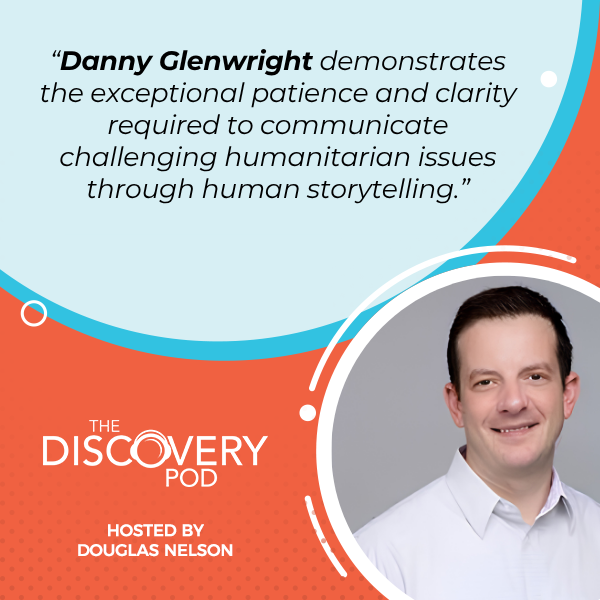
In a rapidly changing global landscape marked by shifting geopolitical priorities and reductions in international aid, protecting vulnerable children requires bold leadership and authentic storytelling. Danny Glenwright, President and CEO of Save the Children Canada, shares how his organization centers child rights and empowers youth-led initiatives in crisis zones across the globe. In this conversation, Danny discusses balancing long-term community development with rapid emergency response, navigating aid cuts through localization, and communicating complex humanitarian challenges with clarity and empathy.
—
Listen to the podcast here
Leading Purpose Through Ambiguity With Danny Glenwright, President & CEO Of Save The Children Canada
Save The Children Canada And Leadership In Humanitarian Aid
I’m joined by Danny Glenwright, President and CEO of Save the Children Canada. Danny leads one of the world’s largest humanitarian organizations working to improve the lives of children in Canada and around the globe through emergency response, education, health, and child protection. With a career spanning international development, humanitarian leadership, journalism, and social profit governance, Danny has worked in more than 80 countries and brings a global perspective on leadership, child rights, and creating meaningful change.
In our conversation, he talks about the important work of Save the Children Canada, how it has changed in response to reductions in international aid across Western governments and around the world. The importance of centering the very idea that children deserve protection, particularly in times of war, and how his organization has responded to changing questions from donors about their role and the role of philanthropy in advancing Save the Children’s purpose. It is a great conversation. It is an example of a CEO on top of the messaging that is so important for organizations and for leaders to have. Please enjoy this masterclass with Danny Glenwright.
—
Welcome to the show, Danny.
Thanks for having me.
We are going to have a wide-ranging conversation about Save the Children, your organization, the great work you’re doing, and what you’re seeing across the globe. Anyone who’s paying attention to the news knows there’s a lot to be paying attention to. As we get started, tell our readers about Save the Children, the work that you do and who you serve.
Save the Children is one of the world’s leading child rights organizations, and we’ve been around for more than 100 years with the focus to do exactly that, keep children in the news and make sure that their priorities are defended and make sure that every child realizes they’re right to survive, to learn, and to be protected no matter where in the world they were born.
All children have equal rights, and it’s our job and our work at Save the Children to make sure that we’re doing everything we can to make sure they get them. As often as we can, we work in partnership with children. We try to be child-led in all the work that we do, informed by the needs of children, and the wishes of children. That’s a critical part of our work because it’s so easy as adults to think we know what is best for children.

Save The Children Canada: As often as we can, we work in partnership with children. We try to be child-led in all the work that we do, informed by the needs of children, and the wishes of children.
Listening to them and including them in our work is something that I find so valuable. Every time I meet with children, I’m inspired in some way and I learn something in some way. What I love about our organization is that we incorporate that into our work and into our approach. It’s an essential part of our success.
What’s an example of working with children or being child led when possible?
The most recent one I can think of, I was in Lebanon visiting our work there and our response there to horrific conflict. I was so inspired. Everywhere I went I met children who were either leading the work that we were doing to support children and youth or working to inform our staff there about what they think our priorities should be. We have a youth council in Lebanon that’s composed of 12 to 17-year-olds.
They set the priorities for the strategic plan in Lebanon. Every year they say, “These are the things we want you to focus on.” It was because of the context in Lebanon, it was, “We want you to focus on child protection. We want you to focus on psychosocial and mental health support for children who are going through these challenging moments in the country that include displacement, conflict and the closing of schools, etc.”
That deep work, working with children, with parents and community is very important to create that lasting change. At the same time, you’re also responding to emergencies or crisis situations around the globe, of which there are far too many. How do you as CEO approach those two different speeds or those two different types of work, that deep community building youth council work, which is so important? You don’t need to convince any of our readers that’s an important thing, an important way to do the work with that need for an emergency response for a crisis that breaks out or reemerges in a different area of the world.
It’s a very important question. It’s a conversation we have often within the organization because so much of that partnership work, which is essential to ensuring the impact you have is sustainable, is time intensive, and resource intensive. It relies on building trust. That, in some ways, is the opposite of what humanitarian response needs to be.
It's about bringing people along on the journey, including donors and people interested in funding your work, making sure that they're learning and unlearning at the same time as you work together. Share on XI also think you can do both at the same time. I’ve seen that having been in Lebanon, as I said. You can visit a community. I’ve visited a collective shelter in Tyre in South Lebanon, where many families have been displaced or are staying. We’re able to provide as Save the Children, because it’s what we do, the shelter, the water, those essentials. At the same time, we’re working with children and youth to coordinate what we call a marathon.
It was bringing all the kids out into the yard to a football field where we set up stations. Each station is a different activity that’s played for them, but they’re learning something there. They’re looking at a ladybug, and the ladybug has spots on it, and the youth who’s leading the program is saying, “What do you do when somebody touches your spots and you don’t want them to?” It’s about incorporating activities like that which build trust, which connect children to the work into what is essentially a humanitarian response.
We’re at a school that’s been turned into a shelter. We’re giving those children a moment of respite, a moment of play, and we’re teaching them something at the same time. There are creative ways to do both at the same time. We’ve been around a long time. We’ve got many of them that we can adapt to different settings and scenarios.
That’s a great response, and there’s a lot there. We could probably do a whole episode on that. Listening to you say that, I’m thinking about the conversation of explaining the need for that deep community-based work and balancing that with emergency, and how you put those two things together. That’s important. It can be challenging, I would imagine, to communicate to donors sometimes who want to know that stimulus-response to crisis is often a way that organizations can be successful as long as they don’t only use that stimulus-response because eventually, the donors burn out. What do you think about that? Having that broader, longer-term development-type conversation with the many hundreds of thousands of people who support your organization.
Communicating Long-Term Social Change To Donors
It’s almost a similar conversation to the one we would have with other partners and with communities. It’s about bringing people along, and that includes donors, that includes people that are interested in funding your work. Bringing them along on the journey and making sure that they’re learning and unlearning at the same time as you work together. I’ve seen over the years of doing this work. Many examples where a donor will say, “I’d like this result in this amount of time.”
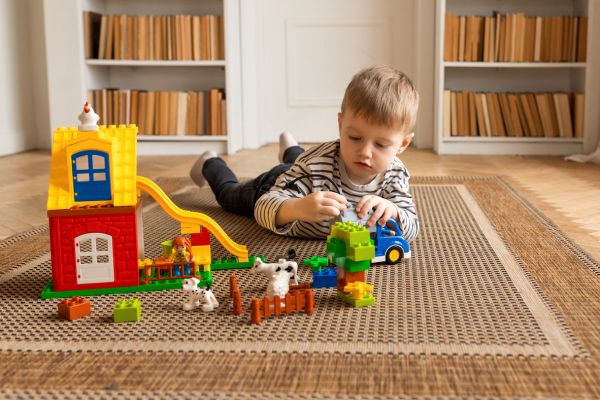
Save The Children Canada: We’re giving those children a moment of respite, a moment of play, and we’re teaching them something at the same time.
If you can stop and explain to them and say, “At the end of the day, that’s not how it works. We need more time for X, but here’s what we can do in this amount of time.” It’s a negotiation. It’s an evolution of that relationship. Reasonable people understand that when you explain it to them. It doesn’t mean that we don’t go for those quick wins when we can get them. It doesn’t mean that sometimes things don’t happen faster.
It just means that patience is required for social change. Most people that work in the sector that fund the sector understand that. That impulse is there even for those of us who work in this space, though, to get things done quickly, to see results and see impact. We also understand how to communicate to others when it’s not possible.
I would imagine that here’s what I would like you to do for this amount of money in this period of time. I would love to be able to say yes. There’s nothing I would like more than to be able to treat this very complex Gordian knot of a problem as a straight A to B, diagnosis, prescription, treatment, or cure but that’s rarely, if ever, how it works. One of the things is getting ready for our conversation, learning about your organization and learning a bit about your background.
I often am amazed at the patience required to communicate these very challenging messages on a consistent basis, and the challenge in individuals like you in those CEO chairs. The name of your organization is Save the Children. Not particularly controversial as a statement, hopefully. It’s an effective initiative campaign to stop the war on children, and I want to get into that in just a second.
These basic principles, save the children, stop the war on children. How do you avoid just getting frustrated at having to say the most basic things over and over again about the individual dignity and rights and the equality of children around the world? It seems like it should be table stakes for everyone, but your organization exists because it’s not. How do you as a leader balance that frustration?
You have to remember that we live in a complicated, complex and anxiety-ridden moment. Everyone everywhere is dealing with their thing. In order to connect with people, for me, it’s not about sharing examples of gloom, doom and superlatives about how this is the most unprecedented crisis. It’s about those human stories that connect people. It’s telling the story of, for example, the little boy that I met in Lebanon a couple of weeks ago, Ali, whose family was displaced.
Patience is required for social change. Most people that work in the sector that fund the sector understand that. Share on XThey were warned by the Israeli military that they were going to bomb their village and told to move to another village, which was then bombed. This young child lost two of his friends and his pets. He’s waking up in the middle of the night. He’s sitting in class every day terrified because there’s the sound of drones outside. His teacher is crying and he’s telling me this story. That is what you’re able to get through to people by telling those very human stories because we can all relate to that. We can all relate to that fear that we see in our children’s eyes or in a child’s case, in their parents’ eyes. We can make that connection.
We know that it’s unjust and we know that it’s not necessary. Much of the work that we do is quite simple. When you think about the problems that we’re trying to address, getting people shelter, food, water, giving children a space to play, to have a bit of a break from the chaos around them. These are all things we understand. We call them differently here in Canada. We might say self-care. We might say a staycation. We might have a nice meal. At the end of the day, the needs we have as humans are all the same.
The impulses that drive us are all the same. Making that connection through storytelling is what’s critical. Having the humanity to realize that most people, when they hear those stories, it does resonate. They just haven’t taken the time to think about it because they’ve been so busy focusing on the challenges in their own lives. When you can connect the two and give them that information, it often has an impact.
Danny, that’s a tremendous reminder. Not just in international development, but across the social profit sector in Canada and beyond. I have a theory that sometimes our insider language gets in the way of telling a good story. The number of organizations that have used the word polycrisis in their annual fund letters in the last couple of years, so they’re right. I’m not disagreeing with the finding or the concern or the outright terror with the reality of what some of these organizations are dealing with and supporting around the world.
If they don’t tell that connection about Ali that you just shared, if that isn’t first and foremost in the minds of supporters and partners. It can inject an aversive response, “This is another thing I can’t fix. This is another thing I don’t have control over. I’m going to go think about something else or I’m just not going to think about this anymore.” How do you keep that story of the individual’s archetypal or actual at the forefront within your organization?
It’s essential to what we do. It’s through what I mentioned earlier, which is working with children and being led by children. We are interacting with children and youth every day everywhere we work. They’re always top of mind. There are so many stories. It’s also what drives us in positive ways because children are so resilient. They are so filled with ideas, joy and creativity. It’s easy to share stories of children because they resonate with people, and because they are always compelling and they inspire us.
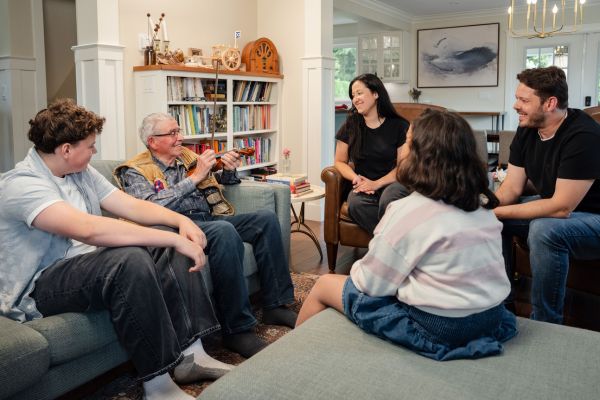
Save The Children Canada: In order to connect with people, it’s not about sharing examples of gloom, doom and superlatives about how this is the most unprecedented crisis. It’s about those human stories that connect people.
We all have children in our own lives who we think about in those moments. It’s a relatable thing for people. People also recognize that how we treat children as adults says a lot about who we are and the world that we have created. Now, we are not treating children very well. One in five children is living in conflict.
That’s 520 million children. These are places where grave violations are happening against children. The rules that we’ve created to protect them, we are breaking with abandon publicly, increasingly. That’s a sad statement about the state of the world. We need to do everything we can to change that. It’s kids that are going to keep reminding us about that and stories about children as well.
This will be the last question that I ask you that is like, don’t you ever get frustrated? In looking at the work that you do, that must be so frustrating. To have a campaign, advocacy and awareness campaign, called Stop the War on Children, do we have to tell people that we should stop the war on children? For goodness’ sake.
Confronting The Reality Of The War On Children
I wish we didn’t. At the end of the day, though. First of all, “Every war is a war on children,” that’s a direct quote from our founder, Eglantyne Jebb. She said that way back in the 1920s. She’s right, and it’s still true. What we’re seeing the highest number of child amputees in modern history in Gaza, more than 21,000 children killed in what the UN has identified as a genocide. That’s just one example. Children in Sudan, in Haiti. You name it.
Every conflict around the world has an outsized impact on children. It’s unfortunate that we have to remind people that this is wrong. It’s frustrating, as you say. It also is our job. For me, it’s finding ways to remind people of that, finding ways to pressure the government here in Canada. All governments that we work with at Save the Children about the obligations that they’ve made under international law to protect children and their commitments.
At the end of the day, the needs we have as humans are all the same. The impulses that drive us are all the same. Making that connection through storytelling is what's critical. Share on XRemembering that there are political and economic imperatives that are important in this changing world, but we can’t forget our basic humanity in that, that they all are important. All the economic decisions in the world that may benefit Canada. We won’t have any good in the long run if we forget the humanity at the core of that.
Thank you for giving in and saying the word frustrating. I can only imagine. The frame on that as positive action that is your job is encouraging and a good example for our readers to think about how that applies to their own work. One of the other big changes that was happening prior to the shift in world order where governments are cutting back on foreign aid so significantly was a very positive movement. Which was moving decision-making and power to the communities, to the countries where the work was happening more and more often.
Lots of organizations have done it very well. Save the Children would be certainly one of those examples of shifting that balance of decision-making to community because that is where lasting change happens. That’s complicated work. It’s delicate and it takes time. In the midst of that, the big shakeup in the reduction of international aid and some shaking of the foundations of international development work across the world because of cutbacks, particularly in the United States. How does that reduction, that change in funding affect that move to transfer more authority and more power to the communities that you’re working in?
My hope is that it expedites it. It’s something we’ve been talking about doing for a long time. It’s something we know is right. It’s also hard, especially when the work that we do keeps people alive and the work that we do has a positive impact. It’s hard to change that. Even though we know that by changing it, it’s going to have a better impact. I’ve seen everywhere I’ve traveled over the past couple of years, the impact of the cuts. In tandem, I’ve also seen what that means in our partnership with local agencies.
If there’s a silver lining to that, it’s that I have been able to get creative in what we call localization, which is just shifting a lot of the implementation responsibility of our work, a lot of the power of our work, to local actors, which is the right thing to do. It’s the sustainable thing to do. They say don’t waste a crisis. We’re in crisis now because of the funding cuts, and I’ve seen that up close. I was in South Sudan in 2025 and met with people in Maban, in the North part of the country. There are more displaced people from Sudan living in the community than the local people.
Save the Children had been running refugee camps there and internally displaced people camps there for many decades. They’d all had to close down because of the cuts. I’ve seen the health centers where we’re treating babies who are malnourished. We’ve had to close in places like that in a country where three quarters of the government budget is reliant on international aid. The impact of the cuts are very real.
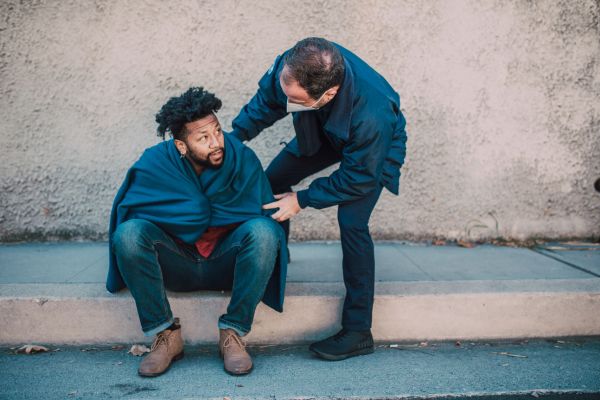
Save The Children Canada: If it takes this crisis to make it happen faster, then that is one good thing coming out of this crisis.
I’m not saying in so many places there are not local agencies that can step in to support that work. In a lot of contexts, there are and it will make our work more efficient. If we’re honest, the work that we do, the sector in which we work, has centered the views of White people, of people that live in the global minority for decades, as the world has. This shift is critical because it also helps address many of the root causes of the challenges we’re trying to fix, which are racism, inequality, discrimination, sexism, etc. This shift to me is essential. If it takes this crisis to make it happen faster, then that is one good thing coming out of this crisis.
I appreciate your perspective on that. The other thing I’m curious about is whether you also find balancing as an organization of the scope and scale that you have. You have that advantage of scale. You have that advantage of experience when you come into a situation or supporting a situation over a period of time. It’s not as simple as, “Somebody else is going to make the decisions now,” because you do have that expertise.
That expertise that you can lend to local communities and countries has a lot of value. You’re not giving that up or forfeiting that. At the same time, how do you shift that decision-making and that ultimate authority more frequently and sooner to the local community? It’s an interesting balance, I’m sure.
That’s the conversation we’re having all the time within our Save the Children movement, because there’s no one size fits all anywhere that we work. What I’ve just described may be possible in one context. It’s not in another. We can’t just say, “We’re making this change completely.” Even within some countries, you’ll have a region of the country that has very strong local agencies and the ability to not require Save the Children and our teams in the way that perhaps we once were required there.
You have another part of the country that doesn’t have that. It is complicated. In some places too, you’ll see local agencies and local interest holders saying, “Don’t pull out or don’t stop doing your work because we need you here in order to interface with the government, in order to help protect us for whatever reason.” Every context is different and evolving.
It makes it more complicated for us because we can’t just say, “We’re changing what we do now everywhere.” That’s okay. We’ve been around a long time, we have a lot of experience in many places we work, so we have the ability to adapt, shift and change. That’s the journey that we’re on as an organization. The critical mandate of making sure that all children are taken care of and realize their rights doesn’t change. It’s how we do it. We do it differently in different places.
If it was a job ad, it’s a dynamic environment.
That’s one word I would use. Yes.
Dynamic ambiguity maybe, but the dynamic nature of it is, I’m sure, very energizing. For the people that work at Save the Children are attracted to the work, attracted to that ability to make a difference in the fact that there is no one size fits all. As CEO, how do you keep that sense of purpose front and center for your team? Particularly your leadership team. All of the challenges, the ambiguity is a euphemism for some real curveballs that you and your organization have been facing. How do you keep that sense of purpose front and center for your team?
Preserving Purpose And Protecting Team Well-Being Against Burnout
I’m so blessed and privileged. Everyone who works at Save the Children is there because they believe in the work, because they care and they want the change that we’re trying to bring about in the world. That’s not a problem I spend a lot of time with. Most of them are convinced of the need for our work. Most of them come with brilliant ideas.
For me, as a leader, it’s not about being the one who knows this, being the smartest person in the room, or being the one who has to share the stories. It’s about lifting up the rest of the team to have the best stories, to be able to accomplish their work in the most meaningful way. That’s the exciting part about our work. We’ve got such an incredible team of people both here in Canada, but everywhere I go, I’m inspired by our staff and their dedication to the work. Very often in humanitarian contexts in which we work, our colleagues are impacted by the crisis themselves.
I was in Turkey after the earthquake there in 2023, touring the sites where we were responding to the earthquake. One of the colleagues points out the window and says, “That was my house. Now it’s a pile of rubble.” He and his wife and their new baby were lifted by crane after their building collapsed. He went to work that same day to respond to support others in that setting. I work with incredibly dedicated people everywhere in the world. They know. They do this work because they care and they do it because it impacts their own communities. The same is true here in Canada.
As a story about the water cooler, someone whose house was turned to rubble and they went to work later that day makes having a sniffle probably not a good reason to stay home. That’s pretty powerful. One of the things that we hear a lot about in our sector and I think it is appropriate to talk about. We may put too much energy into it, but this is this concept of burnout. In a purpose-driven organization where people are committed, and so committed to the cause as is the case at your place. As a leader, how do you think about preserving and protecting the people sometimes from the heat of their own commitment to the work?
It’s a constant conversation and I don’t have any one answer to it. My personal belief has always been that in order to be as effective as possible in the work that we do, we have to take care of ourselves. We have to have a separation between work and other things. We have to have other interests. Now, that’s easier said than done, especially when you were dealing with the type of crises I’ve mentioned here. When you’re lying in bed thinking about children that are being impacted in the country you’ve just visited, that could be many different places.
What we call Save the Children is organizing internally, which is about thinking about our mindsets, thinking about walking the talk in some of the work that we’re trying to champion and making sure that our team has the support that it needs. Whether that’s mental health support, or extra days off. We all understand the importance of that. When colleagues need a break, when they need a moment to talk about something, we make space for that.
Awareness of it or even just a willingness to have the conversation goes a long way on leadership tables and throughout the organization. One of the things, I grew up as a fundraiser. Some of my questions take us down that fundraising path. I’m interested to hear how your conversations with donors have changed since November of 2024, since the change in leadership in the United States and this new upheaval and cutbacks that’s come. Are donors thinking differently about the work of your organization or the importance of their giving to your organization?

Save The Children Canada: I’m looking forward to seeing what this next generation does. I’m inspired everywhere I go by my conversations with children, by the incredible things children say, their creativity, their resilience and their hope.
I don’t think the conversation has changed. What we’ve kept front and center the whole time is all the things I’ve mentioned. It’s the importance of protecting children, and the importance of education. Also, remembering that we are very lucky here in Canada. We have so many things that many places in the world wish they had. There are challenges in our country, but it’s also making the connection between how we are all connected.
Maybe the messaging changed coming out of COVID almost because it was a moment we all shared together. We realized then, unfortunately, in so many ways we seem to have forgotten how interconnected we all are, how important it is for that global solidarity, that global cooperation. The message I’ve been trying to share of late with our government is, as Canada shifts its foreign policy and is building relationships with other countries and putting economic interests at the forefront, understandably.
We’ve got to remember as well that we need to be investing in children and youth. Nine out of every ten young people in the world live in developing countries. Many of these are countries in conflict. If we’re not investing in their education, in their health care, in protecting them, then they become a driver of future instability rather than a demographic dividend that supports us in Canada as our population ages and declines.
If we’re taking the long view, there’s a moral argument which it’s been one with many people but if it hasn’t, there’s an economic argument as well. Which is to say that it is in our best interest to support countries around the world that are not as blessed as we are because at the end of the day that’s where the people on the planet are. We’ll be relying on them as the future innovators and the future entrepreneurs. We should invest in them now.
It seems like a basic recipe and good conversations to have. As we’ve gone through this conversation, you’ve talked about a number of very specific examples of children in crisis around the world, the changing nature, how much more challenging it is to deliver on your purpose, given all the things that are happening in the world. In the midst of all of that, what are you looking forward to?
Looking Forward: Empowering The Next Generation Of Changemakers
Combined with what I just said, I’m looking forward to seeing what this next generation does. As I said earlier, I’m inspired everywhere I go by my conversations with children, by the incredible things children say, their creativity, their resilience and their hope. I’m looking forward to seeing how they impact our world because they have a lot of challenges in front of them thanks to our generations. I always feel hopeful when I leave those conversations that this next generation of children is going to be the one to change things. I’m looking forward to seeing what they do. I hope that we can harness some of that energy at Save the Children and use it to improve our work and our impact.
Danny, I am so appreciative of you making time to be on the show. I’m very grateful for the work that you and your colleagues do at Save the Children. Thank you for being on the show.
It’s been my pleasure. Thanks for having me.