The role of a Campaign Director is a rare opportunity to move beyond traditional fundraising and lead a transformative shift in how a community addresses mental health and housing stability. Keir Macdonald, CEO of Coast Mental Health, joins the conversation to detail how this specific leadership position will bridge the gap between provincial support and philanthropic vision to create a first of its kind integrated care model. This position is designed for a collaborative strategist ready to move past reactionary crisis response and toward a legacy of prevention and long term recovery. It is a call for someone who values deep connection and innovation to help build a foundation that will serve the community for decades to come.
—
Listen to the podcast here
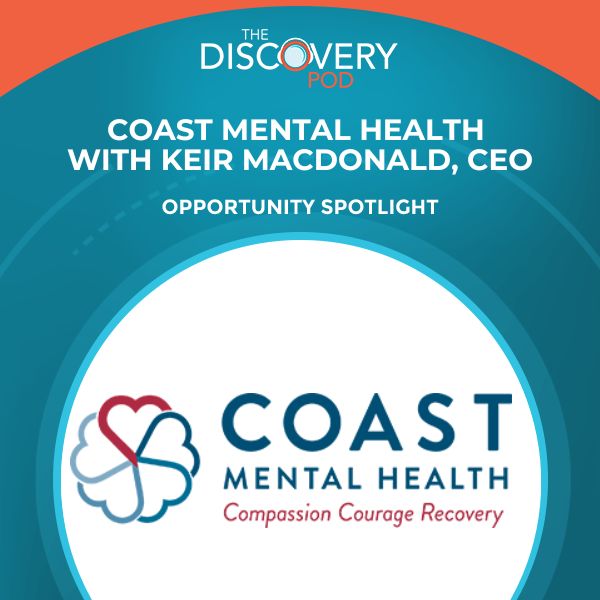
Coast Mental Health With Keir Macdonald, CEO
In this episode, I get to speak about an exciting new role at Coast Mental Health with their CEO, Keir Macdonald.
‐‐‐
Welcome to the show, Keir.
Thanks for having me on.
The Mission: Shifting From Crisis Response To Prevention
No problem. The role specifically we’re talking about is campaign director. It’s an exciting initiative happening at Coast that we’re going to talk all about. There’s lots to cover in the next few minutes. I’m excited about the opportunity to speak with you again. Let’s set a little bit of context. In broad strokes, tell me, first of all, what is Coast Mental Health? What does it do and why?
It’s a big question, but an important question. Coast Mental Health is a community-based organization focused on helping people living with mental illness, primarily to build stable, and meaningful lives. We operate supportive housing and recovery programs. We provide outreach and community-based services, as well as offering employment and training opportunities.
The why is important. Too often, people encounter the system in crisis. Our work is focused on changing that, trying to try to create stability, connection, and opportunity for people to recover and thrive. Coast exists because housing, mental health support, and community are deeply connected. When you bring those things together, you don’t just stabilize people. You can see change.
Coast Mental Health exists because housing, mental health support, and community are deeply connected. When you bring those things together, you don’t just stabilize people. You can see change. Share on XThat impact on people is so important and so crucial, and how the work comes together fundamentally. You’ve been at the helm of Coast for a few years, for that matter. What are you most proud of having achieved during your time there? I don’t want to put you on the spot necessarily to boast about yourself because you’re naturally a very humble leader. What in your time have you accomplished that you’re proud of?
It’s easy to talk about the organization, so I’ll take that prompt.
Fair enough.
This has been an evolution. What drew me to Coast was the fantastic work and the legacy that the organization had. We’ve continued to evolve and meet many of those growing needs in the community. We’ve expanded housing programs. We’ve strengthened recovery programs in particular, but continue to build partnerships across healthcare and community services.
One initiative I’m excited about is that we’re shifting from being short-term and reactionary to long-term. We’re focusing on some of that prevention integration and stability, and moving beyond that crisis response that so many organizations find themselves in, especially since COVID. We’ve been playing catch-up. We’ve been reacting.

Coast Mental Health: We’re shifting from short-term, reactive work to long-term prevention, integration, and stability — moving beyond constant crisis response.
In our strategic plan, we focused on building that foundation for the organization as we embark on strategic planning for the next five years. We are thinking about a longer-term view and how to set up the system and approach our work in a different way, moving from crisis response to more of a focus on prevention and intention in terms of where we’re going.
That intentionality is important. You mentioned the long-term foundation. Let’s shift from the small F foundation to the capital F foundation. Within Coast, there is the Coast Mental Health Foundation. Talk about the role of the foundation within the Coast ecosystem because you’re a few different organizations in some ways. Tell me about the foundation specifically, because the campaign director is going to be a part of that foundation team.
I love being part of our broader Coast family. The foundation plays a critical role in helping Coast go beyond what government funding alone can support. How we position public funding and government funding goes towards those core services. Whether it’s housing or funding some of the treatment programs. The foundation allows us to innovate, invest in new models, improve the quality of life for the people we serve, and also to fill gaps.
It is that partnership between day-to-day operations in the society and the foundation that we write grant applications to the foundation as a funder. It helps connect the broader community to our work. Those donors, partners, and advocates become part of the solution. The foundation helps turn community support into real, tangible impacts.
The Capital Campaign: A New Model For Integrated Care
That’s great. I know community members want to be a part of solutions and want to be a part of this long-term work that you’re doing on many levels in housing, preventative care, and so on. Sticking with the foundation, let’s talk about the pending campaign. Let’s talk about the campaign director’s role. What is the pending campaign? You’ve alluded to a few things. I know a little bit about it, but I want to hear from you. What is the pending campaign all about?
The upcoming campaign is about building the next generation of mental health and housing support. We’re working on a pretty transformative project that combines permanent housing with integrated health services and community services designed to support stability, recovery, and community connection. It’s a partnership primarily with the provincial government, but like many campaigns, it takes public philanthropic support to bring the full vision to life. It’s not just about a building. We’re looking at creating a model that brings housing, healthcare, and community support together in one place.

Coast Mental Health: The foundation allows us to innovate, invest in new models, improve the quality of life for the people we serve, and also to fill gaps.
I alluded a little bit before to some of the long-term outcomes and having that stable housing anchoring and a large community that we’re going to be bringing together. A big part of the vision is the non-residential supports that are part of the community. That’s where the campaign will help us bring that vision to life and create something that will serve the community for decades.
The Campaign Director: Strategy, Storytelling, And Impact
It’s beyond the actual building. It’s such a cliche, but what happens in the building and what happens around the building is what’s going to make a difference and have some impact. The campaign director will be doing what exactly? It seems obvious to say they’re going to be raising money for the campaign, but let’s talk a bit more directly and a bit more specifically about the campaign director’s role in this context.
We hope that it will help us raise a lot of money to support the project. The campaign director will play a key leadership role in shaping and delivering the campaign as a whole. That includes building relationships with major donors, helping refine the case with support, working closely with the foundation board, and coordinating across internal teams.
There are many people who are going to help bring this project to life. We’ve got the project team that is looking at delivering this large capital project. This campaign director comes in to enlist and drive that support to enable us to fund that non-residential portion. It’s a highly collaborative role. It’s going to help us do the work around storytelling, relationship building, and execution. We are bringing those donors, leadership, and community partners around that shared vision.
The upcoming campaign is about building the next generation of mental health and housing support. Share on XThat was a little glib about success, but beyond the dollars raised at the door, what does success look like for this person? It sounds like you’re building a community within and without, in some ways.
Primarily, success is about achieving that campaign goal, but it is broader than that. Success is about building those long-term relationships with donors. This is the first major capital project and campaign that Coast has embarked on. We’re 54 years young. It’s a transformative time for the organization. It’s strengthening the foundation’s fundraising capacity. We run a pretty amazing event called the Courage to Come Back Awards.
I was waiting for you to mention that. I was going to jump in if you weren’t.
It’s coming up on May 28th, 2026.
There it is.
Please get your tickets. Beyond that, it creates this opportunity to position Coast as a leader in innovative approaches to mental health and housing. If we do this well, that impact will go well beyond a single campaign.
Success isn’t just reaching the campaign goal; it’s also about building lasting relationships with donors. Share on XWithin the philanthropic community and the fundraising community, it’s going to elevate donors and fundraiser sites for that matter, making this place a career destination. Look at this great thing that’s been built with the cooperative collaborative work of foundation team members, Coast Mental Health staff, leadership, board members, and campaign cabinet.
It’s all this community coming together in one fell swoop over time with a lot of work. It’s going to take work, no question, but coming together in this milieu is exciting for that matter. Thinking beyond the campaign, if you can look that far and think about your crystal ball. What does the future of the campaign director role look like as the organization and the foundation evolve post-campaign period, after the building is built, the services are in place, and this wonderful thing is happening?
Coming into Coast, one of the things I heard from leadership at the foundation was how long this project had been a twinkle in people’s eyes. It has been 15 to 20 years since the organization has desired to deliver on this. We believe that this role has potential to grow through this campaign. The campaign is a major milestone, but Coast’s ambitions extend well beyond one project. We hope that this is a catalyst. As we continue to evolve, there’ll be opportunities to expand major gifts, deepen donor engagement, and support future initiatives. The campaign director comes at an important time to lead this initiative, but will play a key leadership role in shaping the next phase as well.
I only asked because I anticipate that question from a lot of candidates around, “Is this a permanent full-time role? Is this a term role? What does this look like? If I fall in love with the people, environment, and culture at Coast, what’s the long-term capacity there?”

Coast Mental Health: The campaign director comes at an important time to lead this initiative, but will play a key leadership role in shaping the next phase as well.
Within the posting, we are positioning it as there is a campaign life and a campaign period. We’re flagging that at least 4 to 6 years, which is a very long time, I know, in this world and in the philanthropic world. It’s a small but mighty team. This does provide a catalyst for the transformation of the foundation moving forward. We hope that we can build and sustain. I believe that’s the opportunity available here.
Culture And Connection: Working “In The Work”
People always allude to culture. They ask about culture. I alluded to that very briefly. What’s it like to work at Coast? How would you describe the culture there?
Coast is mission-driven, as well as collaborative and pragmatic. People come here primarily because they want to make a difference. When you get out and speak to staff, and when we look at our engagement survey, there’s nothing that resonates more clearly than people’s passion for the work they do, the deep commitment to the people we serve, and the impact within the organization. That’s always front and center.
When you talk about culture, there’s a strong sense of teamwork across programs and leadership. The foundation is a small but mighty team of about ten people. Collaboratively, in small teams, you have to work that way, but the foundation works very closely with the society, which is 900 strong people. It’s this contrast of a focused foundation, delivering that financial support to the day-to-day, but there is so much collaboration and connection that occurs between the two. We are deeply embedded with one another.
I do love that you talked about mission-driven right off the bat as well because you’re physically present. There’s that presence with each other. Having visited your offices, you’re enmeshed within the service delivery with the society work. Not all 900 people, obviously, because that’s physically impossible, but there’s not a physical separation for mission, which a lot of people do feel in the sector, for that matter. Sometimes, the work can feel very distant.
Coast Mental Health is mission-driven, collaborative, and pragmatic. People come here because they want to make a difference. Share on XIn the foundation, the staff that is on site here in Vancouver are down the corridor. We share space. It’s important to see the impact of your work every day. You’re not disconnected. You’ve got that ability to understand. You’re out there talking to donors and supporting the work. That’s the feedback loop. In terms of seeing that impact, we operate on a site where our mental health clubhouse operates a young adult program on East 11th. You’re working in the work where we’re delivering service.
Who are the campaign director’s closest collaborators? We’ve talked about the ecosystem. We’ve talked about some of the key people, this collaborative culture. Who are they when it gets down to it?
This role will work closely with me. We mentioned before that there is a large project. The project team has an inherently close relationship. I keep being told there’s going to be a role for me to play on this campaign as well. Foundation leadership and the foundation board. There is the executive director and the senior director of fund development. There are going to be some key team members and colleagues that this role will work with.
I imagine as much on the society side and the project team, there’ll be a lot of coordination around those. They’ll also collaborate with program leaders, our communications, and probably our finance teams as well. As this person is out there playing a key engagement role, you’ve got to understand Coast and understand the work. To do that involves connecting with the organization as it exists and talking about how that will look in the future.
Also, telling those stories about what’s happening and the great impact you’re having. Anything on the go that you think candidates should know about? Any pending or current organizational changes that someone considering the role should know about or would want to know about?
Even the campaign itself, this role is a big kickstart to the resourcing of a campaign. We are starting with the campaign director, but there are other places to build around them. We do contemplate further change there. At the same time, the foundation’s executive director is also on medical leave. We are also recruiting for a temporary executive director to support the team during that period.

Coast Mental Health: You’re not just running a campaign. You’re helping shape the future of mental health and housing in our community.
We do hope and expect that the role will be filled in May 2026, so we’ll be able to participate in this recruitment process as well. In the meantime, I’ve been closely supporting the foundation team and kickstarting this campaign. The campaign director means that they’re joining at a time of momentum, but also having the opportunity to help shape how this fundraising function evolves.
The Opportunity: A Catalyst For Community Hope
The organization is clearly committed to this person’s success. The resourcing and investment are happening. This person will be well-supported fundamentally, both by collaborators and teammates within the foundation and in Coast, for that matter, too. A couple of questions here in closing as we wrap up. Why would someone want to apply and join you? Why would someone want to leave their perhaps enjoyable spot where they’re working and join you? Any key messages for someone who’s mulling, considering, or not quite sure if they want to throw their hat into the ring?
Primarily, it’s the chance to be part of something meaningful and transformative. You’re not just running a campaign. You’re helping shape the future of mental health and housing in our community. There are not many of these opportunities that come across in the social profit sector. There are a lot of large campaigns with hospitals.
There’s something different in terms of the community sector that this brings. It brings a closeness to the work and building and delivering on a model that doesn’t yet exist anywhere, which I’m super excited about. We hope that you’ll be joining a collaborative team that values innovation, relationships, and impact. We’re looking for someone to join this ambitious work who has a strong sense of purpose and sees this unique opportunity for what it is.
Mental health and housing are areas that are getting so much attention. You’re living and breathing the work on the front lines fundamentally. There’s lots that can be said in the public discourse for these topics, but having this opportunity to make this impact in such crucial work is key.
What it enables us to do in terms of the talk about this work. There is still so much happening every day and so many crises in our communities that what this project represents is also hope. It represents doing it in a different way, to be able to get out and speak in such a positive way about what this project represents and how it will make a difference in communities and people’s lives. I’m excited to be able to do that.
I can tell you’re excited by it. I’m excited by it as well. I’m excited to have some excellent candidates come forward and share their excitement, too, as we go through this process. Anything else you’re excited about? Anything else that you want to share about the future of Coast beyond the campaign? Anything to reiterate about the campaign that you want to make sure you share?

Coast Mental Health: This project represents hope — a new way of doing things and a chance to make a meaningful difference in people’s lives.
The big thing I’ve talked about is that I’m excited to make that shift towards being more integrated and prevention-focused. It’s tiring being in firefighting and crisis response. There’s a growing recognition that housing, mental health, and community support are vital and need to be connected. I’m excited about the partnerships we’re building.
Whether that’s across healthcare, government, or community organizations, to drive some of those lasting changes. Honestly, there’s a lot to be excited about the work that Coast is doing. This is one very specific project. Quite frankly, there’s nothing bigger we’re doing at Coast. What it also represents is that there’s a range of initiatives that we’re driving in terms of our work, and this becomes a huge catalyst for a lot of it.
It’s always a pleasure to talk to you. I’m looking forward to bringing some candidates forward and getting them to meet with you and the team as we go through the process. Anybody who’s curious or interested and wants to learn more, they should check out your website, www.CoastMentalHealth.com. Reach out to me, [email protected].
Read the brief. Check out this episode. Certainly, you’re very present as well in the media, dialogue, and discussions about mental health. You’re a public figure in that respect. There’s lots that people can learn about society and Coast Mental Health in your work, fundamentally. It’s a great pleasure to chat with you, as always. Thanks again.
Thanks. I am excited to be partnering with you.