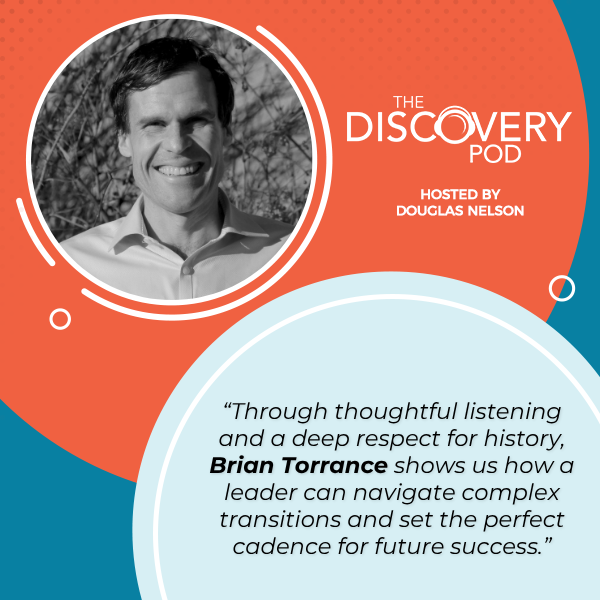
Stepping into a major leadership role is a thrilling milestone, but finding the right pace can be one of the greatest challenges for any incoming executive. Striking the balance between executing bold, decisive actions and taking the time to listen, learn, and absorb organizational history is crucial for long-term sustainability. In this episode, host Douglas Nelson sits down with Brian Torrance, the President and CEO of ParticipACTION, to discuss the delicate art of executive transition. Brian shares his personal reflections on taking the helm of an iconic Canadian national charity, managing board dynamics, and the critical importance of a “cadence check” to ensure the entire team is aligned. He also outlines how ParticipACTION is connecting with a new generation of Canadians through “new nostalgia” and family-centered physical activity initiatives.
—
Listen to the podcast here
Finding The Right Pace As A New CEO With Brian Torrance, President & CEO Of ParticipACTION
Reintroducing An Iconic Brand Through “New Nostalgia”
My guest is Brian Torrance, President and CEO of ParticipACTION. Brian is a leader who is deeply committed to building a healthier and more active Canada. Through his work at ParticipACTION, he leads a team focused on helping Canadians of all ages find meaningful opportunities to move, connect, and improve their well-being in the places where they live and work.
In our conversation, Brian talks about energizing an iconic Canadian organization, and introducing it to a new generation of Canadians, as well as the process of embracing ParticipACTION’s roots as a charity. Brian’s vision, grace, and determination are all examples of leading well in turbulent times. Please enjoy my conversation with Brian Torrance.
—
Welcome to the show, Brian.
Thank you.
The conversation we’re going to have is going to be fit, active, and quick. We’re looking forward to diving into what is ParticipACTION. Every Canadian knows it. A certain age certainly knows ParticipACTION. I’ve had the chance to work with you and your team over the last number of months to learn more about it. For our readers who may remember it a different way, Brian, what is ParticipACTION? How are you involved in the lives of Canadians?
Good question to start off with. ParticipACTION is a national charity. We’re a national charity in Canada. We do focus on the issue of physical activity, where Canadians live, learn, work and play. We want to be a voice, but also be an enabler to allow Canadians to experience accessible physical activity. That’s related to their health and well-being. Canadians know us very well for public education campaigns. We want to be a voice to inspire Canadians in their minds, but also in their hearts. We’ve been fortunate that ParticipACTION has been a special part of Canada for a long time.
We want to be a voice, but also be an enabler to allow Canadians to experience accessible physical activity. Share on XIn my travels over the last few months, it has been saying, “We have this cool chance. We’re working with ParticipACTION. It’s exciting.” They’re like, “What are they up to now? I haven’t heard from them in so long.” Is that something that you encounter or you hear since you’ve become the CEO?
That’s a wonderful opportunity for us that we are known as well as we are, but it’s also a challenge to what ParticipACTION is doing. I’m happy to unpack that. We’ve had some incredibly successful public education campaigns. ParticipACTION started in 1972. It was a charity that was started by Lester B. Pearson. We’ve had this wonderful Canadiana. At that time, we were encouraging Canadians to get more physically active.
Our public education campaigns were seen on television and mainstream media when there were only 5 or 6 channels. It did gravitate to all Canadians. If you’re running home from school at lunch and you’re watching TV during the lunch hour, we were there encouraging Canadians to be more physically active. We had such a presence there within mainstream media and things have changed. It’s a much more noisy space.
Where ParticipACTION is now, we’re calling this the new nostalgia. It’s how we connect and support Canadians and help Canadians as much as we’ve been very strong with our historical aspect of public education campaigns. We have lived in the airwaves and hopefully, connected with Canadians in that way.
You frame this very much as an opportunity, and the opportunity in this is that people are like, “ParticipACTION is something good.” There is value in nostalgia, new or otherwise, is there. It’s how you activate that to change activities and to introduce yourself as a charity for Canadians to support.
We have this endearing aspect. I’ve said this. I’ve been here for months, and this has probably been my most favorite aspect of my job. If I’m in a room or at an event or things like that, I wear a pin with a ParticipACTION brand, people know it. They’re incredibly endeared to it. There’s probably an age where that ends.
We think that might be 38 or 40, that they do know the charity. There’s this group that we do need to better engage. If you look at physical activity in terms of not only the issue of physical activity and trying to move Canadians more. If we look at this issue as a public health issue, and then we start to approach this with much more, hopefully, additional support. Is this a public responsibility that takes government investment? It does. Public health does.
There’s also this strong connection that we could have with Canadians in terms of what we are reaching out to in a way of philanthropy. Are we reaching out to this in a way of reaching out to corporate Canada to be a leader in this voice? We want to position physical activity as a solution to a lot of the different things that the nation is facing, whether that be mental health or creating a positive space of belonging. Physical activity and the community of physical activity can address some of those larger social issues that we’re facing.
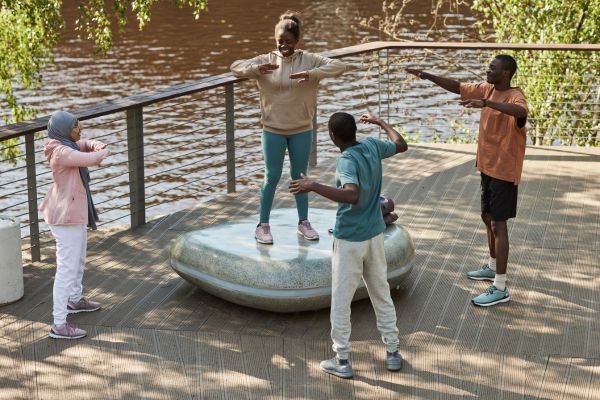
Finding The Right Pace: We want to position physical activity as a solution to a lot of the different things that the nation is facing, whether that be mental health or creating a positive space of belonging.
I’m not one of those people in that 38 to 40 category on the edge. I have nostalgia. The issue of inactivity or that people are in general and moving less than they used to. Especially kids and teens is a big part of the work of participation. Maybe talk a little bit about that challenge and how you see that as a national charity.
In a lot of different ways, physical activity has been engineered out of our lives in a lot of different ways. Whether that be very car centric or urban centers or positive things like sports and recreation. It has been inaccessible due to high costs or travel or things like that. We started to see these elements. It’s more difficult to access physical activity.
There’s not one answer to this, but we want to create behavior change. How do we then support people? The answer is always community. How do we support people within their communities to have the capability to present people with the opportunity to be physically active? To support people, and this is where ParticipACTION had a lot of success in terms of the motivation, too.
We want to bring physical activity and the urge for positive behavior change to the front of mind. Canadians and people are very aware that they do need to be moving more for their overall health and well-being. Also, for work productivity, to have a healthy family, to connect with friends, for all those different aspects as well.
Fostering Equity And Accessibility In Community Recreation
There’s many issues in our social profit sector that rest on a balance between the public health case or the improvement of the country, the betterment of the country. This idea that this is willpower. People should just do this. Sometimes public health messaging can come across as a bit finger-waggy, a bit of, “You know what you should do.” People are like, “You should be quiet, is what should happen. I’m not listening to you.” How do you approach that motivation without scolding? How do you find that balance at ParticipACTION?
We need a lens of equity as we approach these spaces. It’s very unrealistic and to be honest, short-sighted if we think that everybody has the same opportunity to be physically active than everybody else. What we’re seeing is we see a widening gap with people that have more money. They’re also healthier. They’re also more active. They also have more, in terms of our space, like sport, recreation opportunities and those sorts of things.
We have to bring this as a place of equity. I always love bringing this example up because this is sometimes a divisive conversation within urban centers. The aspect of bike lanes or active transportation lanes. This is not the aspect of how we get more people to and from on bikes. This is a place of accessibility. Not everybody can afford to have a car, but we do need to build infrastructure within our cities so everybody can move around.
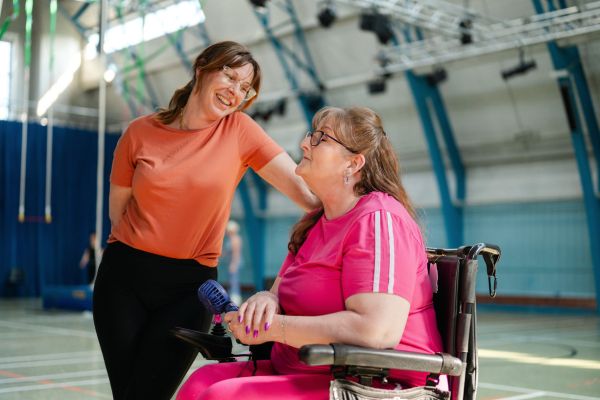
Finding The Right Pace: We need a lens of equity as we approach these spaces. It’s very unrealistic and to be honest, short-sighted if we think that everybody has the same opportunity to be physically active than everybody else.
Those are the initiatives. We can start with equity. The result is increased physical activity. Not everybody has the same opportunity, especially in a sports participation space. We’ve started to acknowledge that. I say, positively, we’re shifting the needle. We’ve seen a social shift to say, “This needs to be for all Canadians and we need to get there together.”
How is ParticipACTION showing up in that equity conversation of making access to physical activity and organized sport more available to more Canadians?
Whatever the problem, community is the answer. It’s very much relevant to that in a social profit sector, but we do try to resource and support the communities that are providing physical activity opportunities. We just finished our seventh annual participation community challenge presented by Novo Nordisk.
We funded up to 600 groups across the country so they could activate accessible, free, barrier-free physical activity opportunities for their community members. Besides being in a room where people are endeared to business action, this has been my favorite part of the job. It’s to see and hear some of the stories that people can do with $1,000. Sometimes, it doesn’t take that much to try to present some intentional opportunities for people to be physically active.
I’m curious. What was an example of some of the more creative ideas that you saw during the challenge?
Everything. I’ll say the mainstream ones like pickleball or different sport-based ones. You see groups that are creating community games of tag. You see scavenger hunts. There was a hide-and-seek example. Anything that can start to convene and bring the community together to then be physically active. The walking clubs and the social run clubs. All these things are exploding in a positive way. Each community is different. Each community will come up with their own solution.
In those examples, there’s an element of play that’s coming to the forefront and bringing people in. That’s lowering the barriers to making it easier accessible for people to come out and be a part of it. Who won?
Whatever the problem, community is the answer. Share on XQuebec City.
What did they do in Quebec City?
The municipality had a lot of different non-profit groups working on it, which is the greatest success, but they drove a positive leadership. Quebec City’s been great for a long time within the challenge, but also within each province and territory. There’s also provincial and territorial winners as well. We’ve had Hay River Northwest Territories in previous years. Red Deer Alberta has won in previous years. It is the community taking a champion role and making sure that this is intentional. The word value comes up a lot. It’s like, are we valuing physical activity? It’s not just something that happens on the side. It’s not cute or fluffy. It’s foundational to having a healthy city and a healthy community.
The analogy I would give is libraries and literacy. We value literacy and everybody should have access to literacy. There’s libraries that are free in every single community. What the community challenge does is it shifts that space to say, “Everybody has to have access to physical activity and we’re going to support it. Whether we resource it, but we’re going to be intentional by including everybody.” Quebec City did a great job of that in 2026.
Congratulations to Quebec City. This very much in an apolitical way, the Prime Minister very much is active. We’ve seen more of the current prime minister’s knees than of anybody, any other prime minister we’ve ever had in Canada, with all of the runs that he does, and he’s out and active. Does that leadership play a role in supporting that message of getting out and being active?
I think so, and those are good examples. As we’ve positively moved within understanding the value and power of physical activity, for us to see that 30 years ago would have been pretty rare. It shows an active strong leader. It shows a healthy leader. It shows us to lead by example. I know in Holland, the prime minister would show up. He would be on a bike and he would just show up to meetings. He was setting an example within his country.
That bike travel was the way that we’re going to move around our country. That leadership is important. Canada is moving in a positive direction by saying sport and physical activity and recreation are nation building tools. We need to be investing in them to make sure that everybody has an opportunity to be involved.
Canada is moving in a positive direction by saying sport and physical activity and recreation are nation building tools. We need to be investing in them to make sure that everybody has an opportunity to be involved. Share on XThat wind at your back that this is a nation building activity that sport and activity are going to play that is going to play that role is encouraging. How do you, your board and your team translate that support or that wind into action in meeting the purpose of your organization?
We have a bit of momentum with some of these statements being provided by leadership, which is absolutely wonderful. I also say that we have a social shift. We’re starting to understand the importance of it. We’re starting to understand the importance of outdoor play and being in an outdoor environment and how that is important for us. Very often within a social profit sector, we have these problems or wicked problems. We try to address them with 6 to 12 month project grants or aspects like that.
We’re trying to capitalize on the opportunity with some of the leadership and some of the investments that we’re seeing to say, “This needs long term sustainable investments for us to see the behavior change that we want to see.” The two examples I’ll give are recycling and also tobacco cessation. Tobacco cessation was a major public health priority within Canada. We didn’t try to address that with a six-month grant. We addressed it with policy. We addressed it with taxation, with public education, and by convening the social profit sector together so they could collectively address this issue.
That’s what we’re trying to do on physical activity. We’re trying to take this momentum and work on a policy level. Also, work at a community level and an investment level to say, “This is going to take a long-term sustainable investment,” to make change. It’s much like it’s taken a long time for us to engineer physical activity out of our lives. Whether that be within our work or also now that we’re seeing within our play. We’re taking a long-term investment to it, but we want to start to build that foundation now where we have some momentum.
Driving Collective Action Across A Fractious Sport Sector
It’s showing some early dividends and a lot of potential there. In my travels in our social profit sector, one of the things I’ve noticed, and I won’t ask you to comment on what I’m about to say. You can pretend that I didn’t say it. The sport sector is fractious, both within the individual organizations and then amongst them. It is a sector in that everybody’s dealing with a sport but they rarely view themselves as part of a larger whole.
ParticipACTION has an umbrella effect by design. That all activity is good. Let’s get people that support it. You position the organization in our conversation and in another conversation we’ve had as a convener around activity and pulling community together, pulling organizations together. What do you see as an opportunity to coordinate and bring together all of the organizations or many of the organizations that are advocating, whether it’s a particular sport or sport broadly across the country?
The important piece is all these organizations want participation. Can ParticipACTION play a role in supporting participation of Canadians within sport? Yes. Sometimes an individual sport would have an individual priority there. We could all come together collectively to say, “How do we increase the participation of Canadians in these positive activities?” We’ll use soccer as an example because it was in front of us and on our TV screens.
As much as soccer is a very powerful place and tool to motivate and create healthy Canadians. It’s the volunteerism that would happen within the communities around hosting soccer. It’s the participation of players, coaches, officials and all those different things. We have to look at this as an opportunity and hopefully, ParticipACTION can play that convening role to say, “There’s so many different elements that we need to support participation.” Whether it be pickleball or soccer or just playing in the playground.
We have to create an opportunity for everybody and we want to bring everybody to that collective conversation. On our role in terms of maybe our brand, our familiarity that people have with ParticipACTION, people gravitate to that. Which has been a wonderful, positive thing that I’ve seen, but something that we want to capitalize on.
By the way, very diplomatic answer to a very undiplomatic question. Full points to you, Brian.
I’m eleven months in.
How are you going to get these people that argue all the time to be on the same page? “We’re going to focus on what works and keep moving forward.” Fair enough. I want to pivot a little bit to talk a little bit about you and your background, because I was sharing with one of our colleagues here at The Discovery Group, “We’re going to get to work with ParticipACTION. This is so cool.”
Transitioning Into The Dream Job: From Regional To National CEO
Her comment was, “How do you get that job? How do you get to be the CEO of ParticipACTION?” Physical activity has been a part of you from your bio your entire life. You were with Ever Active schools for about fifteen years before coming into the CEO role here at ParticipACTION. What have you seen in your career that continues to motivate you around this issue of physical activity?
We’re incomplete. We’re not done yet. That’s been a great motivator. It’s the power of physical activity and what it can do around health and well-being and wellness and bringing people together through community, creating a space of belonging. It’s all those different things. You mentioned Ever Active schools. That was definitely around child and youth well-being, which was a focus of my early work and looking at the schools and environment to influence wellness. That was a key piece of my work.
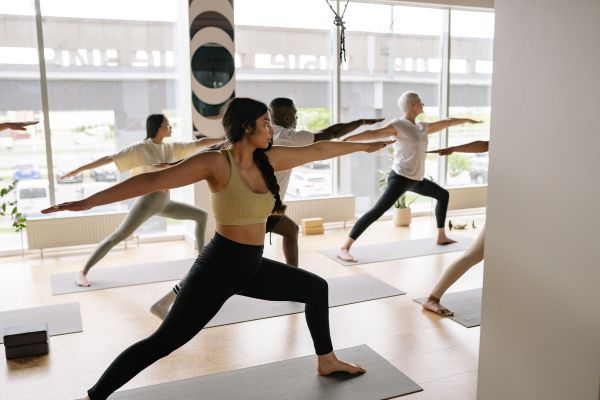
Finding The Right Pace: We’re incomplete. We’re not done yet. That’s been a great motivator. It’s the power of physical activity and what it can do around health, well-being, and wellness and bringing people together through community, creating a space of belonging.
We’re seeing this expanded definition and to be honest, a need. A need for things such as sport, physical activity, recreation, but a need for very positive things such as ParticipACTION. I’m motivated by what that can do to Canadians. To get the job ParticipACTION was, I said this at Ever Active schools because I’m passionate towards this work. It was a dream job. ParticipACTION is a dream job. When it came up, it had to be something like that for me to leave Ever Active. It’s been an absolute joy to meet people that are as passionate as I’m in terms of an incredible team in a board. It’s been such a wonderful learning opportunity for me. I’m so glad I took the leap.
You get this job at this iconic Canadian organization. You’re coming in as the CEO, and new to the organization. I’m sure you’re very familiar with the organization. What was that first day like when you put your hand on the door and pulled it open for that first time in September of 2025?
Lots of learning, for sure. One thing that I learned about ParticipACTION and, to be honest, in terms of personal reflection. Being in a big Canadian charity in Toronto, is different from being in a medium-sized charity in Alberta. That was everything in terms of board members, office, and team members. People came from different backgrounds. That was a lot of learning.
The one thing that I have felt ever since taking the position is I get to represent ParticipACTION. That’s been a wonderful opportunity to hear how people want to connect with ParticipACTION. Sometimes they don’t know the answer, but they’re so endeared to the brand and the charity. We can navigate through. Maybe through lunch or a walk. We’ll navigate through how these groups can work together to support our broader issue in terms of supporting Canadians.
That’s great. The first day you jumped in. When you sit in the chair, what do you think? What was that first day like?
From the start, I’ve said, “How do we connect with Canadians?” I’ve talked about reaching younger Canadians, but in terms of connecting to where people want to support and something that they are hopeful for and something that means something to them. I’ve thought about how we can support that. We have a few different programs that we’re doing now, but I want to bring that to a broader forefront of Canadians. We’ve done an amazing job of connecting with Canadians through our time and I’m asking the question from day one.
Finding The Right Pace And Embracing Executive Grace
You said at the outset, you needed lots to learn and lots to listen to. A lot of our readers are people that are either very new into their ED or CEO path or wanting to be in that role in the next number of years. If you could go back to two days before you started in September of 2025. What advice would you give yourself having had this year in the role?
The word pace comes to mind. Maybe it’s a running analogy as well. One, a lot of people give you a lot of advice. You take advice and sometimes the advice doesn’t agree with each other. I wanted to hit the right pace. The former CEO had been there eighteen years and has done wonderful work. I knew that my work would complement that, but also my work would start to set a new direction. I wanted to set the right pace for setting up some new activities.
The fear is that you’ve gone too fast, but also there can be a fear that you go too slow. I would give myself the advice to say, “Always have that cadence check of how fast we are moving. Is the whole team moving with us? Is everybody seeing the same North Star?” To be very cautious of the pace. I also tell myself to have a bit of grace. It’s a big charity. It meant a lot to Canadians, but with that, it’s had a lot of history. Give yourself time to understand and absorb that history.

Finding The Right Pace: Always have that cadence check of how fast we are moving. Is the whole team moving with us? Is everybody seeing the same North Star? To be very cautious of the pace.
I’m a person that if I read the article the first time, it doesn’t sit with me if I read it the third time. A lot of the things within ParticipACTION, I needed to read three times or I needed to review it three times to maybe get a feel for what we were thinking, what our funders were thinking, and how that was connected to Canadians. I was trying to go beyond the cover page on a few different pieces. With that, it takes time but to give myself a little bit of grace through that time and through those first few months. I’m still in it. I’m still learning and that’s part of it. The more time I spend with my team, the more I get a feel for it, too.
That is excellent advice, that pace check. We did a project for an organization where they were hiring an outside CEO. There had been some tumult in the organization to be diplomatic. We did an interview with all of the board members. It’s just checking how the board was going to advise the new CEO and support the new CEO so they’re going to move through this transition. Similar to what you said about advice. The board was even split like, “Don’t hesitate. Make decisions. Be bold. Stride.”
About the other almost exactly the same number of board members were, “Don’t make decisions too quickly. Listen. Take your time.” One of the joys of the work that I get to do with clients was to share with the board, “This is the advice you want to give this very capable new CEO. Half of you are saying this and the other half of you are saying the exact opposite.” They were surprised, that’s what it was and I said, “It’s healthy to have this tension, but you need to be aware that not everyone around the board table is sharing this sense of pace.”
You need to be mindful of how you’re advising the CEO and how you’re evaluating the CEO in her first year. It was a healthy conversation about pace and where it came from. It’s not that it changed everyone’s mind, like, “Now I see the middle path is the better path.” There was a space to have that conversation at that pace. Your advice to yourself is a good example.
As the leader of the organization, you need to be mindful of that with your team and with your board. I don’t know what your breakdown would be around your board table, but I would imagine it’s not 100% one way or the other. That incredible advice and it’s something that we see quite a lot in the sector for leaders is trying to manage the expectations.
Board members come in, and I’ve been a board member. The board members are at a different stage of pace, too. If you’re a new board member, some would come in to say a lot of different ideas on what they want to do, and some would come into that place of learning, too. It’s so important to connect with people one-on-one. I said this in my previous role, too. Sometimes the best conversations I’ve had with board members are over lunch. It’s not at the board meeting. Board members are so valuable in terms of they come from so much different experience.
It's so important to connect with people one-on-one. Sometimes the best conversations with board members are over lunch. It's not at the board meeting. Share on XWithin our team, everybody has a lens and understanding of physical activity. Sometimes, that’s not at the board level. They come in with different expertise from their different work, whether it be government relations or strategy or those different areas. I’ve learned a lot from that. Maybe to my example of a Toronto-based board. We’ve been incredibly fortunate to get some very highly capable, wonderful people putting their hand up to volunteer for this national charity. I won’t lose sight of that. They’re giving ParticipACTION their time. We’re grateful for their volunteerism.
Mobilizing Families And Reclaiming The Power Of Play
If anyone reading goes on the website and checks out the board, it’s impressive. Having had the chance to work with the board a little bit, they’re impressively engaged in the work of ParticipACTION. Brian, one of the things that I want to come back to, because you mentioned it earlier and I underlined it in my notes here.
You talked about a new nostalgia and you’ve come back to the community. Looking forward, how are you connected going to connect that idea of that nostalgia for ParticipACTION into something new for that new generation? For those 38 and younger and hold on to that iconic national positioning that you have.
Those 38 plus are also parents now, too. There is such a powerful way to reach families. We want family mobilization with physical activity. Physical activity will be a lasting sustainable behavior change, if it is done by family. We’re trying to think how we could reach those younger parents that may know us. Maybe we need to reintroduce ourselves through public education campaigns by being relevant in their community with different information and education that we could provide by different digital platforms. People are getting their information and they’re also getting their motivation very differently now.
How can we reach those parents to then be wonderful enablers of physical activity for their family? Whether that be sport and participating in sport as a family or enabling the family to mobilize themselves around walks in their neighborhood or active transportation. All those different very small nudges that can increase physical activity. We’re trying to work on family mobilization. One key issue that we are focused on, and this is a growing issue across our country is, how do we get people to connect and enjoy the outdoors as well?
We can work with different environments to create outdoor play. Whether that be schools or whether that be within the community. How do we support families in being physically active? We want to be a place of both connection for that, but also education and the knowledge for people to be able to live that life.
That’s wonderful. Thank you for sharing that. As we come to the end of our conversation, I get to ask my favorite question. What are you looking forward to?
I knew this question was coming, so I’ll give you some kudos. I am a regular audience. Getting ready for this job and job opportunity, I would tune in to Discovery Group and a few of the people that you had on. Kudos to you and you bring a wonderful human approach to this. Also, you have predictability that this question is coming. I very much appreciate it.
The thing I am looking forward to is continuing to introduce, reintroduce and connect ParticipACTION to a lot of different groups across Canada. it’s a wonderful opportunity. Sometimes I do pinch myself and the honor and the privilege I have to represent the organization, but we do want to mobilize and reach out to those additional partners so we can have those conversations.
There’s a lot of issues in terms of the social profit sector, whether it be physical inactivity, or overall health and well-being. We want to make sure that we’re bringing a platform, whether it be more physical events together, so people can connect, meet and see ParticipACTION. Also, we can raise the issue of physical activity and all the positive things that come from it with these follow-up groups. I’m looking forward to connecting and bringing that conversation together a lot more as I move into year two.
Brian, thank you so much for the work that you do, and I think our audience understands that grace and that gentleness that you bring to the work. Also, that determination and that insistence to be moving things forward. It has been a real privilege to get to know you and your team over the last number of months. I’m happy to be able to share some of that energy, hope and abundance with our audience. Thank you for being on the show.
Thanks. Thanks for the work you do.