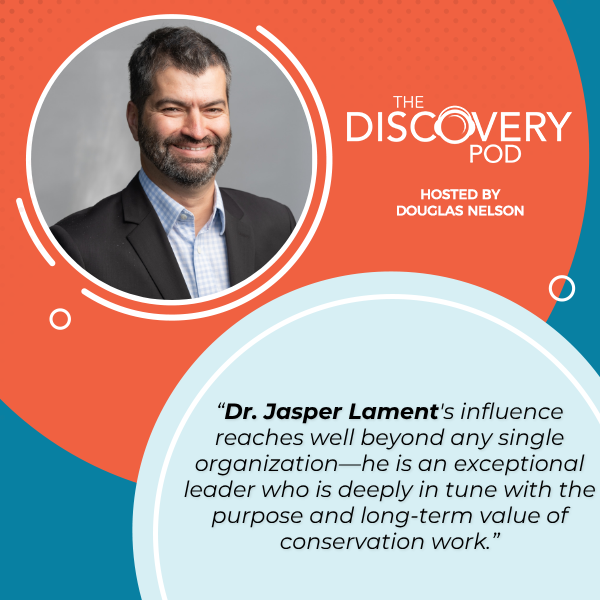
British Columbia is home to over 50,000 species, yet competing land demands make preserving these critical habitats an urgent challenge. As CEO of The Nature Trust of British Columbia, Dr. Jasper Lament leads strategic efforts to acquire, restore, and protect ecologically sensitive land across the province forever. Host Douglas Nelson sits down with Dr. Jasper Lament to explore how science-based decision-making, meaningful partnerships with First Nations communities, and sustainable land management endowments ensure conservation impact endures for generations. They also discuss the evolution of board governance in growing social profit organizations and the delicate balance between urgent action and perpetual stewardship.
—
Listen to the podcast here
Balancing Priorities & Sustainability With Dr. Jasper Lament, CEO Of The Nature Trust Of BC
Preserving British Columbia’s Ecological Legacy
I’m delighted to welcome Dr. Jasper Lament, CEO of The Nature Trust of British Columbia. Jasper has spent his career working to conserve the high value biodiversity that makes BC so remarkable. His influence reaches well beyond any single organization, serving two terms on the Minister’s Wildlife Advisory Council, advising the BC government directly on policy and strategy, and he sits on the North American Wetlands Conservation Council here in Canada. That just scratches the surface of what he’s done for conservation.
In this episode, he talks about the power of acting now to preserve forever, the importance of working with First Nations communities for conserving and redeveloping and restoring wetlands and grasslands across the province, how his board has evolved to meet the rising complexity of the organization as they have grown from a small dedicated team to a more sophisticated, much larger social profit organization.
Jasper also tells you his new favorite bird or his current favorite bird. We discuss a number of things related to the organization, including the seagulls that nest outside of The Discovery Group offices here in North Vancouver. In addition to those wonderful stories, this is an excellent example of a leader so in tune with the purpose of the organization and the long-term value of the work that he and his colleagues do every day. Please enjoy my conversation with Dr. Jasper Lament.
—
Welcome, Jasper.
Thanks. I appreciate the invitation to join Canada’s leading podcast in the social profit space.
I’m glad that the adverts and the taglines got to you in advance of our recording. I heard our colleague Christophe Clodius work closely with you and your organization. We have a good sense of the great work that happens at The Nature Trust of BC. For our readers who maybe don’t know, tell us a little bit about The Nature Trust of BC and who you serve.
The Nature Trust of BC is a leading land conservation organization that works only in British Columbia. What we do is we buy, protect, steward, and restore ecosystems to provide habitat for wildlife and to protect the incredible biodiversity of British Columbia.
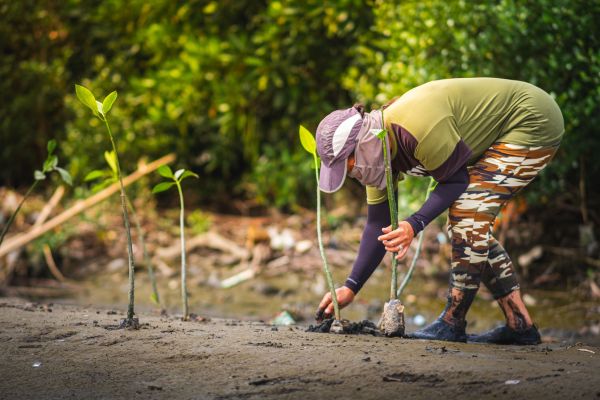
Nature Trust Of British Columbia: What we do is we buy, protect, steward, and restore ecosystems to provide habitat for wildlife and to protect the incredible biodiversity of British Columbia.
One of the things getting ready for the episode that blew me away was the sheer amount of land that you’ve been able to preserve in the 55 years the organization’s been around. How much land have you been able to preserve, Jasper?
The Nature Trust of BC has protected 600 conservation areas, totaling 185,000 acres. What does that mean? That’s about 185 Stanley Parks. It’s a pretty incredible portfolio of ecologically important land.
It is remarkable in the scope and the scale of the land. I’m also interested to learn more about the motivation behind it. One of the things readers and most people probably don’t know is you’re buying this land at market prices. It is not found. You’re not getting a deal. You’re buying this land. Take us through how you approached the opportunity or how you approach an opportunity to purchase land and put it into your preservation cycle.
British Columbia is an incredible place for biodiversity. We have over 50,000 species. We have the highest biodiversity of any province in Canada. Interestingly, the biodiversity is concentrated where people most want to live. The beautiful coastline of BC, the river valleys, the places where our cities have been built. There’s a bit of competition for space between people and the 50,000 species that also call BC Home.
What we have to do is identify where the biodiversity is concentrated, the areas that are most ecologically important, and the places where NTBC can make the most difference by purchasing, protecting, restoring, and stewarding these ecologically important areas. Unfortunately, money is finite and the land values in BC are constantly increasing.
No matter how much money we raise, there are always far more opportunities to purchase and protect land than there are funds available. We have to use the best available science to triage or to prioritize the most ecologically important places so that we can constantly build our impact on protecting ecosystems, on protecting the biodiversity of BC, by taking advantage of the most impactful opportunities that we have.
No matter how much money we raise, there are always far more opportunities to purchase and protect land than there are funds available. Share on XI’m interested to hear how the conversation goes with donors or funders. They probably have clear ideas about what you should buy or how you should buy or how you get a deal. Probably, I would imagine many of the donors you’re trying to agree with the preservation and the stewardship component of it. The methodology, the science that informs the land that you’re purchasing and that you’re seeking to purchase, is a bit of the secret sauce. How do you explain that science connection to the land when you’re talking to potential donors or potential funders?
Science-Driven Prioritization In Land Acquisition
We use some pretty powerful science tools to help us compare any property in BC to the 600 parcels of land that NTBC has already protected. As you mentioned at the start of the episode, we’ve been doing this work for 55 years. What we now can do is evaluate any property in the context of those 600 properties that have already been protected and compare them on a set of different ecological criteria.
We always want to continuously improve that portfolio of conservation lands by adding above average lands to that portfolio so that we’re just continuously building a more and more ecologically important portfolio of conservation lands. The actual tool that we use is called a relative ecological assessment. I’m not even going to attempt to explain that. All the different data layers that go into it.
Speaking on behalf of our readers, thank you, Jasper. We’ll take it on as an article of faith that science works.
I appreciate that. It helps us to sort out what the best of the best opportunities are, and we want to make sure that our donors and our funding partners get the most ecological impact for their financial investment. You mentioned that we pay fair market value for the lands that we acquire. From time to time, landowners will offer to donate land to us. Sometimes, we accept those land donations.
More often, we can’t accept them. The reason is that even land that is donated to us at no cost becomes a permanent cost to steward that land. We have to evaluate land donations under the same criteria as land purchases. A five-acre parcel of land that’s surrounded by an urban area is not going to provide the level of ecological value that 5,000-acre property of intact grasslands and wild ones might provide. That five-acre parcel in an urban area could be extremely expensive to maintain for the rest of time.
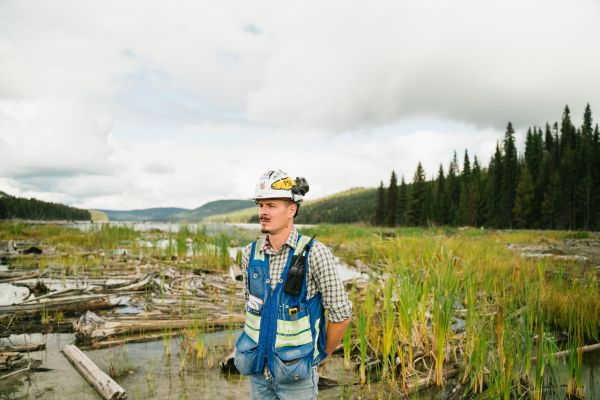
Nature Trust Of British Columbia: Even land that is donated to us at no cost becomes a permanent cost to steward that land. We have to evaluate land donations under the same criteria as land purchases.
We are in the business of protecting land forever, so we have to think about the long term of purchasing and protecting land so that we have a portfolio that we can do a great job of caring for. One of the harder conversations to have is to tell someone who’s attached to their land that, “It doesn’t meet the criteria for adding it to our conservation land portfolio.” It’s hard to disappoint people who have a passion for their land and a passion for protecting it, that maybe it’s not the right fit for NTBC.
What are some of the questions that donors or potential funders ask you as the CEO when they’re considering joining NTBC and purchasing a piece of land?
One of the questions we’re getting more is, how are you going to fund stewarding the land? Once you protect it, and in 2025, The Nature Trust of BC purchased and protected $20 million worth of land, and in 2024, we did the same thing. That’s $40 million worth of land that we’ve added. Donors are starting to say, “How are you going to ensure that you have enough resources to take care of?” That is a significant investment of donor dollars, partner dollars.
Being fiscally responsible is one of the organization’s hallmarks and something that we’ve done for 55 years. One of the things we do is to ensure that we have what we call a land management endowment so that we have a permanent source of revenue to support that important work to care for the land. People want to know that if they invest in purchasing land for conservation, that the dollars will be there forever to care for it.
Bridging Indigenous Knowledge And Western Science
I’m curious to hear, acquiring land in British Columbia, an ecologically sensitive land in British Columbia, doesn’t sound like the most politics-free way to spend your time. With relationships with indigenous communities and with different levels of government, how do you approach that as NTBC in what I’m sure are some very sensitive and very necessary conversations?
Building meaningful, successful, beneficial, mutually beneficial relationships with Indigenous communities is now essential for the future of land conservation in BC. That’s a key focus. It’s one of our strategic comparatives in our current strategic plan. We are working hard to build relationships that can allow us to find ways to deliver on our mission, which is to protect ecologically important places in BC, and bring together our work with the work of First Nations across BC to advance their own work.
Building meaningful, successful, and mutually beneficial relationships with Indigenous communities is now essential for the future of land conservation in BC. Share on XBring their understanding of the traditional ecological knowledge to the table, and braid those two sources of information, Western science, traditional ecological knowledge, into protecting and restoring ecosystems. A great example is NTBC’s work with Cowichan Tribes on Vancouver Island. Together, we are working to deliver the largest estuarine restoration project on Vancouver Island. It’s an ambitious project to bring back some of the incredible estuary habitat that helps sustain the Cowichan tribes for millennia.
They had these amazing indigenous food systems where they cultivated plants to support their needs. We are working with them to bring that back. It’s a powerful story of reconciliation. We are grateful for the opportunity to work with them to bring back the habitat, to bring back the food plants that have sustained Cowichan tribes since time immemorial. It’s powerful, exciting work.
That’s very cool. Such a great example, as you say, of reconciliation and the work done well. In our work here at The Discovery Group, we have worked with a number of environmental organizations, both here in British Columbia and across the country. Folks are often saying that the healthcare space is pretty crowded, but the environment and ecological space is also pretty crowded. How do you, as the CEO, make the distinction of the work that your organization does in an otherwise fairly crowded marketplace?
There’s a lot of important work to be done in the environmental space. One of the things that has helped The Nature Trust of BC be successful for 55 years is to be a specialist rather than a generalist. NTBC’s focus is on purchasing private land that’s ecologically important on stewarding it, and where needed, restoring those ecosystems. A lot of other work takes place involving environmental education, say environmental policy, and environmental advocacy.
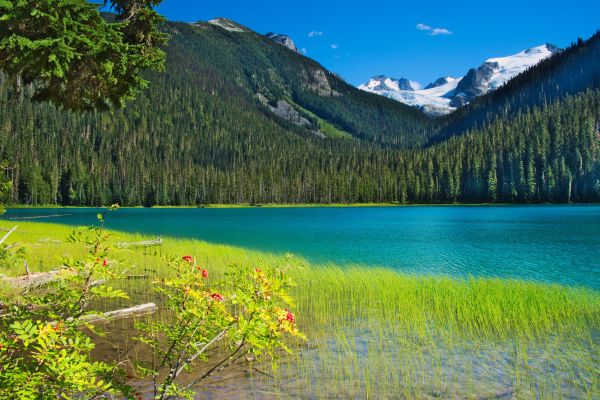
Nature Trust Of British Columbia: One of the things that has helped the Nature Trust of BC be successful for 55 years is to be a specialist rather than a generalist.
Those are all things that our society needs but that’s not our area of focus. It’s not where our expertise lies. We focus on what we do best, which is purchasing, restoring, and stewarding these ecologically important lands. People recognize that we don’t try to be all things to all people, and that we have a track record that we built over time of doing that work well. We always have lots to learn and always opportunities for improvement. Being focused on a relatively narrow mission within the broad environmental space has been key to our success to date.
I perceive maybe it’s the news sources I’m listening to, but there has been a shift in Canada and certainly in North America in the last couple of years. Maybe some people say it’s a pendulum swinging back, but they move away from the preeminence of the environment. The transition from fossil fuels to renewable energy. The prominence of environmental causes seems under pressure. Is that just me listening to too much CBC or is that something you’re seeing too?
Nature-Based Solutions For Climate Resilience
The dialogue is shifting a bit around the role of the environment and the economy. That shift towards greater awareness of the biodiversity crisis and climate change is permanent. People might not agree on what the best approach is to address climate change and biodiversity loss, but the vast majority of Canadians agree that these are significant challenges facing society and they want to see tangible solutions. When conservation delivers tangible solutions to both biodiversity loss and climate change at the same time.
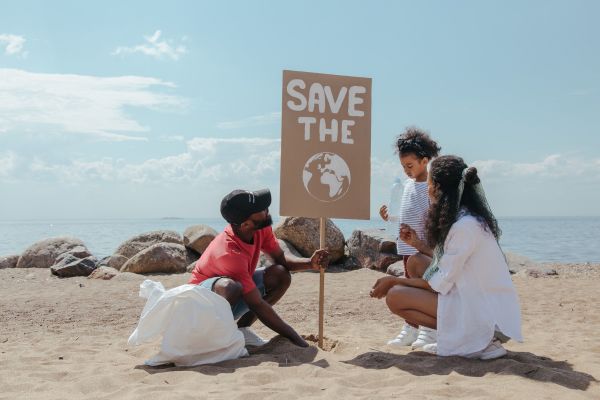
Nature Trust Of British Columbia: The dialogue is shifting a bit around the role of the environment and the economy. But that shift towards greater awareness of the biodiversity crisis and climate change is permanent.
We have amazing tools to deliver resilience, resilience for coastal communities, resilience for estuaries, resilience for grasslands and forested ecosystems. Resilience is something that we need in BC and beyond going forward. I’ll leave it to others to debate fossil fuel policy and those issues. What I can tell people is that finding equally important grasslands, restoring them and taking care of them forever is a powerful nature-based solution to climate change. Those grasslands have incredible amounts of carbon stored in their roots and in the plants themselves and in the thousands of species that call those grasslands home.
Part of the solution to addressing climate change and biodiversity loss is to make sure that we keep those incredible grasslands, those amazing wetlands, and magnificent forests that make BC one of the greatest places in the world to live. There’s no alternative to keeping BC’s forests, grasslands, and wetlands as part of our future. We need those. We need them to keep the biodiversity of BC strong. We need them to have a resilient landscape that will help us navigate into the future and continue to make this an amazing place to call home.
One of the things that’s remarkable to me in learning about your organization is, as you just did in your answer there, coming back to the permanence of the solution. Preserving forever, and that concept is very appealing. It has a finality to it that so few social profit organizations can offer when their work is done well. At the same time, there is the urgency not just of the response to the environmental crisis and global warming and all of those things.
It’s also urgent that this land is now for sale. How do you balance that act now feeling of, “We’ve got to put the money together to save this park and this piece of land near Parksville, or we’ve got to expand the couch and tribe partnership or the great work you’re doing in the Kootenai River area?” That’s immediate. We got to act now, act now forever. How do you balance those two timelines on any given Wednesday?
It’s an ongoing challenge. An argument can be made for, “The crisis is now, we need to go all in on solutions.” Conservation is a long game and saving land from a threat that exists but not having a plan and not having the resources to care for it 20 or 40 years from now, isn’t a solution. Having that right balance between act now versus care forever is one of the hallmarks of an organization that’s built for resilience, that’s built for permanent protection.
Conservation is really a long game. Saving land today from a threat that exists today but not having a plan and the resources to care for it 20 to 40 years from now isn't really a solution. Share on XThat’s something that The Nature Trust of BC has done by having, from the very beginning, a mix of business and science leaders on our board. My background is in Science. I have a PhD in Biology. I am incredibly passionate about species and ecosystems. I was the kid that brought tadpoles and garter snakes home to my mom and wanted to raise juvenile salmon in the basement and all of those things. I’m definitely from the science side of things.
My background is certainly not in finance, but we have strong finance leaders on our board who are always looking to see if we are going to be fiscally resilient into the future. Can we afford this investment? Can we care for this land into the future? Having that right balance, that right risk matrix to make sure that we can act now and steward forever. Having that mix of skills on the board, both business and science, ensures that we make sound investments in land and sound financial investments to be able to, to care for that client. That’s one of the things that I love about the organization is to have that dual expertise and that balance between now and forever.
I liked that. I wanted to transition our conversation. You did it very artfully there. Your background as a biologist. You’ve been CEO for a number of years now. What have you learned as a scientist coming into the CEO role? What has been the biggest learning curve for you?
Navigating Leadership And Organizational Growth
One of the challenges is to scale up an organization through time as it grows and build new systems to deliver similar impact as the organization grows over time. With this 55-year track record, we are continuously growing our portfolio of conservation lands, which means that we need to grow our team over time. When I started, we had just over a dozen full-time staff. Since then, we have added a huge amount of land to the portfolio. We’ve had to scale up, and that old saying, “What got us here isn’t going to get us there,” has been applicable.
Is there a moment in time where, “What used to work isn’t working anymore,” or we need to shift? Was there a walk that you were taking or a moment in a meeting? You’re like, “If we want things to change?” Was there a eureka moment?
I’d say that in our old office, it was a pretty traditional office, and our leadership team would bump into each other at the photocopier. Some of your readers probably don’t remember what a photocopier was. Anyhow, the informal conversations around the water cooler or the coffee machine were key to keeping the organization operating effectively. That’s not the place that we are anymore.
Having the right balance between act now versus care forever is really one of the hallmarks of an organization that's built for resilience, that's built for permanent protection. Share on XAs the organization has grown, those informal check-ins, they’re still valuable, but it takes a more disciplined, more formal approach to teamwork than we had before. It’s a continual growth exercise to figure out, “How do we continue to deliver results with these new responsibilities and new complexities?” There’s been a lot of change in what society expects from organizations that are in the land conservation space. The organization is still the same organization but, on the other hand, the organization has changed a lot and the challenges have evolved significantly.
One of the things I admire so much about leaders who’ve been in the role for a decade plus, is how they have changed their relationship with their board. The comfort of having the chance to work with boards with leaders with various different tenures. One of the things that stands out when the Ceo has been in place for more than ten years is that the conversation is often more comfortable.
The roles are clear, and there is a more of a conversational tone to the way the board works. Not in every case, but in general that the boards are more effective in that advisor role as you described the financial advice and acumen that you’ve relied on your board for. How has your relationship or the kinds of conversations you’re having with your board changed if you go back to your early days to sometime in the last couple of months?
Evolving Board Governance In Social Profit Organizations
I would say one of the things that is evolving is the organization’s approach to governance. The board of a decade or two ago, operated a lot more informally and many of the procedures weren’t clearly documented. There was just a way that things were being done and it served the organization well for a long period of time. Now there’s a heightened focus on things like board governance, documentation and things like terms of reference for board committees and a new emphasis on what should the board committee be spending its time on? At least on the science side of the board, traditionally, there was a bit more of a hands-on approach by board members.
That’s evolving now into more of a governance approach, but a governance informed by science. That’s one of the ongoing transitions that’s taking place and taking a fresh look at what the meetings are focused on and how the meetings of these board committees can add value to the organization and help the organization make better decisions. Even for boards that have been high performing for a long period of time, just like I talked about the changes in how staff management systems need to evolve over time. Likewise, boards over time need to revisit how they work and where they spend their time.

Nature Trust Of British Columbia: Boards over time need to revisit how they work and where they spend their time.
You’ll get no argument from me on that. It sounds like you and your board are doing some great work there and even having the conversation about how it needs to change. Some of those conversations can be challenging. Some of them take a long time, but it is important that they’re happening. I mentioned at the outset, my colleague Christoph has had the chance to work with you and the team. I asked for advice on any questions I should ask you. He told me to be prepared to say what my favorite bird was. Let’s talk about that. Let’s get into it. It is not a species per se, but where we are, our offices are right where the C bus comes in North Vancouver.
At the top of the shed that they come in, for four years in a row, we’ve had a nest of seagulls and we’ve had the eggs to the little birdies to the fledglings and they took it. The fledglings were flying for the first time. We look out at our window and we’ve watched this for years now. There’s always three. It’s usually two that make it but all three made it. My favorite birds are the birds that we get to watch as a team grow up every year. It’s not ecologically preserving the top of the roof of the sea bus shed but it is a pretty amazing experience for us.
That’s awesome. That speaks to how people’s personal experiences with nature color their passion for nature. People love nature in the abstract, but sometimes the individuals right in front of them are what captures their imagination.
What’s your favorite bird?
I had an interesting walk around one of The Nature Trust of BC’s conservation areas called Ferguson Lake. I was with a couple of board members. One of them is Dr. Wini Kessler, who’s a renowned wildlife biologist and former professor Wildlife at UNVC. As we walked along this trail, we encountered a family of gray jays. I live down here on the South coast, so I don’t often see this species. Wini just started talking about them, and she said, “Count them.” We said, “There’s one. There’s another on that tree over there. There’s another.” She said, “There’s three, aren’t there?” I’m like, “You’re right. How did you know?
She said, “At this time of year, each successful pair will have one fledgling with them.” I said, “What happened to the rest of them?” It’s sibling rivalry, and the most dominant individual from that year’s brood will basically chase its siblings off so that it can spend the fall and winter with his parents. I thought that’s an interesting nature moment.
That’s not exactly heartwarming.
It’s not, but I do have three boys and I watch their sibling rivalries unfold from day to day. It does provide a little bit of insight into family dynamics, both human and avian.
That’s great. Jasper, I have so enjoyed our conversation and so appreciated learning more about NTBC and the great work you guys do there as an organization. As we come to the end of our conversation, what are you looking forward to?
Inspiring Perpetual Stewardship For Future Generations
I’m looking forward to seeing and experiencing the places that NTBC protects forever and sharing those experiences with my kids. I had the pleasure of visiting different parts of Vancouver Island. I took my kids to stay in some cabins that are owned by the Kwakiutl Udall First Nation. It’s just around the corner from an estuary that NTBC and its partners have worked to protect for decades.
We watch the birds. We watch the sea lions, and the salmon returning to spawn in this amazing landscape that’s been stewarded by that nation for millennia. We also got to look out over a beautiful estuary that has been protected by the work of NTBC and our conservation partners. That was an inspiring example of how we can provide these experiences for the people we see now and forever. I hope that my kids will come back and visit that special place with their kids. They’ll know that people made a difference to make sure that these incredible BC landscapes are here for the future of our province and the people that call it home.
In your answer and in our whole conversation, you keep bringing back the idea of land conservation and preservation as a very personal element. Act and for the benefit of individuals on the personal level, but also on a whole society level. I appreciate that perspective. There’s a lot of leadership lessons in that perspective that our readers can ponder. I want to thank you so much for being on the show.
Thanks a lot. You’re a leader in the social profit space. I’d encourage your readers to think about nature as being a social profit and something that we all need to consider as we make our choices going into the future to make sure that our society enjoys the benefits and the services that nature provides to all of us. We have to find a way to keep nature in our future.