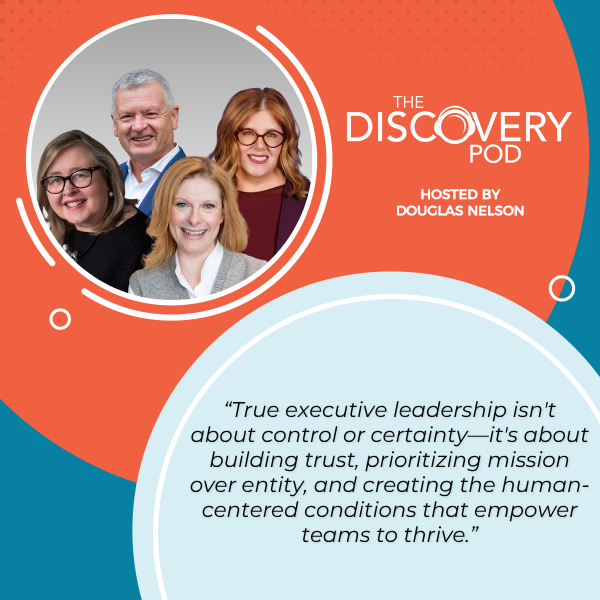
Mastering nonprofit leadership strategies requires a unique blend of emotional intelligence, adaptability, and governance expertise. In this episode, we sit down with four distinguished nonprofit CEOs—Jennifer Gillivan (IWK Foundation), Sharon Avery (Toronto Foundation), Michael McKnight (United Way of British Columbia), and Wendy Beauchesne (Alberta Cancer Foundation)—to explore how the CEO role has evolved over recent years. From navigating the complexities of post-pandemic hybrid work to building trust-based relationships with volunteer boards, these leaders share candid advice on what it truly takes to succeed. Discover the power of creating a “North Star,” the importance of strategic patience, and the art of delegating for impact in this insightful look at the future of organizational management.
—
Listen to the podcast here
The Exceptional Series: Leadership And Learnings From Jennifer Gillivan, Sharon Avery, Michael McKnight, & Wendy Beauchesne
Navigating Nonprofit Leadership And Pandemic Shifts
I’m Jennifer Gillivan. I’m the president and CEO of the IWK Foundation. IWK means Izaak Walton Killam, who was a philanthropist who helped set up the IWK Hospital, which is the number one tertiary trauma center east of Montreal. Think of SickKids. That’s our SickKids on the East Coast. It’s also 1 of only 2 hospitals in the country that has women and children combined, which is an interesting and obvious partnership.
The foundation has been in existence for over 42 years. We’re a private foundation, but we are the primary fundraising organization for the IWK. We have three main areas that we work in. We work in pediatrics and mental health for children and youth. We’re building the first mental health ecosystem of its kind in the world. We have also embarked on women’s health, which is a whole other area. We’ve been an advocate nationally and internationally for changes to women’s health to close the gap.
We are Co-owners and Founders of Canada’s Children’s Hospital Foundations, which is one of the largest funders combined in the country for pediatric medicine. We’re also members of Women’s Health Collective, which is a group of five women’s foundations that support research in women. We have something like over 1,000 researchers connected to us. It’s a big portfolio. That’s in a very quick nutshell what we do.
Question number one, “How has being the CEO of your organization changed over the last five years, and how has being a CEO changed you?” If you look back in history, every major renaissance came out of a world war or pandemic. As we were in the pandemic, I made up my mind that not only would our organization survive, but it would thrive, and that I was going to create a renaissance of our own because I wasn’t prepared for failure at all, regardless. Not knowing whether there was going to be a vaccine, I had made up my mind that that’s what we were going to do.
Over the last couple of years, the biggest changes have been societal changes, such as working from home, hybrid working, the upheaval and what that has caused, and the ramifications since the pandemic. You’re seeing what could be mental health issues. You’ve got to be more than, “Here’s our job, and this is what we do.” You’ve got to provide more, be more flexible, and be more open.
We have a total hybrid model now that we didn’t have before the pandemic. It’s all about trusting your people, having the right processes to measure the success, and then getting out of their way to get the work done. We’re more successful now than we’ve ever been. We had our most successful year in 42 years of our foundation. That’s got to tell you something.

Nonprofit Leadership Strategies: I made up my mind that not only would our organization survive, but it would thrive.
A couple of years ago, as a nonprofit, we knew about cybersecurity, but it wasn’t top of mind. Now, it’s one of the number one risks. We have in-house staff that focuses on IT, cybersecurity, risk mitigation, business continuity, and training of staff. Every couple of days, we get something we have to read because a lot of times, it’s people error that creates the cyber-attacks.
It’s a regular thing talked about at our risk committee and at our board. The level of board governance has gone way up because you’ve got a social media environment and an AI environment that can have fake news. You can have all sorts of things happen to your organization, from reputational risk all the way. Having the right kind of governance model has been another one.
We’re one of the few in the country that runs our entire team on an EOS or Entrepreneurial Operating System model. That has been a game-changer for us because we are fully integrating into that model. It’s a great operating system. The right hand can tell the left hand what’s going on. I can’t imagine us running any other way. That’s been a real game-changer. They would be the biggest ones.
How has it changed me? It has humbled me as a leader. You don’t expect to go through a pandemic. You don’t expect to deal with some of the risks that come your way, or not the obvious ones. They come at you sideways. It has taught me that. The level of patience I have to have is more. It has taught me to double down on my instincts around people, which is our whole work as people, but my own team, and making sure people are looked after and spotting things that maybe before you wouldn’t have even looked at.
I have a practice I’ve always believed in, but I have doubled down on it in the last little while. That is always looking for and scheduling time for reflection every week. You work on your business, not in your business. As a leader and a CEO, that’s probably the most critical thing you can do. It’s counterintuitive because you can always be busy, there’s always a big list to do, and there are always people to talk to and meet. Stepping away and clearing that brain is where you come in with the opportunities and the problem-solving that you need to do.
Mastering Board Governance And Transparency
Question number two, “What is something that you wish someone had told you about working with boards?” I’m glad I’m ICD certified and trained because it does help give you the credibility that you need, especially the more complex your board is. There’s a difference between nonprofit boards that are not paid, which are there out of the goodness of their heart, and paid board positions. When you’re working for and on a nonprofit board, you can only push so far. You can only ask for things so far. When you’re being paid on a board, you have a different expectation.
Also, the power of influencing board members. When you’re in a situation as I am, I’m a CEO on a board that I report to as well. It’s a hard spot to be in. You’re constantly trying to be respectful to the board members and appreciative that they’re giving their time, talents, and resources. Sometimes, they’re also donors, so it can be tricky. Also, you have to present the case. I have a style where I present the good, the bad, and the ugly. There are no surprises with me. It’s fully transparent. It can be an art and a science to do that in that environment.
I wish someone had almost laid out how complex sometimes it can be. It can be a very lonely place because you can’t go to the full board. You work for them. You’re on your own. There are the CEOs, and then you’ve got the leaders who are working for you. If you’ve also got donors, you’re on your own island. It’s being very mindful of that as you plow through the different challenges or opportunities that come your way. That would be the thing I wish somebody had told me sooner.
You work on your business, not in your business. As a leader and a CEO, that's probably the most critical thing you can do. Share on XThe final question is, “What is your best advice for a new CEO?” The first thing I would say to a new CEO is, “Do nothing. Change nothing for the first at least six months. Listen, learn, take notes, and reflect on what you took notes on.” Every leader has their own style when they come into an organization. You don’t want to rock everything. You want to rock the right things.
Having the right people around you, some of them smarter than you are, is a good sign of a good leader because no one person can have all the talent and knowledge. You want to make sure you’ve got the best in each of those key business areas and that you have the right system to be able to communicate on a regular basis without being in the weeds, but you can know deep down what’s going on in the organization. That’s why I’m a big fan of EOS because it enables you to be able to do that.
It’s about the right people, the right seats, and the right culture. It takes a good two years before you’re driving the bus. You don’t want to rock it too far. I’ve seen leaders go in and say, “I’m going to change it all.” I don’t think that’s the right move. I think you need to listen and learn. If you’re a new CEO, find sponsors, people, or organizations that you can go to where you have other leaders to learn from, lean on, and be with. It can be a very lonely place if you don’t have that. My other final one is to always take the time out every week to reflect. If you don’t do that, you’re going, and you’re not strategically working on where you want to be.
Leadership now is much more about judgment than it is about certainty and good judgment. Share on XThe thing about EOS is if you have a visionary CEO, which is what I am, and an integrator, which, in essence, is an internal CEO on the processes, it’s a fabulous marriage when you have that in an organization. It’s hard to come by, but when you have it right, you do have the best of everything. Everybody wants to strive for what’s possible, which is the visionary piece.
You also have to have someone who can help integrate that and say, “Is this doable? It might be a great idea, but is it the right decision for now at this time in the organization?” It’s the right people smarter than you. Don’t do anything too soon. Listen and learn. Don’t throw the baby in the bath water out too quickly. Have the right system with the right people to then build the culture and the teams. Your first team or your senior team is key.
Redefining CEO Judgment And Organizational Culture
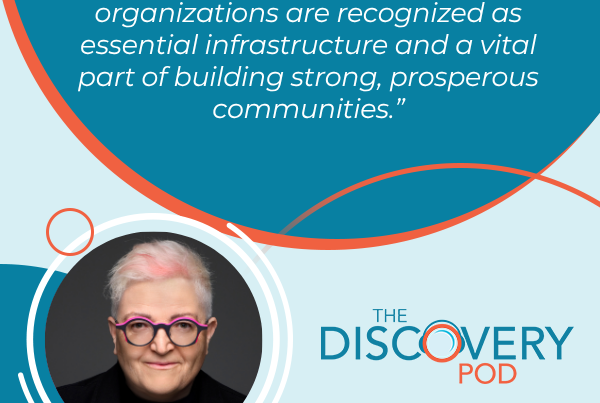
I’m Sharon Avery. I am the CEO at Toronto Foundation. I’ve been there for ten years. I can’t even believe that. It’s my first CEO job. Before that, I was at UNICEF Canada as the Chief Development Officer. It was a fundraiser for 25 years. I worked in a number of places. I am happy to be part of this show on leadership. Question one. “How has being the CEO of your organization changed over the last five years, and how has being a CEO changed you?”
A couple of years ago, I thought that my job was about making good decisions, but now, probably, my job is about helping other people make good decisions. I’m not always good at helping other people make good decisions. I think I’m good at it, but I’m more prone to making decisions. The thing I’ve learned the most and the thing that has changed the most over the last couple of years is that leadership now is much more about judgment than it is about certainty and good judgment.
If you are too certain as a leader, you’re going to fall behind. With the amount of change that is happening in the world and the amount of volatility, we plan differently than we used to. There are very few right answers anymore. Sometimes, people want perfect answers. When I talk about judgment versus certainty, sometimes, you have to act, and you have to act quickly. I used to think that leaders were supposed to have answers, but now I think we’re supposed to help people move forward when nobody has all of the answers. Being able to work in ambivalent spaces is more important than ever.
No question that being a CEO has changed me, but probably the biggest change is fundamentally understanding the difference in power between myself and maybe non-managers on my team. When you aren’t the CEO, every word carries so much weight. People read meaning into everything. I’ve had to become a lot more intentional about what I say or don’t say.
I can be an open book, and I’ve had to learn not to share everything. I get that advice from my executive team every so often. They’re like, “Did you need to share all of that?” I do like to share with staff at all levels and run flat organizations. You always have to understand that there’s still a power imbalance. That’s probably the biggest thing I’ve learned in the last couple of years.

Nonprofit Leadership Strategies: Having the right people around you, some of them smarter than you are, is a good sign of a good leader because no one person can have all the talent and knowledge.
Another thing I’ve learned is that what made me successful earlier in my career is not necessarily what makes me successful now. In fact, it can be problematic for me. I have always been a natural leader. I’ve always been a leader who led even when I wasn’t in charge, but partly because I like problem-solving, I move quickly, and I take initiative. All of those things can be great, but they can also be my greatest weaknesses as a CEO. I do too much. Day-to-day, I solve problems for others when I should probably be helping them solve problems for themselves.
My pace can be problematic as well. I’ve had to learn patience. That’s probably my greatest learning in the last couple of years, but I’m still learning it. I’m not talking about being passive. I’m talking about being strategic about when to be patient and how far to allow your team to go for their experience versus what you think should be done. Letting ideas mature is something I struggle with, and it’s so important. When I’ve done it, it has been great. I have not mastered this learning, but it is still a learning.
The staff expectations have changed over the last couple of years in terms of the CEO, for the better. In their change in expectations, I’ve changed my expectations for myself. I was part of a generation that believed that the number of hours you put in equaled your commitment to the work. Younger staff have taught me something about boundaries.
Respecting that people have lives and that they have the right to disconnect doesn't reduce their excellence. Share on XThey have taught me that respecting that people have lives and that they have the right to disconnect doesn’t reduce their excellence. I have amazing staff who are very clear about their boundaries. When they are working, they are working so hard for the mission and the organization. When they’re done, they’re done. They have lives. I did not give myself that luxury as a younger person, but I’m learning it from them.
I love my Mondays and Fridays work from home. I love even being home from school when my son, who is in high school, gets home. As opposed to getting home at 7:00 and having missed his whole self-reflection of the day, I get in on time. I get to leave my desk here in the basement, go upstairs, and start making dinner as my transition instead of a long commute. I am so much a better leader as a result. That’s something that has changed.
Maybe I talked about this a bit earlier, but the way we do strategy has changed. The five-year plans, I still do them, but I create plans that are changeable. In the old days, they would be concrete and super-mapped out. Now, I create plans that have a compelling direction, but adapt constantly. The destination matters as much as ever, but how you get there can change. That’s a big shift in the world of leadership.
Treating Boards As Thinking Partners
Question two, “What is something you wish someone had told you about working with boards?” I love my board, so I’ll start there, but I’ve had to work at it. When I talked to peers, probably 99% of the issues that come up for my CEO leader peers are challenges with their boards, their individual board members, or their chairs.
What I wish someone had told me was that working with a board isn’t something you do alongside the CEO job. It is the CEO’s job. It’s not everything that I do, but it touches so much of my work. I’ll be into something, but I’ll have to say to myself, “What’s the governance implication of this? What’s the risk implication? Who do I not want to surprise?”
I had a great peer, Terry Cooke from Hamilton Community Foundation, tell me very early on, “You ignore your board at your peril.” He was so right about that. It all starts with your chair and your relationship with the chair. I like to build a relationship of trust, candor, and a no-surprises rule on all sides. If that relationship is strong, then your relationship with the entire board is much healthier.
Number two on this one, don’t treat the board like an audience. I’ve seen so much performing for boards. They can, 9 times out of 10, see through it. When they don’t, you miss out on so much good stuff. You want to treat them as thinking partners. You want to make sure that not every meeting is about approvals, but sometimes, it’s about wrestling with difficult questions.
In working with your board, recognize that everyone wants to contribute. They have joined the organization’s board because they wanted to make a difference. Your job is to help each person find where they add value. That does not mean creating extra work for yourself. It means being hyper-aware of the skills they each bring and maximizing those skills.
I always like to think of boards like gardens. You can’t ignore them for six months and expect them to flourish. They do need attention, conversation, and maintenance all year long. That may mean staffing your board with you differently. I’m a big believer in having staff who have, other than myself, board relationship management as part of their jobs explicitly. You don’t make it something you do alone. Great governance isn’t about keeping boards out of operations, although that’s important. It’s about helping everyone stay in the role where they’ll create the most value for you and for the organization.

Nonprofit Leadership Strategies: What made me successful earlier in my career is not necessarily what makes me successful now.
Question three, “What is your best advice for a new CEO?” I have a few things to say here. Build a network of peers. Maybe you want to call it your own personal board of directors. I’ve been in the job for ten years. A few years ago, I started with another peer who had become a first-time CEO, another woman of another not-for-profit. She and I agreed that we should get a group together, so we went out, and each brought three of our friends into this group. Now, that group is thirteen women. We’ve been meeting together for almost a decade.
It is interesting to me that I’m the only one still in my CEO job. Everyone else has switched to other CEO roles. We have gotten so much out of meeting regularly. People say it can be a lonely thing to be the CEO, and it’s true, but you can create a safe community to have those icky conversations about your salary negotiations, the CEO evaluation process, the challenges with your board, staff issues, terminating people, and all of those things. You don’t have to be lonely. You have to build a network.
The second thing for me in terms of advice is remembering that culture starts with you. It’s one of the things that got me excited about being a CEO because I had watched other CEOs set tones that I didn’t entirely agree with. What does that mean? It means no matter what, it’s going to start with you, whether you are intentional about setting culture or not.
Your staff is watching you. They are watching how you behave, what you reward, what you tolerate, and how you respond under pressure. That is culture. It can’t be, “Do as I say, not what I do.” It’s important. That’s why I believe in setting values, and not just values that sit on a wall, but values that you live every day.
Another piece of advice I would have is that giving people a North Star is important. You don’t have to have every answer, but everyone needs to know where you’re going. Creating a shared vision is critical. Maybe the last piece of advice I would have for a new CEO, which is one I have not yet fully learned, is to protect your capacity.
One of my great mentors, and I’ve had a few through the years, talked about this in terms of leaving room for surge. We fill our calendars up quickly as CEOs. We are needed in all kinds of different spaces. Your judgment is one of your organization’s greatest assets. If you aren’t spending time with family, sleeping well, exercising, spending time with friends, and building and thinking time for yourself, you won’t make good decisions, and you’ll be exhausted. That does not serve the organization well.
Don't treat the board like an audience. You want to treat them as thinking partners. You want to make sure that not every meeting is about approvals. Share on XIn closing, I used to think my job was to carry the organization. I think my job now is to create conditions to help others do their best work. I have this core philosophy that governance, strategy, and culture are all expressions of something deeper. We are stewards of organizations. It may be a different version of servant leadership. I believe that I’m here for a period of time, and I have the opportunity to make a group, and in my case, 25 folks’ lives more full, rich, and impactful. It’s an honor to be a CEO. It’s not easy, but it is something I’m deeply grateful for. I’m so happy to be able to share some of that with you.
Adapting To Sector Complexity And Consolidation
I’m Michael McKnight. I’m President and CEO of the United Way of British Columbia. I have been in this role for 22 years, so it’s been a while. I have had lots of different experiences that have shaped who I’ve become as a leader over the years. The first question that’s being considered is how has being CEO of my organization changed over the last couple of years, and how has being a CEO changed me.
Interestingly, five years is a relatively short period of time, but within that period, we had COVID. That changed organizations very quickly, and it changed the style of leadership quickly to adapt to that crisis. Coming out of that, many organizations, ours included, have been a little slow to adapt to the end of COVID. What I mean by that is that we got out of necessity, good and comfortable at doing things virtually. We’ve been slow to understand and adapt to the need to be back in person again.
I know, for example, United Ways often have campaign cabinets, which are groups of leaders in the community who come together to support the United Way campaign. For many years and decades, there were a lot of great personal connections in the campaign cabinet. People were motivated to work together because of their ability to connect with other leaders in their community. COVID changed that. Everything became virtual.
Many of our volunteers say they want to get back together again, but when we hold in-person meetings, a lot of them don’t show up. It’s inconvenient to come together again. How do we adapt to what we need, what we want, and the change in our society and community that COVID forced us to adopt? How do we get back to some of the best practices that served our organization very well for decades, what we got out of the habit of doing, and that became more difficult for us, as well as the volunteers?
The benefit of a lot of those experiences was based on in-person meetings and that human connection that we got used to living without for so long. How do we pivot back to that? How do we understand that it’ll take time, and that we need to accept some of the failures of reintroducing that? What I mean by that is having in-person meetings when people don’t show up. That’s okay. We’ll do it again next month. Eventually, we will get back into the habit and expectation that human connection in face-to-face meetings is important. We need to put in the time and energy to ensure that it happens.

Nonprofit Leadership Strategies: I used to think my job was to carry the organization. I think my job now is to create conditions to help others do their best work.
That’s one of the changes we’ve seen in the last few years. The second one is around consolidation. We all know the sector is facing an increasing scarcity of resources. I’ve been doing this for over 30 years. I’ve always heard that line, but I’ve felt it in the last few years as the economy has turned. There are far fewer resources for an increasing number of not-for-profits to share or work towards gathering.
We’re going to see and have seen the consolidation of not-for-profit. We’ve seen that with United Ways across Canada, but here in BC in particular. There were originally twelve separate United Way entities, all operating independently. Now, there’s one serving the whole province. While that has been very beneficial in a number of different ways, it has also created its own set of challenges in terms of sometimes the feeling of a lack of autonomy or a lack of reflection of local needs and issues because of its centralization here in Vancouver in the BC context. We’re going to see more of that.
There is, at least in some of the conversations I’ve been in, less of a focus on the protection of an entity and more on a realization that if we are truly committed to a mission, that mission trumps infrastructure and autonomy. There is a realization that maintaining that mission and delivering on programs for the people we serve can be better suited in a single organization than multiple organizations. There’s probably more of a realization that that is what should drive us more in the last few years than I’ve probably seen in many years. That’s another short-term change that’s happened in our sector, certainly in the United Way context.
The third one is complexity. We’ve heard about complexity for decades, but in the last few years, complexity around risk has increased. Most organizations are used to focusing on doing good in the community and helping vulnerable people. It’s almost a prerequisite to have a risk matrix, and to have governance around risk, and how to manage it and mitigate it, which is not something I’ve seen as integral to organizations as I’ve seen in the last few years.
AI is changing everything that we think about and do. The speed of change around AI has been incredibly impactful. Most charitable organizations are probably struggling to keep up with what it means, how to use it, and how to create benefit, not risk, out of it. Most of us aren’t prepared for that. In my context with United Ways, there’s a bunch of one-off initiatives.
I don’t think anybody has a good handle on what AI will mean to our lives in general, better or worse, our organizations, over the next number of years. Having to deal with that is something that most of us need to spend more time on and pay more attention to. That has happened in the last few years and will probably accelerate over the next 2 or 3 years, but people keep reminding me over the next 6 months or 3 months. It’s changing that quickly. What we need to do with that is increasingly important on our agendas.
Running an organization is relatively easy. People are hard. What we spend most of our time wringing our hands about is how to manage people. Share on XAnother one is small-p politics. I don’t think I’ve ever seen politics push people apart as much as I’ve seen or we’ve seen in the last number of years. The radical left and the radical right are new terms that we all have to come to grips with. It used to be people who thought differently than we do. Now, we’re putting them into opposing camps, and those are our neighbors, our friends, and our family members.
The impact that will have on charitable organizations that are trying to manage people’s expectations, donors’ expectations, and volunteers’ expectations, being forced to take a stand on political and societal issues, has a big impact on the culture of an organization when we’re forced to pick sides. That has intensified over the last short period of time in a way that’s not beneficial to the work we do. That’s a new thing that’s happened in the last few years.
Managing Board Personalities And Risk
There is a whole pile of things that go beyond doing good in our community that charitable sector leaders have to understand, manage, and navigate that I haven’t seen in most of the 30-plus years that I’ve been doing this work. The second question was around something that I wish somebody had told me about working with boards. Boards are one of the most complex challenges that we have as leaders in the not-for-profit sector. At the end of the day, they are the ones responsible for whether we’re in these roles or not. Learning how to manage them successfully is probably one of the biggest skills a CEO or an executive director needs to have.
Some of the things that I’ve learned over the years that nobody told me, unfortunately, at the beginning of my tenure as a CEO, was that boards don’t often remember things. That’s because being a board member is certainly not high on their list of priorities. They have their own careers, own families, and other community initiatives they’re involved in.
Their involvement in our organizations is episodic. It might be at a monthly board meeting, or it might be every 2nd month or 4 times a year. Our expectation that they’re going to remember from meeting to meeting what we do is something that we have to understand and manage. I have an example. Once, we were at a board meeting, and the question came up about whether we have a social media policy. We had presented the social media policy at the previous board meeting, but nobody had remembered that. It was two months before that.
How do we not take offense with that, not get defensive about that, and recognize and understand that board members come in and out of your life in a periodic way? We need to remind and educate them on a far more regular basis than we think we should, living every single day of our lives. That’s an adjustment that I think we have to understand and adapt to.

Nonprofit Leadership Strategies: If we are truly committed to a mission, that mission trumps infrastructure and autonomy.
Boards are very risk-averse. How do we balance their need to protect the organization with the need to innovate and the need to take risks on occasion? A good example I can think of around that is that most of us have some reserve funds of some kind. How those reserve funds are managed or invested can impact the financial health of the organization, positively or negatively.
For example, here at United Way, our board has always had a very risk-averse, conservative investment policy that has left a lot of money on the table over the years. It is money that could have been used in the delivery of the mission and mandate of the organization, but hasn’t. How do we look at how boards understand, assess, and decide on things that are risky in nature?
Amalgamation is another one. Boards often will be very resistant to amalgamation. They’re trying to protect the entity more than understand the mission because they have that conservative risk-averse perspective when they come to the board table. That may or may not serve the organization and the people who serve in a positive way.
Boards change often. The people change often. How do we manage that? How do we manage people on the board who have been with the organization for a long time and have history and skin in the game in terms of the decisions that have been made, with new people who join on a regular basis? That happens often. A good example is somebody will come into the board and question a policy or a strategy because they’re new. They don’t understand it. They weren’t part of the decision-making process.
Delegation is an art. When you delegate something, it means people are going to do it differently than you, but you've got to be okay with that. Share on XWhereas board members who had been there the previous year had made the decision to go in a particular direction. That change in people around the board table can be a constant tension that needs to be managed by a CEO and their executive leadership team, so that we can focus on moving forward, not rehashing the past all the time because people around the table weren’t part of the history of that direction or decision that got made.
A small one, a fourth one, born out of frustration, sometimes more than anything else, is that words often debate format more than content. I can think of our risk matrix, for example. I don’t know how many different versions or iterations of a risk management framework I’ve done over the years, but there have been many. Ninety percent of the time I work with boards on our risk matrix is spent debating what the format of the risk matrix looks like, not necessarily what the content is.
I can say the same thing about my experience with board evaluation or CEO evaluation frameworks. We often spend a great deal of time debating the format, not the content. Somebody has experience with a format in another organization they were involved in. That gets introduced into it. Trying to even maintain some consistent year-over-year ability to compare results is challenging because somebody new shows up to the board and wants to debate the format of the things that we do.
All of these things are about managing people. Whether they’re board, staff, volunteers, or donors, it doesn’t matter. The most important thing that we learn is how to manage that human element, the different personalities, egos, histories, and all of those things. I wish somebody had told me at the very beginning that managing people and managing personalities was probably the most important and most challenging thing about being a CEO of a not-for-profit, and probably any organization.

Nonprofit Leadership Strategies: Boards are one of the most complex challenges that we have as leaders in the not-for-profit sector. Learning how to manage them successfully is one of the biggest skills a CEO needs to have.
The last question you had was, “What is the best advice for a new CEO?” Typically, we encourage people to read different books on leadership and take different leadership courses. At the end of the day, the most successful path is common sense. Common sense doesn’t seem to be that common anymore, unfortunately. If we spend the time to think about the decision, listen to ourselves, listen to others around us. They’re mostly common-sense decisions that aren’t necessarily made better by having read a half-dozen books on leadership.
I did a Master’s in management many years ago. We covered all kinds of aspects of running a business, but not one part of that course, that program, or that degree was about managing people. That’s often our biggest challenge. I often will say, “Running an organization is relatively easy. People are hard.” What we spend most of our time wringing our hands about is how to manage people.
The other parts are relatively straightforward, but learning how to manage those personalities, egos, and insecurities is the most important element of being a CEO. I did my Master’s thesis a few years ago. I did it on how not-for-profit boards hire leadership. They often do it based on what a resume says and how they feel the answers in an interview went. My argument was that none of that is as relevant as emotional intelligence.
The aspects of emotional intelligence can lead us to better common-sense decisions and can enable us to deal with people in a more successful way than without them. At the end of the day, having empathy, self-awareness, and all the elements of emotional intelligence are the most important aspects that any of us can work on in order to be successful leaders. That sums up, to your questions, my 32 years and counting experience as a CEO of a not-for-profit.
From Campaigns To Operational Excellence
I am Wendy Beauchesne. I’m the CEO of the Alberta Cancer Foundation. I’ve been in this role for six years. A little bit about the Alberta Cancer Foundation is that we are one of the largest provincially-based health foundations in this province and the larger non-government investor into cancer care and research in this province. I have the great privilege of leading an organization that is laser-focused on having impact. We help create more moments for Albertans facing cancer by inspiring our community to give to innovation and finding better ways to prevent and treat cancer.
How has being CEO of the Alberta Cancer Foundation changed over the last couple of years, and how has being a CEO changed me? If I look back, the Alberta Cancer Foundation was embarking on a journey of transformation. It was a new strategic direction for the organization, all about transforming from top to bottom in order to better deliver on our mandate and deliver the best value to all of our partners, whether that’s patients, researchers, clinicians, or our donors.
A couple of years ago, we were changing everything. We were doing a complete overhaul of our systems, policies, processes, technology, everything. In parallel, we were launching two of the largest campaigns the foundation had ever been part of, one in Calgary for the Arthur J.E. Child Comprehensive Cancer Center and in Edmonton for the Cross Cancer Institute. Two different campaigns. The Arthur Child was a new facility. It was focused on a $300 million fundraising target. Edmonton was a $30 million fundraising target.
We are out of the campaign five years later, so lots have changed. I’m pleased to say we successfully closed both campaigns in record time. We’re in a very different place. We are in a position of strength. At the same time, we remain that humble underdog in our sector. We remain laser-focused on our mission, on delivering the greatest impact, and on how we can help make life better for those facing cancer.
There’s something beautifully simple about being a campaign. Campaigns give you laser focus. It gives you momentum. It helps galvanize the team and community. What happens in five years when we don’t have that, now that we’re not in the campaign anymore? You can’t be in a campaign forever. When you lose that focus, momentum, and cause, and you’re putting a stake in the ground that galvanizes everyone around you, you risk seeing organizational drift.
We’re in a completely different place now that we’ve closed those campaigns. For a while, there’s a little bit of a drift, but that’s normal. What I’m seeing that’s changed for our organization in some ways is more complex and harder. We are focused on operational excellence, stabilizing out of coming out of two large campaigns, and getting ready to scale for what’s next.
If you are so busy doing your old job, you're going to fail at your new job. You were hired to be the CEO, but the new job isn't what you were promoted from anymore. Share on XThat’s a harder time to lead in. It’s less clear. It’s less easy to say, “That’s the end game. That’s the end state that we’re working towards,” but it’s equally as exciting. For the team, now that we’ve had that year of being out of the campaign, we’re getting our feet under us again, and to say, “Here’s how we scale and move forward. Here’s the next big thing.”
How has being its CEO changed me over the last couple of years? I like to say that a couple of years ago, I was a baby CEO. I was a brand-new CEO. I’d been on the job for over a year. I’ll tell you this. It hasn’t gotten any easier. One of my friends is a marathon runner. I live on top of a very steep hill in Calgary. I said to him once, “I’m going to walk that hill every day until it gets easy.” He said, “Wendy, it will never get easy. You’ll do it faster and better.” That’s the same.
A couple of years ago, as a CEO, I was focused on building a coalition. I was focused on those early wins, quick wins. A couple of years ago, I wanted things to be perfect, whereas now, I see that perfect can be the enemy of good. Sometimes, when it comes to execution and the pure volume of what we’re looking at, you have to move forward. Sometimes, good is, in fact, good enough.
The other big change I see with me, being a CEO for over five years, is delegation. That was harder for me a couple of years ago, but by sheer volume, I’ve become a lot more comfortable about delegation and what needs my attention and focus. That’s the thing about delegation. It’s an art. When you delegate something, it means people are going to do it differently than you, but you’ve got to be okay with that. We’ve got a great team here, and I feel blessed to have that. Employing that delegation as much as possible is key to my success.
Finally, the last one would be feedback. As a CEO, feedback can be both overwhelming and nonexistent in terms of direct feedback. As the organizational leader, we’re getting feedback constantly about our programs, from our donors, from our partners, from researchers, and from clinicians. You name it. We’re always getting feedback.
At the same time, there’s not necessarily all that much direct feedback about your performance as CEO, but in there, there’s feedback. Being okay, water off of a duck’s back, taking things a lot less personally than I did in the early days, crystallizing, “Here are some levers we can pull that will truly make a difference,” and using that feedback as a gift has been a big way I’ve changed in the last couple of years.
Tapping Into Board Expertise And Impact
Next question. What is something I wish someone had told me about working with boards? In our case, the case of the Alberta Cancer Foundation, and frankly, sector-wide, we’ve got a volunteer board. They come to us because they want to make a difference. As you grow in your career, you are trained. You are hardwired to want to deliver perfect, to leave no stone unturned.
I have yet to meet a board that wants to sit through hours of management presentations. They want to make a difference. They want to have an impact. The thing I wish I’d known about working with boards, or someone had told me,, was finding the best way to tap into their immense expertise and skillset and the diversity of that expertise and skillset. There’s a real art to that, and it is not by sculpting agendas that are presentation after presentation from management.
When you look at our board, and probably most boards, what a true privilege to work with that diversity of experience, frankly. There can be written reports, and they should be thorough and complete. How do you cultivate that conversation where you need their feedback on the areas that are related to strategy and risk? That’s the skill I wish I’d known about and that someone had taught me a little bit more when I started.
Strategic Advice For The Modern Nonprofit CEO
Last question. What is my best advice for a new CEO? I have two things. The first one is pretty simple. If you are so busy doing your old job, you’re going to fail at your new job. What I mean by that is you were hired to be the CEO because you are probably either a good VP of development or advancement, or a good COO or CFO, whatever it might be, but the new job isn’t that anymore. Your new job has changed.
Understand what the new role is. Focus and prioritize your time on the CEO role. I get it. It’s comfortable to go back to the role that you were in and the reason you got promoted, but that’s not the new role. Focus on your new job as CEO. Prioritizing your time is my number one recommendation or piece of advice for a new CEO.
Number two, at least in this sector, the social profit sector, it’s important to be ready quickly to speak about your mandate, your priorities, and the impact you’re making. Reading more reports isn’t going to help you do that. I encourage all new CEOs to get out the door as soon as possible, whether that’s to meet with a donor face-to-face, go to a meeting with a partner, or do a media interview in week one, if you can.
Having more time in the seat isn’t going to help you get better at it. In fact, it’s going to delay your performance at it. When I first started as CEO at the Alberta Cancer Foundation, for instance, I was asked to go to a news conference to talk about the Alberta Cancer Foundation’s investment in CAR T-cell therapy with the minister and others.
At the time, I’m thinking, “What do I know about CAR T-cell therapy?” Guess what? I’m not going to get better at talking about the critical importance of that program unless I prepare to go do something like that. That would be my next piece of advice. Get out there. Talk to your stakeholders, whether they be donors, partners, or your staff, face-to-face in week one, if you can. Keep pushing yourself to do that.