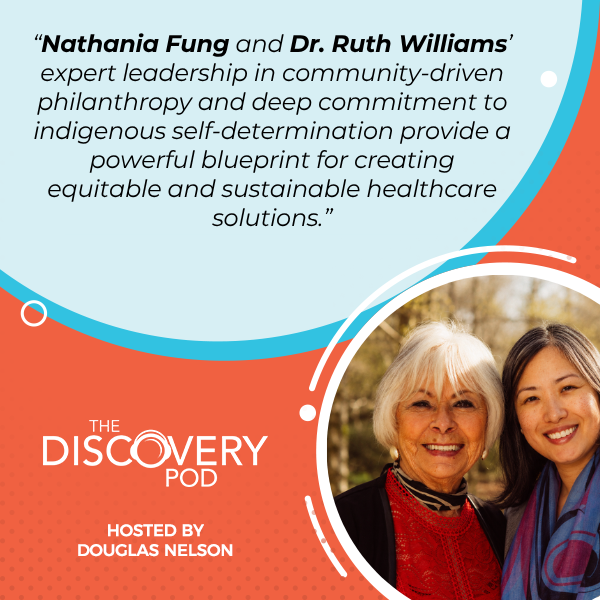
Closing the systemic healthcare gap for First Nations communities requires more than government support; it demands a radical shift toward self-determined, community-led philanthropy. In this conversation, we are joined by Nathania Fung, inaugural CEO, and Dr. Ruth Williams, Board Chair of the First Nations Health Foundation, to explore how they are bridging critical funding and knowledge gaps across British Columbia. By grounding their work in holistic wellness, cultural wisdom, and trust-based relationships, they illustrate how a community-driven approach can accelerate infrastructure development and empower Indigenous leadership. Listeners will gain insights into the necessity of moving beyond traditional funding models, the importance of social determinants in holistic health, and the transformative potential of donor partnerships that honor the unique needs and autonomy of First Nations peoples.
—
Listen to the podcast here
Bridging Knowledge And Funding Gaps For Indigenous Health With Nathania Fung, CEO, & Ruth Williams, Board Chair, First Nations Health Foundation
In honor of Indigenous History Month, we’re sharing conversations that amplify indigenous leadership and celebrate the work being done to strengthen communities, reclaim stories, and build a more just future. We’re joined by two incredible leaders working to advance health and opportunity for First Nations communities across British Columbia.
First, we have Nathania Fung, the inaugural CEO of the First Nations Health Foundation. Nathania brings over twenty years of experience in healthcare, social services, and philanthropy. She’s working with First Nations communities to advance culturally safe, equitable, and self-determined approaches to wellness and raising a whole lot of money to go along with all of that.
Joining her is the Board Chair, Dr. Ruth Williams, a member of the Order of Canada. Ruth has spent decades creating innovative programs that connect communities to technology, modernize housing services, and open new financial pathways. Ruth shares a lot of her own personal stories, a part of this show, and it’s some of the best we’ve ever done.
In this episode, our guests talk about the evolution of the First Nations Health Foundation, the work to connect communities, identify gaps, and develop fundraising priorities for donors to engage and to give. It is a story rooted in the people that it serves and the opportunity to close gaps for a bright and equitable future for First Nations peoples in British Columbia and beyond. This is a must-read episode. Thank you.
‐‐‐
Welcome to the show, Nathania and Ruth.
Thank you.
Happy to be here.
Personal Journeys & The Roots Of Motivation
I am so excited to have this conversation to learn more about the First Nations Health Foundation and the great work that you do as chair there, Ruth, and as CEO, Nathania. Before we do that, let’s start with the people first. Let’s learn a little bit about you. Maybe I can ask you to start, Ruth.
What I’m proud of is that I’m a Shushwap. I’m in the territory of Stk’emlupsemc Te Secwepemc. I’ve been involved in social programming for, as you can see from my age, or as I will let you know from my age, for at least 50 years.
A remarkable career and a commitment to communities near and far. Given all that you have done in your career, what brought you to wanting to be involved with the First Nations Health Foundation?
Originally, I was involved with all aspects of programming. I worked as the Executive Director at the Interior Indian Friendship Center in Kamloops. As such, you’re addressing the different social aspects of our community. One of the ones we did focus on was health, because health isn’t just physical health. Health is mental health. Health is also the addictions. With that, I was part of operating a health center through the Friendship Center, and then I was asked to be on the board of First Nations Health. I was blessed to be one of the founding members of First Nations Health.
Health isn’t just physical health. Health is mental health. Health is also the addictions. Share on XNathania, tell us a little bit about yourself and how you came to be involved with the First Nations Health Foundation.
Thanks, Doug, and thanks, Ruth. I am the inaugural CEO of the First Nations Health Foundation. I am employee number one. Before I jump into talking a little bit more about me, I do want to acknowledge that I was born and raised on the unceded and ancestral territories of the Coast Salish people, specifically the Musqueam, Squamish, and Tsleil-Waututh nations. It’s where I grew up and where I’m raising my own family. It has shaped who I am and how I approach this work.
I also want to acknowledge that I’m calling in from our office at Park Royal, which is on the lands of the Squamish Nation. While I’m speaking from here, our work at the foundation takes place across British Columbia in partnership with the First Nations Health Authority, which Ruth was a founding member of. Also, we work with First Nations communities throughout the province.
I’m a second-generation immigrant settler and uninvited guest of Chinese ancestry. My parents immigrated from Hong Kong. That part of my story is important. I mention it because it shapes my identity and my sense of belonging. Why it’s important to this work is that while I’m very aware that being a BIPOC woman comes with its own challenges. I’ve also had a lot of opportunities and privileges because of that. I hold with a lot of care and intention how that plays into how I do this work. Into that professional bit, I spent most of my career in healthcare fundraising. That’s what’s led me into this role.
I have been given the opportunity to understand our healthcare system and the healthcare infrastructure here in BC and a little bit across Canada, and how important a role philanthropy has in moving things forward. When I took on this role, my focus was to build the foundation, structure, strategy, capacity, and all the policies, procedures, and data. I love that stuff. It’s in a way that supports First Nations leadership over the long-term. That includes building a team that reflects the communities we serve.
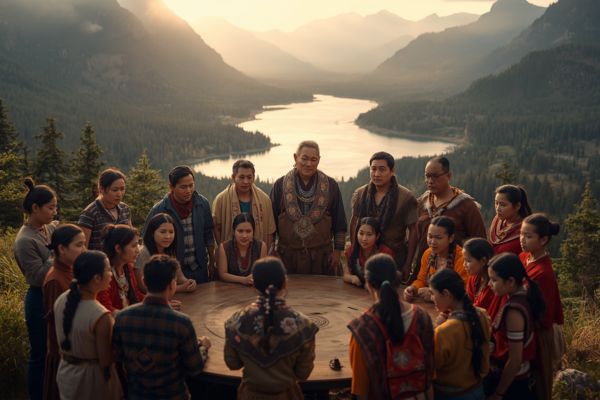
First Nations Health Foundation: You needed political will to take all of this and respect each and every First Nations person in British Columbia and design something that worked for everyone.
I do want to mention that we’ve brought on a director of development with First Nations ancestry. We will continue to grow that capacity over time. I’m also excited to bring on a development assistant who has First Nations ancestry. We are building the capacity in healthcare philanthropy for First Nations. Coming into this role brings together my personal values and professional experience in what I think is meaningful and important.
Thank you very much for that. Ruth, I’ll come back to you. In this conversation, we get to talk about a couple of firsts and onlys. The First Nations Health Authority was the only one in Canada, as well as the foundation that raises money to support it. Ruth, maybe you could take us back a few years to the formation of the First Nations Health Authority. How did it come to be?
Formation Of The First Nations Health Authority
I’m nervous. Sometimes, you have to probe me, Doug, to get information out, and other times, you can’t shut me up. What’s important for me is what motivates me to do what I do and what has motivated me to continue to do what I do. I am from a family of seven, a single mother. I was born out in Big Bar Creek, which is 40 miles away from Clinton, from nothing. I was raised in a family with no grocery store. It was pretty grassroots, extreme poverty.
We moved into what we call the city. It’s a community of almost 800 people. We thought it was quite large, and our lives changed. There were a second marriage and two more children. We became a family of nine. Blessed with having come from that is you don’t have to tell me what it’s like to not have anything. You don’t have to tell me what it’s like to not have access to medical care because of the isolation.
You don’t have to tell me how challenging it is to fit into society when you’re poor, you’re indigenous, and you come from a large family. Some of us landed solidly on the ground. For the majority of my family, there have been five who have died directly from alcohol and drugs. That is what I think, without even recognizing how this drives me. I have been blessed with all of these feelings and knowledge from living with it. That is an education that one cannot get from an educational institution.
Coming from that was why when I was asked to be a part of First Nations Health Foundation, I was blessed. For me, also to learn a bit about our political structure and how the whole history in British Columbia has affected us was somewhat new to me. I lived off reserve, which is different. I moved from on reserve to off reserve. Understanding the difference in British Columbia versus other provinces. The difference in having seventeen different tribal areas here.
The difference in having small reserves without a treaty of as small as eighteen members to as large as 5,000, and the difference in having 30-something different language groups. You needed creativity. You needed political will to take all of this and respect each and every First Nations person in British Columbia and design something that worked for everyone. The biggest thing for me is feeling a sense of belonging. How do we incorporate that into our healthcare system?
It’s not just about resourcing and bridging funding gaps. It’s about bridging knowledge gaps. Share on XHow can we expect Health Canada to understand when they’re serving all the provinces across British Canada the difference in British Columbia? We are unique. We need the political force of our chiefs and leadership councils to help to share the message, and they have to be patient to understand us. It’s not just coming in and saying, “This is the population. There are 203 First Nations there.” There are 203 First Nations, but they have 316 occupied communities that also have to be served.
It’s so complex that the leadership had to be the driving force. Let them ride that agenda. Let them get the input from their leadership at the community level. Let us, as First Nations Health Authority, do the grunt work that’s needed to address the health and human needs of the people. Separate that, but keep it connected. With the delivery, form another association for those that are delivering the service to have input from the grassroots level.
It’s so that we’re constantly aware of the challenges and uniqueness, and tailoring the services to meet our people’s needs and respecting their uniqueness. That’s where I came in. I had the opportunity to declare my interest in chairing the First Nations Health Foundation. We know that we cannot always depend on the government to provide our services. We all have an obligation as a population to look at directing some of the funds to help us to meet those and bridge those gaps in services that the First Nations Health Authority delivers. That is my motivation.
A powerful story and powerful motivation. Thank you so much for sharing that. What are the unique features of the First Nations Health Authority from my perspective. It sits alongside the Provincial Health Services Authority, and all the other health authorities, as a peer. Given the history and the historical racism that’s been a big part of healthcare in British Columbia and Canada. It is the uniqueness of the First Nations Health Authority as a peer in those conversations.
You talked about the complexity of bringing together all of the First Nations communities in British Columbia around this health authority, and then having the conversation with the Provincial Health Services. How do you approach that both as a board member of that authority and the role that the foundation can play to support that work?
Governance, Trust, & Strategic Pathways
Do you have any thoughts on that, Nathania? That is a very challenging question, Doug.
I want to reflect for a moment on what Ruth was saying about self-determination and how important it was for us when we created our vision, mission, and core values as a foundation several months into our becoming operational. Speaking of being the first and only and of being a model, we wanted to ensure that everything that we do is First Nations-driven and community-led. This is something that the foundation holds at the forefront as part of the seven directives that the First Nations Health Authority, the First Nations Health Council, and the First Nations Health Directors Association all look to as the seven directives to take out our work.
First Nations Health Foundation: We wanted to ensure that everything that we do is First Nations-driven and community-led.
What that allows us to do is become a layer in the health governance system for First Nations. We know that there’s funding from the government and Health Canada, and then that funding is administered. The gaps in the funding and the gaps in the knowledge for First Nations and for all health are huge. We can see how big a part philanthropy can play in closing those gaps quickly.
It’s not that the government doesn’t have the money. They just don’t have the money now. If you give the government 50 years to fund a new 3T MRI, they can do it. With philanthropy or donor support, we can get that 3T MRI in 3 years. It’s recognizing the incredible part that philanthropy can play in this work. That’s how I think our foundation and the health authority are unique.
How we intersect with the regional health authorities is special because we’re not just working with the geographical area that’s small. We’re working with the entire province. I’ve sat in meetings with different health authorities and their CEOs in some foundations across the province to talk about how we can work together. There’s a sense of collaboration. There’s a sense and a feeling of needing to do this work together, which we saw when we were building our strategic plan.
I’m digressing a little bit, but I do want to take a moment and talk about the creation of our strategic plan. I think the readers would be interested in knowing how we came to it. I talked about our mission, vision, and values, and how we came to that in the first few months of becoming operational in October 2024. That was our baby stage. Eighteen months into it, we are entering what I like to call our toddler era.
Those suffering from addictions lack a sense of belonging. Share on XWhat we did to create our strategic plan was we were very intentional about taking about a year to get to know ourselves before creating a strategic plan. In that year, what I did with a First Nations strategic planner consultant was talked to about 50 people in one-on-one settings and in group settings to validate what we should be doing as a foundation. In these 50 conversations, what came back to us was very consistent. Most of the people that we talked to were First Nations leaders, whether they were in the community, in the health system, or in philanthropy.
Hearing all these different people talk about the need for First Nations health and support in different ways but in the end, they were all saying very similar things. It has helped develop our strategic plan in a way that resonated not only with the board and our staff, but with all of those people who were involved. What came out of that strategic plan was also our pathways to change. Most people call that a theory of change, but we thought a pathway was more fitting for us. It can all be found online at FNHFoundation.ca. I welcome you to look at those and share a feedback.
I share that because what I think is important in our work is to involve and engage as many people as possible. As it says in our mission, it’s not just about resourcing and bridging funding gaps. It’s about bridging knowledge gaps. There are huge gaps in knowledge about First Nations culture, health, and a lot of misinformation. I do feel like there’s a huge role that we play as the First Nations Health Foundation to bring both funding gaps closer together and smaller, and knowledge gaps. It’s exciting to be a part of this work.
You mentioned identifying those gaps and closing those gaps a couple of times. One of the hardest things in fundraising, as you know very well, Nathania, is that it’s impossible to educate and fundraise in the same conversation. In your answer, you have a lot of educating to do as part of your mandate and to build that credibility or build the relationships to be able to ask donors. How do you, as a professional, balance the need to inform, inspire, and condense that into the shortest period of time possible?
The Art Of Educating Donors & Bridging Knowledge Gaps
We’re fortunate in that the people who are interested in having a conversation with me are people who are willing to learn. I had a conversation with a prospective donor. They were saying, “In the context of everything that’s going on in the First Nations space, how are you doing? What’s the sense in organization? Are you having any difficulties?”
I honestly said, “No, because people like you who want to talk to me are people who are open to having this kind of conversation. There are people out there who don’t want to talk to me at all.” Eventually, we may have to reach out and be broader in who we want to speak to. Since we’re fairly new, we’re still at a point where the people that we talk to are open and want to learn. That makes the education not easier, but it makes our role in providing that education simpler, if you will.
Ruth, maybe I can come to you. As Chair, what do you see as the role donors play in the work of the foundation?
They’re helping us to bridge the gaps, Doug. When we look at your question about health services and how we deal with them, there’s a real gap there. There’s a gap in understanding. There’s a gap in challenges in the delivery of those and access to those services because of our physical locations. You’ve got regional health authorities that deliver more in the urban areas. Our communities are not in those urban areas, so it’s a real challenge for us.
First Nations Health Foundation: The people who are interested in having a conversation with me are people who are willing to learn.
We have to get the knowledge out on the challenges we’re facing. If you take the whole issue of our children who are in care, the number and percentage of children in care have gone up versus down. That is indirectly as a result of the health of our people and the health of those people who are in charge, like the parents of those children.
It’s another level that we’re looking at the impact of not being able to necessarily provide for their children, and their children being apprehended. It goes on and on. You have those children of those children that are coming out. A lot of those are the ones that we’re seeing suffering from addictions because they’re lacking a sense of belonging.
I do believe that the general population would like to help, but doesn’t know how to go about doing that. With the First Nations Health Foundation, you have a credible organization that you can trust. That is the strength of having this foundation. That is the strength of having the First Nations Health Authority supporting the foundation.
The strength is that we also garner the knowledge from First Nations Health Authority, their working knowledge as well as on-the-ground knowledge. To be able to make sure that we’re tailoring what the needs are in filling the gaps that are identified. The First Nations Health Foundation is a center you can trust. It is a center that has the direct knowledge to be able to tailor the services and provide access to the services to bridge the gaps.
There's an art and a science to fundraising. Share on XRuth, if I got to work for you as a fundraiser, I’d try to put you in front of as many donors as possible with that message.
Thank you. It’s the truth, Doug.
I mean it, too. Nathania, we talked about some firsts of both the health authority and the foundation. Having had the chance to know you in other roles and know what a great professional you are and how you approach the work, there is a newness. There’s so much opportunity because no one has walked this path before in terms of this type of philanthropy.
The numbers are pretty stark. Less than 1% of giving in Canada goes to indigenous-led organizations and indigenous causes. What do you think about that as you’re amplifying the work and rolling down that path that you talked about? How do you think about where we are in terms of philanthropy for indigenous-led organizations and where we need to be?
Transforming Philanthropy: From 1% Giving To Holistic Impact
I see opportunity. I see potential.
I expected that of you.
There’s nowhere to go but up at this point. Emphasizing what Ruth was saying about the First Nations Health Foundation being the philanthropic partner to the First Nations Health Authority. It gives us that credibility to do our work. What I also want to talk about a little bit is that because of the newness, we get to build a lot of processes. We get to work with the First Nations Health Authority and communities directly to understand what it is that they need.
One percent is going to First Nations now, but that’s probably connected to how much people understand and how much people know. As we fill in those gaps in knowledge, people understand what they should, need to, or want to give to. I truly believe that as we educate, people will have a better understanding, and they’ll want to contribute.
Our understanding is that health is shaped by so many interconnected factors. In First Nations ways of being, in particular, and how I’ve been learning about this in the last couple of months. One of our values is that we’re rooted in holistic approaches that balance mind, body, heart, and spirit with the community environment. We want to uphold First Nations ways of being, knowing, and doing to ensure that our work. Our approach reflect the wisdom of the communities we serve and ensure the well-being of future generations. That is one of our core values.
First Nations Health Foundation: We want to uphold First Nations ways of being, knowing, and doing to ensure that our work reflects the wisdom of the communities we serve and the well-being of future generations.
The social determinants of health like housing, access to food, education, cultural connection, language, family, community, and belonging. These social determinants of health affect the health and wellness of First Nations people. When you talk about education and giving donors a reason to give, what’s bringing my experience from working with health foundations is preparing a menu. As a fundraiser, we talk about this. What do we share with our donors so that they can learn about our work?
I’d like to talk about the process a little bit. What we’ve created is seven impact areas. Those seven impact areas started as five. Through those conversations, those 40 to 50 people that I talked to while we were developing our strategic plan, we took those five initial impact areas, chucked them around, and talked to the stakeholders about it. We landed with seven because of the way we engage the people that will be affected by how these impact areas impact them.
We ended up with strong leadership and strong futures, healing journeys from womb to spirit world, care closer to home, transforming systems, strengthened times of crisis, healthy environments, and healthy people. All of these align with the FNHA’s ten-year social determinants of health strategy. There’s this very strong relationship between the FNHA’s priorities and ours.
We’re in lockstep with the FNHA and communities to advance all of this work with them. It helps organize our fundraising work, too. That’s important. With fundraising, there’s an art and a science to it. Since we’ve got that science part in, we get to tell the stories and bring all the art into it. I want to talk about a couple of our fundraising priorities as a result of that.
In the last couple of months, we held our very first gala and raised nearly $400,000, which was fantastic. The fund that we had that evening went towards a youth program to address the toxic drug crisis, which is in its ten-year anniversary. That was an important priority for the FNHA and for many communities, and that support showed how important it was. That was part of our healing journeys impact area. We have our strong leadership and strong futures impact area.
We created a Nursing Bursary Program, which was an idea from a donor. This donor came to us, and he said, “I’d like to set up a nursing bursary because I have First Nations friends who want to get into nursing and who are nurses, and they tell me how difficult it was for them to get this education. I want to help.” He gave the first donation, which inspired a number of others to give to this fund. We funded three nursing bursaries in 2025, and on track to fund a lot more.
People understand the physical portion of health, where you need hospitalization and doctors, but it goes much farther than that. Share on XThis one, I love. We have a list of about 80 menu items for our donors across all seven impact areas. We approached a funder, and they said, “I’m interested in pilots. We’re interested in funding new things that nobody else wants to because it’s new.” We looked down our list, which was compiled because we worked with FNHA and communities directly, and saw Pharmacy Kiosk, this wonderful idea. Cindy is the person that we talked to at the FNHA. We said, “We think there’s a match here.”
We worked, put together a proposal, and sent it off to the donors. They came up within weeks and said, “We’ll fund this.” Our process, our procedures, and all of the work that we’ve done leading up to this in practice is working. There’s a magic to it that comes from us being prepared with all the resources, us having the credibility, and us having this long history that Ruth talked about, and then this vision of getting beyond that 1%, to get back to your question.
It is powerful to hear the evolution of both the authority and the extension of the foundation, and how closely those things are connected. Ruth, did you want to comment on that?
Dispelling Myths & Healing Systemic Healthcare Gaps
My comment is I think our major challenge is to dispel the myth and the belief that First Nations don’t need any funding. They’re funded and supported federally and provincially. That is an absolute myth. We have to bridge the gap by coming together as people and supporting our First Nations and our Indigenous people in bridging that gap and understanding it.
Unfortunately, a lot of it rests on us to give, provide, and share the information so people understand. There’s a thirst for that knowledge, and a lot of it is not out there publicly. There are major gaps in what is supported, especially in the determinants of health and what is needed. People understand the physical portion of health, where you need hospitalization and doctors, but it goes much farther than that, way beyond that.
The history with Indigenous people in British Columbia and Canada, and that legacy, we’re the ones that are left dealing with that. We are the ones who are left to heal that and work with that. It comes out in many different ways, not just physical health, but mental health, the need to deal with the addictions, and how that affects parenting.
First Nations Health Foundation: Our major challenge is to dispel the myth and the belief that First Nations don’t need any funding.
It’s a major thing to be able to get that educational tool out there so people can understand it and then make informed decisions. They can be like, “I can see and understand now,” and support an institution like the First Nations Health Foundation that, in fact, can implement this. This is a trustworthy organization that you can work with, which has the knowledge base that will take the direction.
Both of you have talked through our conversation about this idea of bridging the gap. You talked through the development of the mission, vision, and values that led to the strategic plan that helped to identify these priorities. You have a very clear sense of the role that you want your donors and philanthropy to play in your organization and in serving your purpose. That is such a powerful step forward and being able to say, “This is how people can make a difference.”
Future Visions: Building A Legacy Of Trust & Stewardship
The persistent myth that healthcare and access to education are all paid for First Nations people is not true, and it has never been true. There are significant gaps in access that can be addressed. Addressing them in the healthcare space makes perfect sense for your organization. There’s a lot of work to do. Your to-do list is longer than the day. I’m curious. I’ll start with you, Ruth. What are you looking forward to?
I would love for some group to come to us and say, “We would like to learn more about First Nations health. We’d like to learn more about your population. We’d like to learn a bit more about the history. How can we work with you?” Not for you, but with you, Doug. When we talk to people and share our history, it’s a gift to them and a gift to us to learn how they feel.
If that’s one way of bridging the gap, come to us and ask because we have connections with the First Nations Health Authority Board. We have the most wonderful, knowledgeable elder on our board who was part of the practice of taking care of their own in the Nuchatlaht Nation. That history is golden. When people care, hearts open, and knowledge is shared, it’s genuine, and trust is built. We’re the foundation, not only of health, but we’re the foundation of trust.
I love that. Nathania, what are you looking forward to?
First Nations Health Foundation: We’re the foundation, not only of health, but we’re the foundation of trust.
I’m looking forward to a second seven-figure gift. We received a pledge of our first seven-figure gift in late 2025. I’m looking forward to that next one. I don’t know who it’s going to be from next. I know that with all the different priorities and menu items that we have, when the right donor comes along, and they learn about this work, the checkbook will be open.
As a fundraiser, I feel like I have to say that. The truth is that I’ve always felt like I have been very open. I knew enough that I knew I didn’t know anything at all. When I came into this role, that could not be truer. There is so much that I don’t know. The more I learn here, the more I yearn for more learning because I know that when I have a better understanding of this work, I can help amplify it more. I can tell the story better, and more people can become engaged.
I know this sounds corny, but I am so excited every day when I can get up and talk to somebody new about this work. I know it will probably be the first time that they hear about it in this way. It’s so exciting when you see somebody else’s light bulb go off. Also, to be able to play a small part in the story of this foundation. I have no doubt that it is going to grow and do great big things in its future, and to be able to be at this point in the formation of a foundation like this is so special. I look forward to seeing how big the future of this foundation can get because there’s so much work that needs to be done.
I love it. Ruth and Nathania, I want to thank you for being a part of the show and for sharing your story, Ruth. That was generous of you. I very much appreciate it. You have shown the strength of the process of building this foundation. I look forward to seeing great things in the months and years to come. Thank you for being a part of the show.
Thank you, Doug.
Thanks, Doug.