Nearly one in three Canadians reported having their human rights violated in 2024. Because of this alarming reality, the mission of the Canadian Museum for Human Rights has never been more important. Douglas Nelson sits down with Mena Gainpaulsingh, CEO of the Friends of the Canadian Museum for Human Rights, to share their fundraising efforts for this national institution fighting for survivors and bravely advancing women’s rights. Discover how they bridge the tension of raising money for a sensitive topic like human rights by grounding conversations in the fundamental principle that “everyone is born free and equal in dignity and rights”.
—
Listen to the podcast here
Fundraising For Human Rights: Leading With Trust With Mena Gainpaulsingh, CEO, Friends Of The Canadian Museum For Human Rights
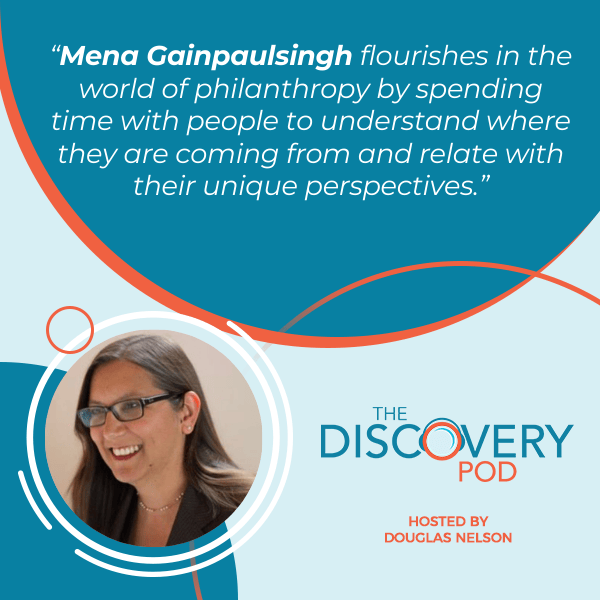
I am joined by Mena Gainpaulsingh. She is the CEO of the Friends of the Canadian Museum for Human Rights. Mena is a respected fundraising leader with national and international experience, known for her deep commitment to human rights and her ability to build philanthropy that advances dignity, justice, and meaningful social change.
Since being appointed CEO in 2018, Mena has brought a global perspective shaped by capital campaign leadership in the UK, consulting work across Canada, and a clear dedication to supporting survivors, advancing women’s rights, and strengthening institutions that serve the public good. In this episode, she talks about fundraising for a national institution on the cutting edge of social activism, what that means for conversations with donors, and building meaningful relationships across the country and around the world. Please enjoy my conversation with Mena Gainpaulsingh.
—
Welcome to the show, Mena.
It’s wonderful to be here. Thanks for having me.
Mena’s Work As CEO Of The Canadian Museum For Human Rights
Mena, you represent Friends of the Canadian Museum for Human Rights. I am really interested in hearing and sharing with our audience more about that museum and the role that your organization plays. Tell us, what is the Canadian Museum for Human Rights?
The Canadian Museum for Human Rights is one of Canada’s national museums. It was the first museum built outside of Ottawa and the first museum in the world dedicated to the theme of human rights. Established around 2014, it opened, and since then, it has welcomed millions of people through its doors and many more online. We consider our work to be more than our physical space. We have a lot of content online that we use to share stories about human rights and encourage people to engage in human rights conversations and become human rights champions.
An organization that quickly has a reputation, having had the chance to be in the museum, it is a truly awe-inspiring space from the outside and certainly once you get inside the museum. It is a museum that deals with very sensitive topics, or some people feel more sensitive than others about certain things, but it is an organization that really does push the edge and forces Canadians and people around the world to look at issues in the bright light of day that can be quite uncomfortable for people. I am curious, as the leader of the fundraising for the organization, how you bridge that tension between offering people the opportunity to see something that is difficult to understand, difficult to look at, and also to financially support it at the same time.
It can be challenging, actually. It is something that I have learned and discovered through this journey. I have been involved in human rights for I think it is around 27 years now, and typically they have been around very specific areas of work, specific causes, whether it is refugee rights, women’s rights, a broad range of different areas of work. What drew me to the museum was that it was about everyone’s rights, it was about basically what is in the Declaration of Human Rights, that everyone is born free and equal in dignity and rights.
I love the fact that the museum was there to tell the stories of all peoples and to use those stories as illustrations of a much bigger point, which is Article One of the Declaration. It is what drew me to the place because it was about human rights in general. That can create some challenges because there is a lot of diversity in what matters to people. People bring their own biases, their own experiences, their own journeys to the conversations that we have.
When it comes to fundraising, hitting on the things that matter to those people can really be varied. It has been an interesting journey and certainly a learning for me to understand that people bring those perspectives to the conversations when I am thinking that everyone may be thinking of human rights broadly and around every community.
That may not necessarily be the perspective of the person you’re talking to. It can be an interesting conversation. It could create some challenges in fundraising, but the way we deal with that is to really know and understand our donors, to bring it back to those fundamental principles, which people do not disagree with in general. People do believe, I would say generally in human rights, it is just how that plays out, how that is interpreted, how it is prioritized, that can vary from person to person.
We try to meet people where they’re at, wherever they are in that journey, and just begin that conversation and have the dialogue, which can lead to some really interesting perspectives and conversations that have changed my mind over the years. While it has its challenges, it also has its opportunities to really help us understand where people are coming from and broaden our own perspectives on what human rights mean to people.

Human Rights: While fundraising programs have their challenges, they also have their opportunities to understand where people are coming from.
One of the things that is particularly fascinating to me about the museum is that it is not a museum in the go look at the dinosaurs sense. It is very much dealing not just with the history, of course, but with what is happening in society today. From the perspective of the museum and as the leader of the fundraising program, how do you anchor in the views and experiences of Canadians as it relates to human rights today and understanding the temperature of the population, which of course is going to be varied, and how do you apply that to the work of the museum?
Interesting that you mentioned that, just because in the last couple of years we have been doing some research and surveying Canadians to better understand both their perspectives and their experiences of human rights, and this led to what we call the Foresight Report, which is available on our website, where you can see a broad range of experiences and perspectives from Canadians.
We use that information as well as what we hear from our visitors, what we hear from our donors, and what we hear from our broader community who engage with the museum in different ways, and we use that to inform our future work. To share a bit more about the report, this was a national survey where we had around two and a half thousand responses. It was really enlightening to understand what the experiences of Canadians were.
To share a little bit of some of those experiences or the data that came from that is helping to inform our future work. To share some of those details, nearly one in three Canadians had told us that they had had their human rights violated in 2024. That had increased by almost a quarter compared with the year before. This number jumps to just over half for Indigenous and 2SLGBTQIA+ people who have had their rights violated.
We also heard from people saying that the strength of the community is collapsing, with only 35% of Canadians feeling that their community is close-knit, 41% sharing that they do not trust their neighbours. How such a small number had gone to the authorities when they had had their rights violated. These were important details for us to understand. On a positive side, in terms of where the role of the museum comes in, is that three quarters of Canadians feel that everyone is responsible for looking after the rights of others in their community.
Three-quarters of Canadians feel that everyone is responsible for looking after the rights of others in their community. Share on XNearly half are looking for ways to take action for human rights. The problem is that they do not know how to. This is the role that the museum plays, is helping people across Canada and beyond to understand ways that they can take action and how they can stand up for human rights within their communities, within their daily lives, within their jobs and in various ways that they engage with the world.
Some startling numbers in that report. When you released that report, what reaction did you get?
Certainly, I can talk about the donor community because they’re most of the conversations I have. Generally, the reaction has demonstrated that people have felt a greater sense of urgency from hearing that information. What they’re telling us is that this work is even more important. Certainly, the reaction I hear from the donor community is that this is incredible to know.
They did not realize this, that people have been experiencing human rights violations to the level that they are. Data like the fact that people do not trust their neighbours and the feeling that a sense of community is not being there. It has helped us to articulate why this work is so important, and it has helped to really boost interest in the work that we’re doing and the ways that people can get involved.
The Importance Of Meeting People Where They Are At
In all of that and your answers to this, there are some reasons for optimism and some reasons for concern. You mentioned you came to the museum with a significant background in human rights and expertise, a familiarity with it and an understanding of the human rights community. I would imagine not everybody who walks through the doors of the museum has that depth of experience or understanding or nuance in understanding human rights. Not every donor would have that perspective. As a leader, how do you make sense of that? How do you view people who may be in a very different part of their journey or people who are on a different path entirely?
In answer to that question, an important factor that we bring into our work is a commitment to meet people where they’re at, and that can be in many different places when it comes to human rights. We have people walking through the door who are academics who have worked in human rights all their lives.
We have had people who come into the building because it is a beautiful building, and they are not so much focused on the content, but the response when people leave is very powerful. We hear all the time phrases like, “I cannot help but be changed by the experience of coming through this space and spending time here and reading the stories and learning about other people’s experiences.” We hear from people saying that we need to spend more time here.
We learn from people, hear from people saying that I never knew this, even when we run an annual gala, for example. That draws people who have possibly never taken part in one of our programs, or they may never have even gone on a visit to the museum. We always focus on a human rights topic of some kind, and it may be lighter in terms of the content. It is part of taking people on that journey to think about how they might like to get more involved.
What is the role that philanthropy plays in moving people along that journey? Are there people who are giving and learning as they go, or is the gift more of an occurrence at the end of that process?
There is definitely a lot of learning as we go from our perspective and also from the donors we talk to. They may be coming or be interested in the work because of a specific human rights issue that matters to them, or they are just curious, or they are seeing the state of the world around them right now. There is definitely a lot of concern we are seeing around us.
People are feeling lost. They are feeling like they do not know what to do when they see the dismantling of human rights globally. We saw that also in the research that we did, that while people felt that human rights in Canada were relatively strong, they felt confident, they were feeling less confident about human rights globally.
Given the diversity of our country, that is going to have an impact on people’s lives when they have connections in places where they are seeing human rights being abused. In terms of the world of philanthropy, we look to spend time with people, understand their perspectives, understand where they’re coming from and explore the ways that people might like to get involved and go on that journey with them. It can be very varied. Some people are instantly deciding they want to engage. Sometimes it can take years for them to find the piece or the story that attracts them to this work.
A Greater Sense Of Urgency With Upholding Human Rights
You have been with the museum for a number of years. How have your conversations with donors changed over your time at the museum?
The thing that has changed over the years is certainly a greater sense of urgency. People feel like it needs to be happening right now. A greater interest in supporting work that is less about the bricks and mortar and the local work that we do, and how we can have an impact on a national or even global level, as the only human rights museum of its kind in the world.
There is a great opportunity for the museum to become a real hub for human rights conversations and an anchor where people can feel that they can ground themselves to have those conversations and connect with others who can help them make discoveries when it comes to how they can get involved in human rights.
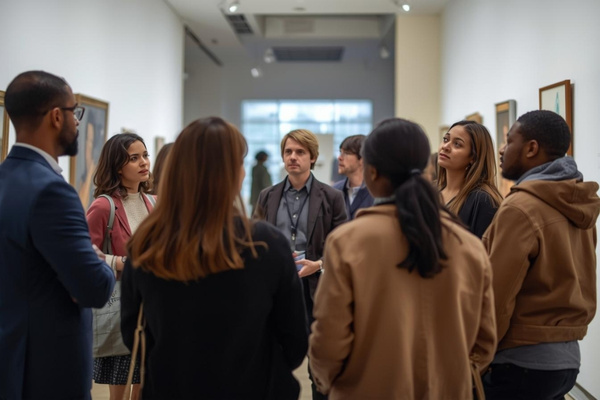
Human Rights: Museums can become a real hub for human rights conversations and an anchor where people can ground themselves to talk about that important topic.
That interest in having more of a national conversation and potential for this museum, which many people really do love and enjoy spending time in, they say, “We need to be out there in the world. You’re doing such important work, but it’s in Winnipeg, and we need to see it out there.” Many of the initiatives, including one we have called Be an Upstander, but with donor support is reaching schools across the country. That is because of the fact that people feel that this is really important, and they feel it is important to invest in this work.
Fundraising Efforts For The Canadian Museum For Human Rights
Anyone who has been involved in the sector for a number of years or many years knows the long or is familiar with the long fundraising campaign to build the museum. You just talked about that transition from how do we raise money to create a museum to how do we raise money to support the programming to fulfill the purpose and the intent of that museum? Is the donor base evolving? Are there different people giving to support the programmatic than gave to support the museum, or is it a fairly consistent group of folks?
I would say it is definitely evolving. I would say that it is becoming a broader base of support. It is becoming a different demographic engaging. We’re doing quite well in terms of keeping some of the donors on board, but at the same time, as the world changes, as people’s experiences change, or they see more around what is happening around them, we’re attracting different groups of people.
We’re attracting a lot more corporate support than we used to. A lot of corporate support we’ve received in the past has been driven often by individuals within those companies who had a greater passion for this work. Now, with more companies looking to understand and engage in human rights work themselves, that includes how they create a sense of belonging or a greater sense of belonging within their organizations.
Also, meet the needs of their various communities, whether it is the staff community, whether it is their customers, whether it is others that are involved, partners that are involved with what they’re doing, there is a great interest in how they can be involved in the work that’s happening here at the museum. One area I would say that has really evolved is how we have broadened from a specific group of major donors to being more interest to the corporate world as well.
Why DEI Will Always Be Part Of Human Rights Discourse
That is really interesting to hear and encouraging to hear that companies are willing to step forward. Some of our audience have paid attention to what is happening in the world. There are lots of human rights things, of course, to be very concerned about on a daily basis. There is also, from my view, a very concerning pushback happening against initiatives related to diversity, equity, and inclusion.
I was working with a board a couple of weeks ago, and it was intended as a joke, but one of the board members said, talking about the role of DEI and their strategic plan, he said, “We don’t have to do that anymore.” Somehow, the clock had run out on the race for equality. The joke went over poorly, not offering that as something anyone should share. That sense that the pendulum is swinging back, are you seeing that? Are you hearing that? Is that something that is part of the conversation you’re having at the museum?
Certainly, we have had interesting conversations over the last year around this topic. One thing that is good to make a distinction on is that our work is human rights work. It is about how we create a culture where everyone feels that they belong. DEI is part of that work. I would say that we do not necessarily deliver DEI programming. We deliver human rights programming.
That’s not to say that they should not fit well together in terms of that work. I definitely saw some pulling back for a while, but I think what we’re now seeing is that there were others that were leaning in even more heavily into that support. It was very encouraging to see. At the same time, we’re seeing people understand that this is about all people.
This is about creating a world where everyone feels comfortable and everyone feels that they belong and have a place. That is hard to argue with ultimately. That helps us to have the kinds of conversations with people who may be skeptical of DEI work and understand what the meaning behind this work is, specifically the meaning behind human rights work that we do here at the museum.
Are you concerned?
I had a moment of concern. I do feel less concerned now. I feel that there are definitely many that are believing in this work more than ever. It is about finding ways to connect with audiences in a way that they will understand and that we get better at having conversations that are meaningful to all people.
Scaling Fundraising Efforts On A National Scale
I am glad to hear that. You’re at a very important crossroads or an important point in our social understanding of human rights, and DEI is a component of that. It is good to hear that people are willing to stand up and push back. That is very nice. I want to come back to fundraising for a second. You’ve mentioned a couple of times in our conversation so far the national scope.
You’ve got a purpose, an educational mandate that you want to make sure through schools. You want people to understand the importance of human rights. The museum is part of the national museum system. It is a national museum. It is based in Winnipeg. As it relates to your philanthropy, what does being national mean, or what does it give you in terms of the conversations you’re able to have with donors?
It comes down to impact. What the donors that I am chatting with on a regular basis want is to see more of the museum in more places. That’s what matters. That is what matters to people. That’s what they want to invest in. They want to see us in every school. They want to see us in every community and every organization, looking for human rights education and training. They want more people to care. They want a kinder world, and they know that it cannot be isolated to Winnipeg. They know that we have the potential, as we are in a unique position.
One of the things that came out of the Foresight Report was how trust in more typical places for human rights information is eroding, whether it is through the news or through our government. There is less trust in those institutions, but trust in museums remains very high. It puts us in a good position to lead on some of those conversations and to work with communities and work with partners across the country to get messages out there that help people to think more about how they can play a role in building a kinder world.
Human Rights: Trust in museums remains very high. It puts them in a good position to lead the efforts in building a kinder world.
How To Put Yourself In Other People’s Shoes
I really appreciate that phrasing, building a kinder world. It hits me in my soul. It is something that we should all do. That is what a lot of us who work in the sector take pride in, in building that kinder world. If there was one thing that any of our audience could do to take a small step or a step, however small, in terms of that kinder world, what would be your ask of people who are tuning in to this show as it relates to human rights?
The thing that comes to my mind is to be open to the perspectives and experiences of other people. It can be very easy to be entrenched in a certain way of thinking, a certain way of being, which is often based on our own experiences and the world around us. Many people do not walk in our shoes. Many people have not had the opportunities we may have had.
That affects how they experience the world. Having more of an openness to difference and to the things that we see differently can make such a difference. Just spend some time absorbing yourself into the human rights world a bit more, in terms of taking some time to go on the website, find out more about the museum, and the work we’re doing. That could be a pathway into thinking a bit more broadly about how we can all play a role.
How To Remain Open As A Leader
It is a great answer, Mena. It speaks to the challenge of awareness and translating that awareness into action. Are there times in your, as a leader, are there times when you’re challenged to remember that openness? How do you make sure you stay open as a leader and as someone such a prominent figure in Canadian human rights?
I feel challenged every day. I have to catch myself in terms of the way that I might be bringing my biases into conversations I am having. It may not be a human rights conversation. It might be a conversation with my family, with members of my team. I might be thinking I could have handled that differently, I could have thought about that differently. I am very conscious that I bring my biases into the way I might approach things every day, because we all do. There is a natural tendency to do that as humans.
It is a natural tendency for humans to bring their own biases when approaching things every day. All they need to do is catch themselves. Share on XIt is catching yourself. It is thinking, “Could I have done that differently? Could I have handled that better? How could I be thinking with different perspectives around this particular conversation I am having? Is there a way I could have caused harm in the way that I may have managed a particular situation?” These were things that we could all be doing a bit more, and just spending a bit of time to ground ourselves and thinking, “Did I handle that quite right? Could I have done that differently?”
That is really helpful. Particularly young fundraisers that I remembered earlier in my career working with donors who have opinions, political or otherwise, that they share. You’re thinking, in my example, being a junior fundraiser and thinking, “This is not a political or a worldview that I share or would otherwise just let go,” but sometimes you’re in a position in fundraising where you say nothing.
It depends on the degree of the course. How do you stay open when you’re having conversations with donors who may not be as far along in their human rights journey, or they may have a really strong opinion on a particular human rights issue, when groups are maybe pitted against one another that you do not share? How do you stay open to that? How do you meet the challenge of meeting them where they’re at?
I had a colleague here at the museum with whom I had this kind of conversation some years ago. I was quite early in my work here. I was having some struggles sometimes with how to deal with some of those conversations. He said, “If you bring it back to the Universal Declaration of Human Rights that everyone is born free and equal in dignity and rights, and you find ways to bring the conversation back to that principle.”
We are all entitled to our own perspectives and opinions as long as we are not causing harm to other people. Share on XIt is hard for people to argue with, and it can cause people to have a bit of pause and a chance to take a step back and think about where they may be coming from. It helps to ground me when I come back to that because it can be hard to have some conversations around areas where I may not agree. If I am able to bring it back to that principle that I believe in very strongly and gives people a chance to have a pause and think about where they see themselves in relation to that principle, then that can help the conversation in a slightly different way.
You’re not going to convince everybody, and you accept that, too. Also, that is part of human rights. The reality is that we’re all entitled to our own perspectives and our opinions. As long as you’re not causing harm to other people, then people should be free to have those perspectives and opinions. I have to remember that too, that not everyone is going to agree with me, but just coming back to that principle of freedom and equality helps me to feel grounded in those conversations.
Mena’s Plans And Hopes For The Future
What you’re sharing there is a powerful lesson in leadership for anyone in our sector or beyond, and just anybody walking around, whether you meet people in the street. Your organization, the Canadian Museum for Human Rights, is never more relevant, never more important in the conversations happening not just in Canada, but around the world.
Every day, the Globe and Mail and wherever people choose to get their news, or their snap chatter, TikTok, or somewhere else, issues of human rights are at the top. It can be scary. It can be disillusioning. As someone personally, there is so much strength in starting with what’s working and building from there. I am really curious. What are you looking forward to?
I am looking forward to continuing this work, continuing the journey, continuing to work with incredible people. I really mean that. Just incredible people who are very passionate about having a fairer world. Whether they’re the members of the team, or whether they are donors. I am just thinking of some of the donors I have met in just the past few months whose passion for this work shines so much, and it inspires me.
It makes me feel like we’re doing a good thing. It makes me feel there’s hope in the world, and it helps to feel that you’re doing something that really matters and that’s really important. To work with the people I get to work with, to connect with the donors I get to connect with, who just want to make a difference, they just want to do more. It is very inspiring. I am looking forward to continuing those conversations.
Mena, thank you so much for having those conversations on our collective behalf and for the great work that you and your colleagues do there at the museum. It has been a real pleasure having you on the show.
Thank you very much.