Uncover the essential nonprofit fundraising insights needed to anchor your organization in abundance for 2026 and beyond. In a special “Ask Doug Anything” session, Douglas Nelson sits down with Samantha Gayfer, Director of Strategic Development at The Discovery Group, to tackle the sector’s most persistent challenges. They dive into critical shifts in donor behavior trends, discussing the intergenerational wealth transfer and the true “next generation” of donors. Doug outlines the most common campaign readiness gaps, emphasizing the focus on top gifts and mid-level giving, and dissects the “great irony” of internal structures that undercut fundraiser success. Finally, they cover strategies for CEOs to navigate board tension and foster deeper board engagement in philanthropy, providing clear guidance for leaders on shaping their next steps.
—
Listen to the podcast here
Ask Doug Anything: Donor Behaviour, Readiness Gaps, And Board Engagement With Douglas Nelson, President & Managing Director, & Samantha Gayfer, Director Of Strategic Development
I’m Samantha Gayfer, Director of Strategic Development at The Discovery Group, and I have the absolute pleasure of working with and learning from Doug as he leads the sector with relentless optimism about its abundance and deep respect for the internal expertise held by each of the clients we have the honor of working with.
I am thrilled to be stepping in as a guest host for this special edition of Ask Doug Anything. Doug is normally guiding these conversations, but in this episode, I will do my best to fill those shoes and I get to ask him your questions. We’ll dive into questions around donor behavior, strategic planning, readiness gaps, and a few career focus questions that may help shape your next steps. Thank you to everyone who sent in such insightful questions. Let’s dive in. Are you ready, Doug?
I’m ready. I’m a little nervous and I’m regretting the choice not to see the questions before we did this. This’ll be off the cuff and unfiltered.
The Biggest Shift In Donor Behavior & The Next Generation Of Giving
You’ve got this. Across the sector, we are hearing about a lot of data that points to fewer but larger gifts. Predictions about the impact of a significant intergenerational wealth transfer, the impact of donor-advised funds, the need to build new strategies to bring younger donors on board. In your experience, what is the biggest shift you are seeing in donor behavior right now and how should organizations respond?
My head instantly goes back to the first conferences I went to when I was new to the sector, new to everything, very young, and seeing David Foot talk about Boom, Bust & Echo. I’m sure some of our readers remember that. David Foot went around for about a decade telling everybody about the silver tsunami and what it was going to mean. Now he’s retired and he made his money and he can be part of that silver tsunami.
This great intergenerational wealth transfer has been something that has been coming my entire career. I think we’re either at the peak or probably past the peak of the revenue that’s coming from that intergenerational transfer. The organizations that have benefited most from that have been those that significantly invested in planned giving after they saw David Foot talk in 2004, 2002, and built those relationships.
That is something that’s going to continue. Having conversations with individuals who have been around your organization and supportive of your organization for a long time is really the greatest source of those planned giving donors. Everyone knows that many of our clients, particularly at large institutional clients, the primary purpose of the annual fund is to steward and identify additional planned giving donors. That is where most of the planned giving donors are coming from.
We’re seeing fewer and fewer blended gifts at the major gift level. Interestingly enough, I guess not surprisingly, many of the largest gifts are structured either through trusts, through estates and current gifts. When you’re naming a building or naming a hospital or a school at a university, so the mechanisms are going to continue to evolve.
Those conversations are happening earlier in donor conversations because donors have been more thoughtful or working with advisors about what might be possible in their philanthropy. Being prepared to have those conversations earlier than maybe was the case 5 or 10 years ago is something that I think will put the fundraisers in good stead, comfort with those donors, with the new generation.
I think it’s really important for fundraisers, for executive directors, and for board members to hear this next part. For large organizations, particularly health-focused organizations or post-secondary organizations, their next generation of donors aren’t 25, their next generation of donors are 55. That 55 to 64, that’s when people are starting to think much more about their philanthropy, the kind of philanthropy they want to support, the kind of people they want to be and express to their friends and relatives and community through their philanthropy.
It is not about how do we connect with the people who are spending a good deal of their time on Snapchat. It’s those people who are spending their time talking about whether this is going to be the year that they’re going to start seeing to see a natural path about their diet. These are people who are becoming more health aware. These are people who are becoming more aware of the world that are leaving their children.
Your new donors really are in that, even give yourself to 50, but that 50 to 65 is where the young donors are. That’s almost never what board me members mean when they say, “What are we doing,” with their new donors. There are many organizations, of course, that have a donor base that skews quite a bit younger. For those organizations, being present counts. While everyone is more online and everyone is finding ways to connect and all of those have value, it’ll be those organizations that are investing in the staff and investing that staff time and being able to be externally focused and sitting down with donors, whether that’s engaging them through events, through evenings, through giving clubs, through special societies.
We’ve seen a number of those work, even seen a resurgence of the junior board concept and a couple of organizations that we’ve worked with that’s been quite effective. Mostly the junior board concept is not all that effective because people don’t want to be on the junior board. They want to be on the real board. A few clients have pulled that off very well and established some good relationships that way.
Being active, being present, and being in person has to guide all of these conversations, whether it’s trends and giving, whether it’s intergenerational giving or working with younger donors. The organizations that show up in person most frequently, most consistently, are going to be the organizations that raise the most money.
The organizations that show up in person most frequently and most consistently, are going to be the ones that raise the most money. Share on XExcellent. Thinking about younger organizations, so we talked about healthcare and universities. If you’re an up-and-coming smaller social profit organization, how do you start connecting with those 50-plus donors when you haven’t been on their radar?
For new or new-ish organizations, the first thing is not to view philanthropy as a means to an end. You’re not asking your donors to give you money so that you can do what you want to do. Instead, think of it as an invitation for those donors to join you. It’s an invitation for those donors to be a part of the change that you see for your community or for the world. It’s an opportunity to bring them inside and to make them part of the change that you and your colleagues envision for the world.
Rather than philanthropy being that extra or that external thing, it really needs to be brought into the core. The organizations that do that effectively establish credibility at the major gift level more soon, more quickly. They establish a track record of retention much more sustainably. People are really excited to be a part of what they’re doing.
The way to do that, if you’re like, “That sounds good, how do we do that,” it really is being really clear on what your philanthropic value proposition is. What does it mean when a donor joins your organization? What does it mean when a donor makes a gift of $100 or $10,000 or $1 million to your organization? What does it mean not just for your organization? Sure, know what that is, of course. What does it mean for that person when they join you at that level?
What are you inviting them to be a part of? What are they helping to accomplish? What is the role that their gift or the sum of all gifts is enabling? That’s the offer to people. Rather than, “We need your money to do our good work,” it really needs to be, “Join us so that we collectively can do this great work together.” The organizations that do most effectively are already raising much more money, much more dynamic and able to shift more readily because their donors are a part of the ride rather than just interested observers who notice when they may slide off course a little bit.

Nonprofit Fundraising: Do not view philanthropy as a means to an end. It is not asking your donors to give you money so you can do what you want to do. Instead, think of it as an invitation for those donors to join you—to be a part of the change that you see for your community or for the world.
Common Campaign Readiness Gaps: Hope Vs. Reality
Super important distinction. One of the other pieces to that then is their ability to be ready to do this work. We worked on an assessment tool to help organizations measure their readiness to take on a major campaign across a number of internal and external factors. That’s available for download on our website. When you work with organizations considering a major campaign, what are the most common readiness gaps you see?
I think that there’s the hope versus reality gap is the first one. Anytime a board member or a member of the executive team that isn’t the head of fundraising or the CEO says something like, “We should be able to,” they are not helping you. They are not your friend. They are leading you down a dark alley very late at night. What if we just raised all that money? That’s great. Why don’t we do that?
Wouldn’t it be great, that hope-to-reality gap? What we find is that for many organizations that gap actually isn’t that big, or often, it’s not as big as people think. For programs that are looking to go into a capital or a comprehensive campaign, they’re typically looking at wanting to increase by 3X, 3.5X, 4X their annual fund, what they’re raising annually over the life of the campaign. Very doable in most cases with the appropriate investment.
One of the things that’s really important, and we find with a lot of organizations, is that they haven’t taken the time to look at how they’re investing in their fundraising program. Where are the investments? What are the expected returns relative to the benefits? We’re getting about 40% of our money through planned giving, and we’re putting about 5% of our fundraising investment into planned giving. We would see that and say, “Here’s an opportunity to significantly increase your planned giving,” which is to invest more in what’s already working.
Of course, the biggest gap that many organizations face or find is that they want to make sure that they have enough donors. One of the mistakes that organizations make, and particularly fundraisers make, is they think we need to solve the donor pyramid from the bottom up. The number of donors that we have, we need to make sure we’ve got 1,100 donors who are capable of giving us $25,000 or less in order for this campaign to be successful.
One of the things that we consistently remind our clients is focus on the top 5 to 10 gifts. If you’re able to be successful in the top 5 to 10 gifts, credibility of those gifts, the celebration of those announcements, the momentum generated by those gifts is going to lead to more annual monthly event-style donors to your organization. The trick becomes how do you retain those donors? That’s my final thing.
One of the organizations that are really focused and consistently focused on their donor retention tell better stories. They engage their donors and, as we talked about in the last question, they invite their donors to be part of the solution rather than just enabling it. Taking those three things as a singular hope, that’s often what we find. Make sure you focus on the donors that are going to make the biggest difference to creating momentum. That’s the top of your gift chart. Make sure you’re doing your stewardship and make sure that you have come up with a number that is based somewhat in reality and not just what people think is possible.
The organizations that are consistently focused on donor retention tell better stories and engage their donors. Share on XThe gap is not that you don’t have great Instagram or TikTok strategy.
Personally, I have a terrible TikTok strategy. There’s not a simple trick. There’s not a simple all you have to do. As a firm, we see very strongly for a lot of organizations, the greatest opportunity is in their mid-level giving program, at their leadership, giving a number of folks. Call it that $5,000 to $25,000 or 5,000, even up to $100,000, depending on the size of your program. That is where you can have the most conversations with your donors. It’s where being present and in person with those donors is going to make the biggest difference in retention and size of their gift. It builds loyalty, it builds momentum.
That is a benefit of being able to do a large campaign, being able to add resources to your mid-level giving, but almost no organization that we’ve looked at. In fact, I can’t think of a single one has mid-level giving solved. We’ve got that figured out. Often, it’s the annual fund that’s doing quite well. Major gifts or transformational principal gifts are doing quite well. You’ve got this desert in the middle. That is where campaign success lies, and that’s where the legacy of campaign success lies, both in terms of actual legacy donors, but your next generation of major gift donors to your organization.
The Internal Systems Stunting Nonprofit Growth
With hundreds of organizations that you’ve worked with, from well-established to up and coming, what internal systems or structures do you think most often hold those organizations back from growth?
I may have said this on the show a few times, so forgive me if this is a repeat for our readers. The great irony of our sector that drives me crazy, it is the biggest thing that bothers me, is that organizations invest in very high-caliber, very experienced fundraisers. They bring them into their organization and then they force them to negotiate for permission to do the job they were hired to do.
The internal structures that prevent fundraisers from getting what they need in order to get out the door, as a fundraising program leader, you got to identify those barriers and spend a lot of time eliminating as many as possible, mitigating the few that remain, and just acknowledging there may be 1 or 2 or 3 that have to stay there for whatever reason, taking that as an excuse away from your fundraisers. Anything you’re doing that causes fundraisers to have to come together to negotiate permission, to talk to donors, anything to come together to talk to program folks about asking permission to tell the story about the program, not the story about the individuals.
Of course, there’s rules there, but any of that internal negotiation is a direct theft from time available to go out and talk to donors and build meaningful relationships that are going to result in philanthropic resources. That is undoubtedly the biggest challenge facing fundraising programs. Fundraising programs in small shops, the soup to nuts, whenever I hear that, I think that’s just a terrible job that’s going to be so hard to be successful at.

Nonprofit Fundraising: Any of that internal negotiation is a direct theft from time available to go out and talk to donors and build meaningful relationships that are going to result in philanthropic resources.
The small teams, I think it happens more often that it, they’re explaining why we have to talk to donors. Unfortunately, in some smaller organizations where the philanthropic culture may not be very mature, it’s treated as a necessary evil. When it’s treated that way, there’s a lot of internal negotiation. There’s a lot of conversation about how we’re going to do it and how we’re not going to let our donors do this or that, and how we’ll protect our organization.
Some of that may be necessary, but for the most part, those internally focused conversations generate $0. You’re paying fundraisers a lot of money, some too much, mostly not enough. I think as a fundraiser, fundraisers all should get a raise. Particularly the ones that are talking to donors, when you invest in these teams of these professionals and then force them to sit in meetings and ask for permission to go talk to donors, you are really undercutting your organization’s success.
How To Liberate Leaders: Eliminating Internal Roadblocks
What do you think is driving that mindset organizationally? Why do those roadblocks exist and how can we liberate senior leaders and boards from wanting to have that hold on this particular function?
In my most optimistic, let me say, it’s just that people aren’t familiar with what it means. Often, if you’re thinking about pursuing other known ways of getting money into the organization, whether it’s grants or government funding or some of these conversations are necessary, so I think there’s just a general lack of awareness.
The second reason stems from a very appropriate and natural instinct to protect the organization. Let’s make sure that we’re not asking our donors what they want to do, and then figuring out how we’re going to make them happy. It’s really important that the fundraisers, of course, are positioned as advisors to the donors, working for the organization to introduce the priorities of the organization and build those relationships and ultimately, secure that support.
It is profoundly uninteresting in interpersonal relationships for someone to come and say, “I can be whoever you want me to be,” or, “I’m thinking of being someone that you might be interested in. Tell me the skillsets and the personality types that you would like to be interested in someone, and I will do my best to replicate that.” It’s absurd. That sounds absurd. When we go to our donors and say, “We know there’s this problem that we’re trying to solve. What do you think we should do?”
If you’re fundraising that way, the organization is right to try to protect itself from donors. Some donors do have strong opinions. They will be assertive. They will say, “Do this or you don’t get my money,” but there are so few of them that are actually like that, that they’re worth telling great stories about when you’re with other fundraisers.
The vast majority of donors, dealing depending on your area, they care about the area your organization’s in and they want to help. If you don’t give them a priority to fund, and you say, “What do you think we should do?” They’re like, “Here’s what I think you should do.” It’s not the donor demanding. It’s often the organization abdicating its responsibility to lead with its priorities.
How you fix that feeling of how do we protect ourselves from our donors is really make sure that you’ve got your priorities locked in and you’re leading with the strength of what you know to be most important about your organization, that you can articulate that philanthropic value proposition we talked about earlier, and build genuine relationships with folks rather than asking them to tell you how to do the job you know how to do best.

Nonprofit Fundraising: Make sure that you’ve got your priorities locked in and you’re leading with the strength of what you know to be most important about your organization, so you can articulate that philanthropic value proposition.
Navigating Board Tension: A CEO’s Guide To Pushing Back
Through the work of TDG and your experiences personally and professionally, we know that board tension is as ubiquitous in the non-profit sector as it is in the for-profit sector. Imagine Canada BoardSource, Stanford Social Innovation Review all describe board staff dynamics as the most persistent and universal challenges in nonprofit leadership. Given that backdrop, how do CEOs avoid appearing defensive with their boards and yet still push back when appropriate?
I think you’ve really nailed it there, Sam. The number one thing I hear from CEOs that we get to work with here at The Discovery Group is, I don’t want to appear defensive with my board, but sometimes they say things like, “I have to put my foot down.” I think that’s a very natural position for CEOs to find themselves in.
We use a model that I think it can be really helpful in asking the board to show up in 1 of 4 roles, whether they’re the advisor role or the board is giving their advice that is either their lived experience, their professional experience, their professional expertise, or their knowledge of the organization or the issue. Rather than telling the CEO, “This is what you should do or management should do,” or they’re providing their advice and their perspective and management can come back with either a proposed solution or go off and solve the problem without coming back to the board.
Make sure your board is informed as to what matters most in your organization. Share on XThe second role is the explorer, and that’s what we think of as the generative discussion of looking at the horizon, the issues facing the organization outside the organization. The decider, that’s the oversight function of the board to make the few decisions that boards need to make in a year. Of course, ambassador, which is the work that they do outside of the boardroom.
To directly answer the question, to avoid being defensive, don’t say, “I don’t want to appear defensive.” It’s the fastest way to sound like you are being defensive. There’s nothing you can say after that sentence that doesn’t sound defensive. Secondly, really have that conversation with your board, and particularly with your board chair and your committee chairs as necessary, that what you value most in the board is that advice. That advice needs to be informed by an understanding of the business model of how the organization raises its money, receives its money, how it executes its programs, how it makes its decisions on what it funds, etc.
Make sure your board is informed as to what matters most in your organization, what are the levers available for strategy and operations, and really encouraging them to give advice because advice can be offered but is not actionable. When that line between advice and instruction gets blurred, ceos really have no choice but to push it back and be in that defensive position. That certainly occurs at different times, but really leaning into that conversation about the advisor role will reduce the number of instances and the severity of those instances in a given board year.
The Honest Indicators For A CEO’s Next Step
Sometimes, and I found myself in this position before, CEO or an executive director gets to a point where they have to consider whether or not it is the appropriate time to step aside and pursue something else, whether that’s their retirement or another role, whatever their next step is. What are some indicators that they can consider to be sure that they’re actually identifying this is the right time for me to go and pursue something else?
I assume your question is when it’s a thoughtful moment. It’s not like, “If they ask me that question again, I quit.” I hear it in my travels from a number of leaders that they don’t want to stay past their best before. A common strategy that CEOs use and when they get a new board chair say, “I only want to be here as long as I’m adding value, so you tell me,” which is actually a really hard position to put your board chair in, because when it comes time I say, “We don’t think you’re adding any value,” in my experience, Sam and the CEOs that I get to work with that make the decision to leave or to retire, they know. They may not act on it that week, that day, hopefully not that minute, but they know when they’re headed that way. It’s unambiguous.
In one instance in my career, it was very clear to me that my time was up when I realized that I was acting as though I owned the organization. There was a particular issue where I was like, “I get to decide this.” Of course, I did not get to decide that it is not my organization. Realizing that I crossed that line that I think a number of CEOs navigate very well. In that instance, I did not. It was time for me to go.
I talked to one CEO and she said, “We have this event every year and it’s really successful and people really love it, but I just hate it. I find it exhausting. I don’t understand why it’s so successful. I don’t understand how it fits with our mission, and I just don’t want to go. I realized coming out of one of those events, I just can’t go back to this event again. I knew I had to be out of this CEO role for that event happen.” That’s another example.
That would feel pretty clear-cut.
Not everybody gets to choose. I would say it is something to consider as a real honor and a badge of honor in fact of a job well done to be able to set your timing or call your timing, but be really mindful that once you say, “I’m thinking that this might be my last year or might be my last two years,” if you’re giving any kind of professional runway, which is healthy and helpful for you and the organization you lead, the story isn’t yours anymore.
Once you have that conversation with the board, once you tell your leadership team, it’s not about being a lame duck. It is you are not as relevant anymore. Your jokes won’t be funny or as funny. Your ability to make some of the harder calls is really going to be significantly diminished. I think that’s one of the things that a lot of folks that I’ve worked with have struggled the most with, that period of having said, “I’m in my last year, I’m in my last couple of years,” and the board coming closer and being a little bit more involved in some of the big organizational decisions because you’re leaving.
A big adjustment to feel like you’re on the sidelines for a little bit.
Yeah, or at least headed to the sidelines. That’s almost harder, I think.
Deepening Board Engagement In Fundraising: Champions Of Gratitude
Staying on the board topic, what is one of one thing that leaders can do nowadays to deepen the board’s engagement in fundraising? I think that’s a question on every CEO and executive director’s mind.
We did an episode about this. We’ve done a few blog things on this over the course of the year. Really, really important. It starts with this. Do not treat fundraising as something separate from the governance role. It is integrated in that ambassador role we talk about. The first thing that a board does to support fundraising is to approve the annual budget.
That budget has fundraising goals in it and investments in the people and the programs that are going to raise the money for your organization. That is a board function related to fundraising. Remind them that a couple of times throughout the conversation, make sure that they see that as the work of the board is approving the investment in the fundraising and the use of those funds once that fundraising is successful. That is really important. It’s a great starting point.
Secondly, you want to make sure that the board understands what your philanthropic value proposition is. I would say just as a quick trick or a quick tip for any leader, whether you’re the vice president of philanthropy or you’re the CEO, talking to the board about giving, always have 1 or 2 stories, short ones, about what a donor is saying or how a donor is reflecting on your philanthropic value proposition or why they give.
Lead with those stories. Make sure the board understands how your donors see your organization, because often, they’re not the same. The board perspective and a donor perspective are not the same. Some board members don’t have access to the donor perspective just by one of life experience or generosity. Make sure that you’re bringing that donor perspective into the boardroom through stories and examples whenever possible.
The third piece to really make sure is make it clear that organizations are asking foundations, particularly corporate foundations, but also institutionalized foundations are asking whether you have 100% board giving. I know it’s a hot topic, I know people say it’s a gift of time, and you’re excluding folks if you have mandatory giving on your board. Funders are asking whether you have it. They’re using it as a filter to determine whether your organization moves forward at all.
It’s a gateway now. Board members need to understand that if they’re not giving and they’re approving money to be spent to fundraise from other people, personally, I think you’re in the how dare you category, but just operationally, it doesn’t make sense. It’s incoherent. The biggest thing, if there’s one single thing that I would change is to put position the board as the champions of gratitude.
Give your board the opportunity to call. You can do it structured with, “Call these 5 or 10 donors and report back and put them in the donor base.” Anything, having them sign thank you cards as a part of every board meeting to donors who’ve given 5 years in a row or 10 years in a row, or come back to giving after taking 2 years off. Whatever it is, involve them in the act of gratitude for your donors. Position your donors as strategically enabling of your organization and your board as the stewards of those relationships.
Don’t treat donor stewardship as a function just of management. Bring your board in, give them the opportunities to be those champions of gratitude. You’re going to see both their giving go up, their awareness, their advice will improve and that sense of engagement that board members have around fundraising is going to build and build and build over time.
Don't treat donor stewardship as solely a function of management; bring your board in. Give them the opportunities to be those champions of gratitude. Share on XI want to circle back to the invitation for your board to be 100% participating in terms of their philanthropic contributions and how that changes or what lens fundraisers should use when their donor is a board member. I’ve heard organizations say, “If I do this, it’s just going to be board members, not donors, and so we’re not going to invest this time and energy,” and losing sight on the fact that those board members are also still donors. How do we steward board members?
I think one of the best ways to do it is make sure that it’s a peer-to-peer gratitude from other board members as the first, first and foremost. The board chair needs to be one thanking board members for their gifts, no question about it, first. However you can structure that, do it a phone call, a text, a Snapchat notification, depending on your organization, depending on your board chair. That is critically important. That peer recognition of their gift is critically important.
To extend that question a little bit, one of the big challenges a number of organizations are facing is when their most significant donors are on their board. I once reported to a board of 52 people, and for those of you reading, that is too many. Most of the organization’s largest donors were on the board and many that weren’t on the board had been on the board for years and years prior.
Every board meeting becomes a stewardship event rather than a governance occurrence. It really weakens the governance of the organization. Be mindful. Your largest donor is actually going to add a lot of value as board members, as individuals, but you have to be really careful and the board chair needs to be really clear with that person why they’re on the board.
Not to oversee their donation, not to oversee the organization’s receiving money, but to be an equal participant in the board conversation and even still having 1 or 2 really can be problematic. Turning the board mostly over to your donors, your largest donors can be challenging too. Really want to see those as two separate worlds. Sometimes there are individuals who show up in both worlds, but it should be the exception, not the rule.
The Most Vital Leadership Qualities For 2026
If you reflect back on the last six months, what leadership qualities would you say are the most vital to leading a social profit organization as we head into 2026?
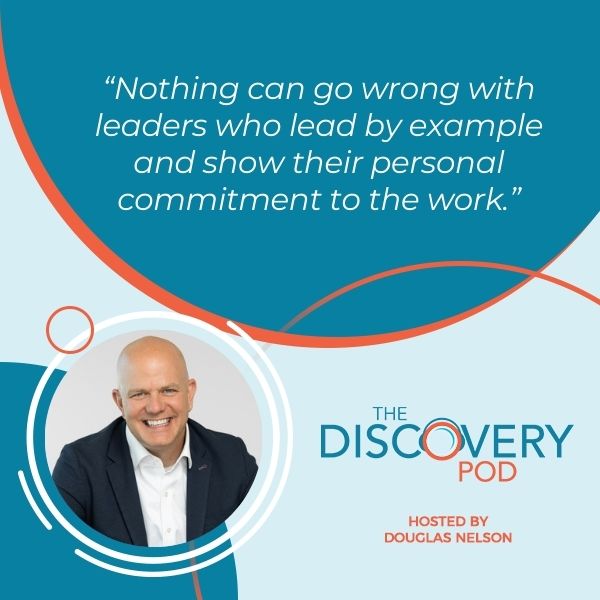
Sense of humor and humility. The organizations and the leaders that I’m most inspired by, whether they’re guests on the show or we get to work with them, and Sam, you and I have worked with a few of them together, the leaders that have that sense of purpose, they just show up as the same person every day and get to work and get it done. I don’t think there’s anything that can go wrong with leaders who are leading by example and showing their personal commitment to the work that they’re doing, not that they’re doing everybody else’s work.
That’s a commitment to micromanagement, not to the purpose, but making sure that they’re showing up as the same person and really leading with the intention and the purpose and that philanthropic value proposition of their organizations. They know why we’re here, they know where we’re going and they can bring their teams along.
Most of the great leaders that we get to work with, Sam, talk about we a whole heck of a lot more than they talk about I. I think that that’s true not just in our sector, but in our society. The organizations that talk about we and view it as a team sport, we’ve got big goals in our social profit sector. Each organization has big goals and collectively we have these tremendous goals. It’s foolish to think that one person, a cult of personality, can change the world for the better. The organizations that are strong, the leaders that are doing the best, are talking about their teams, talking about we and reminding everyone and representing that value proposition on a daily basis and a sense of humor.
Critical. Maybe the most vital. I love that at the end of your episodes, you always ask a question and now I get to ask you that question instead of you asking someone else. Douglas Nelson, what are you looking forward to?
I get asked that question probably close to 300 times and I always feel like, “This is such a great question.” Now hearing it reflected back to me like, “That’s really hard.” I’ve learned something, I’m not going to stop, but I’ve learned that it’s a harder question than I thought. Sam, I am inspired every day by the work that our colleagues do with our clients and the work that our clients are doing in their organizations.

Nonprofit Fundraising: The organizations that are successful are anchored in abundance. They take what little is working and build from strength. That is what makes people better, what makes organizations sustainable, and what enables organizations to make a positive impact on their community.
I grew up in the sector. I believe in it as a force for good, which doesn’t mean there’s nothing that needs to change. There’s a lot that needs to change. There’s a lot that has changed. Who is leading our organization looks a lot different than it did ten years ago. I think it’s going to continue to change for the better. The diversity of leaders. Diversity in every sense is increasing is nothing but good for the sector. There are so many great examples of organizations that have articulated ambitious goals and achieved them and then are now on to their next set of ambitious goals. There’s a lot of reason for optimism.
I am really looking forward to the day when scarcity isn’t the organizing principle of our sector in any way. Rather than talking about stretch too thin or paying a living wage or doing what we can and all of the jokes about using bad computers and broken chairs are gone. The organizations that are successful are anchored in abundance. They take what little is working, what little opportunity may be available in an area, in an issue, in a geographic spot, and build from strength. That is what makes people better. That is what makes organizations sustainable and is what enables organizations to make a positive impact on their community.
Anchor in abundance, start with what is working and it’s happening more often. There are examples you see every day of organizations doing that well. Rather than starting with what is broken, what is not working, what is not funded, lead from a place of what is working, where good things are happening and leverage those good things into even more good things. That is where positive change comes from, not from sitting in scarcity and yelling about it. Start with what’s working and make it better. That is how we talk about our work. It is the clients that we see that are doing the very best for their organizations. Anchor in abundance.
That sounds like a great message to head into 2026 with. Thank you for your time, Doug.
Thanks, Sam, and thanks for all of the questions. It was a long list, I’m told, and I think you did a good job of picking some good ones for our readers. I hope I did right by them.
I think so.