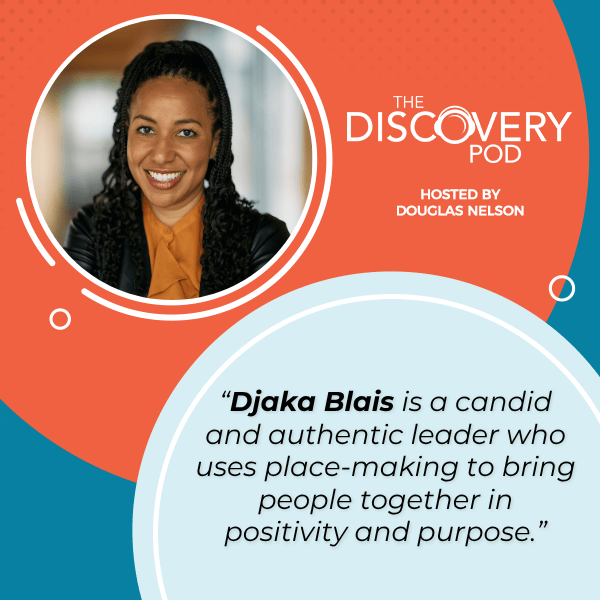
Hogan’s Alley Society (HAS) is dedicated to advancing the social, political, economic, and cultural well-being of the Black community in Metro Vancouver. Douglas Nelson sits down with their inaugural executive director, Djaka Blais, who talks about their place-making efforts focused on nonprofit housing development and community engagement. Djaka discusses how they embrace Afrocentric governance principles to push their efforts forward and explains how their Community Land Trust model works. She also breaks down the benefits of fostering a culture of care, which helps her team avoid burnout and remain committed to their core mission.
—
Listen to the podcast here
Place-Making And Purpose With Djaka Blais, Executive Director, Hogan’s Alley Society
We’re joined by Djaka Blais, Executive Director of Hogan’s Alley Society in Vancouver, British Columbia. Djaka is a respected social profit leader with over two decades of experience across philanthropy, government and grassroots community organizing. As the inaugural executive director of Hogan’s Alley Society, she’s leading work that advances the social, political, economic and cultural wellbeing of Black communities in Vancouver through inclusive housing and culturally rooted programming. In this episode, she shares her approach to uplifting the community, building both an organization and a movement in leading and emerging organizations. She is candid, real and doing very important work. I hope you enjoy this episode with Djaka Blais.
—
Welcome to the show, Djaka Blais.
Thanks so much for having me.
Djaka Blais Of The Hogan’s Alley Society
I’m looking forward to our conversation to learn more about Hogan’s Alley Society, the great work that you and your colleagues do and the unique model, the community land trust model that you’re building in the heart of Vancouver. As we get into that conversation, Djaka. Tell us about the great work that the Hogan’s Alley Society does and who you serve.
Hogan’s Alley Society is a Black led organization in Vancouver. We’re working to advance the wellbeing of people of African descent, more specifically Black people. We do that through three key areas. The first one being operating culturally informed housing, housing that meets unique needs of Black communities.
We’re also working on building affordable housing and other community spaces for the community across Metro Vancouver. Our third area is community care and engagement where we have some support programs. We do public education and developing partnerships as well. Ultimately working to recreate a hub for the Black community in Vancouver.

Black Community: We are looking to build a future of opportunities for the growing Black community across Metro Vancouver.
It’s important and many of our readers who know or maybe don’t know the great work of the organization on a day-to-day basis. I know Hogan’s Alley because of its connection to Jimmy Hendrix and the Shrine that people come to visit or the memorial that people come to visit. Is that a part of the organization or is that something that you get tired of being asked about?
We’re never tired of talking about Vancouver’s Black history and Hogan’s Alley in particular and the community that developed there. That’s ultimately where we come from and what our work is built on. Hogan’s Alley was the informal name given to an area where Vancouver’s first Black community formed. It’s in the Strathcona neighborhood. It’s important for us to be having these conversations about history because the erasure of that history contributed to decades of challenges that Black communities faced in Vancouver and in the area that we’re looking to address now.
We’re always happy to be talking about that history and the community that started forming in the late 1800s, early 1900s, and seeing that nucleus of a community growing with businesses, restaurants and entertainment places for people to come and connect. The Hendrix family was one part of that community. His grandmother, Nora Hendrix has looked or sought to acknowledge in particular, given her role in helping build the community.
I want to move relatively quickly into the great work that’s happening and look forward to it. It’s important to take a couple minutes here at the outset to explore the origin of the organization. I want to start with the pretty basic question which is, what happened to Hogan’s Alley?
I was talking a little bit before. People started arriving in the early 1900s. Black people started settling more and more in that area, which was a very multicultural neighborhood and saw different waves of newcomers coming in and settling there. It’s right beside Chinatown and that connection there as well. It also had close proximity to the train terminal that was a couple of blocks over where we saw sleeping car porters, many of which were Black men.
There was a rooming house in Hogan’s Alley where the porters could come to rest after their long shifts. They were seeing this growing community and chose to bring their families there. As we saw more and more people coming to the area, the first Black church was built or established in Hogan’s Alley and Nora Hendricks played a leading role in helping establish that. Many other communities where we see Black and Brown community members settling throughout our history. Those become targets for different levels of government.
We saw different races policies being implemented and having an impact on the community rezoning the area surrounding it to industrial which had an impact on property and values. People started moving away because of the discrimination they were facing and things like that. Ultimately, there was a narrative that this area was a blight on the city that needed to be remedied. Unlike other municipalities across North America, we saw urban renewal efforts having an impact on Hogan’s Alley.
The ultimate displacement came from the building of the Georgia, which was part of a larger plant highway. Which was going to be a six-lane highway. It would have cut into Chinatown, but Vancouver rights stood up and pushed back against having a freeway cutting through our city but the damage was already done for Hogan’s Alley. That’s where we lost the community. Not only the physical structures but the community bonds and community capital that had been built up over the decade.
I appreciate you walking us through that and sharing that story. The phrase urban renewal is a pretty loaded phrase that crosses Canada in terms of how cities have developed. It’s one of the reasons I’m so impressed with the work that Hogan’s Alley has done and to create again what was lost. In our work at The Discovery Group, we’ve had the opportunity to work with a number of Chinatown organizations and Chinese-Canadian organizations. Particularly at the Chinese Canadian Museum and almost next-door neighbor to you.
One of the interesting challenges that those organizations faced was convincing members of the community, primarily the Chinese community, that Chinatown was a part of the present story of the community. Not just a relic of the past or a story of a past generation. How do you approach that recreation and make Hogan’s Alley a story of today and tomorrow rather than the history that you just walked us through?
That’s an interesting question because we always look at our work as looking at the past, present and future. It’s important for us to be acknowledging and learning more about and daylighting the history of Vancouver’s Black community. That also contributes to a sense of belonging and a sense of place making for the community. That’s vital. That then informs the work that we’re doing now, our present day building of community, building of structure placemaking but we’re planning for the long term.
We’re looking to build long into the future to create opportunities for communities that will go long into the future. There’s a growing Black community across Metro Vancouver. Surrey has the largest and fastest growing Black population in BC. We have very vibrant community organizations doing work and we’re looking to help bring those groups together and work together with them to build community.
Appreciating The Beauty And Impact Of Place-Making
There’s such an art and a beauty to that concept of placemaking. It is such a very positive story of a community coming together to create a place, in the case of Hogan’s Alley to recreate a place. As executive director, how do you see your role playing out in terms of making sure your organization is leading or facilitating that place making?
I just celebrated my third-year anniversary and joined the organization as the first executive director for their organization. My role became a lot of building up of structure and procedures and then recruiting team. We had a volunteer board of directors that were needing a lot of the amazing work that the organization had done to date. Along with some folks that were working as an independent contractor that were committed to the mission.
My initial focus was on creating the home or the container for all this work to happen like in building up the procedures and all the different components of organizations and making sure that we were able to deliver on the commitments that we had already made as an organization and be able to move forward on the on the dreams that we had. Now, we’ve reached a point I would say of relative stability compared to the last three years.
We’re looking to the future looking to see that there’s a lot more work that we need to do in moving our priorities forward. I see my role as making sure that we have the right people at the table, whether it’s working in the organization or who we partner with. Also, making sure that we’re working together to have a clear vision of where we want to go and staying in line with that vision. Even though there’s lots of requests for us to do more to try and stay within some key priority areas.
How The Community Land Trust Operates
The challenges of leadership for sure and particularly as an organization that has such a significant ambition. Culturally informed housing and affordable housing are expensive, big sophisticated and complicated projects and require that formality of an organization that you’ve been charged with creating for years. One of the pieces that I’m interested in understanding more from you is the Hogan’s Alley’s community land trust. Can you tell us a little bit about what that trust is and how it operates?
Community land trusts are tools to be able to hold land or property and take it off the speculative real estate market and hold it within community ownership. It’s to protect affordability long into the future, prevent displacements that have happened previously and ensure that land or properties are focused on community wellbeing rather than profit. The community land trust model has Black roots. The first being in Albany, Georgia, an organization called New Communities, Inc.
Community ownership protects home affordability long into the future, prevents displacements, and ensures that properties are focused on community well-being rather than profit. Share on XIt was former sharecroppers that pulled their resources together to purchase former plantation and build collective community and collective farming model. That’s spread across the US and into Canada, and now internationally. That model of collective ownership is one that you can see used for different purposes. In our case, our focus is on having land and housing in particular.
Some of our readers may read this and say, “I would like to have land that we could pull out of the market and protect it for our organizations.” What is involved in creating a community land trust?
I’ll just give a pitch that is a great resource, if that’s something that someone is interested in learning more about. It’s the Canadian network of community land trusts. They have great resources to help support groups who are considering this. The community land trust is rooted in having a community-based governance model. You don’t need to have land to start off with. You need to have your vision of what your land trust will be focused on and who your land trust is for.
Some of them are focused on specific communities and their supporting tenants in these communities. There’s a growing number of Black led community land trusts in Canada and we’re a part of that network with quite a few establishing in the African-Nova Scotians community. Our organizations have more of a cultural identity focus and then work through a process of establishing your governance structure of what community governance looks like in the model that works for your organization. You’ll potentially be looking to acquire or lease land or property that would be held within the land trust.
It’s a remarkable vehicle and thank you for sharing that. I am interested in hearing from you. How do you govern that? As you mentioned in the early part of our conversation, a lot of your work with the last few years has been about building the container of all of this community-led activity in the lower mainland and particularly in Downtown Vancouver there. Now, this land trust in the South, these are significant undertakings. How do they all fit together?
That’s a big question. Our organization, Hogan’s Alley Society is not just a community land trust. That also adds a level of complexity into the governance structure. We’re now going through that process of working out what our full governance structure will look like in taking into account all the different components of the work that we do. What was important for us in terms of our governance is that it is Black led because we’re looking to be connecting with the community that we’re looking to serve and that we’re a part of.
Also, because we have different areas of focus as an organization, establishing a governance structure that has different entities within it. There’s the land trust that will eventually hold the land and the property and the developments. There’s also where our other services and other work that we do are being held within another organization but all of that being held within the overarching organization that provides governance.
The answer to how do you govern such a complex entity is very carefully?
Yes. The other piece that we are working through, we had a session in the summer about this and looking to learn from the community and other organizations that had been through this process is bringing Afrocentric principles to inform our governance structure. We’re in the process of working through that and to establish ways of working together within our governance model, within our operations that align with more traditional ways of connecting within communities in the African diaspora.
There aren’t that many clear models of that. It’s a process of going through, taking the time and learning what makes sense for our organization. We’re not trying to necessarily replicate the same structures and models that are in other nonprofit organizations because we see how that can be a barrier for our communities. We want to ensure that what we’re building will meet the needs of our communities.

Black Community: We want to ensure that what we are building will meet the needs of our communities.
Staying True To Afrocentric Governance Principles
I think so much of the work that we get to do at The Discovery Group on governance boils down to or comes down to having to work for the people in the room. Most especially the people that are served by the organization that governance is for. Is there an example you could share with us on what an Afrocentric governance principle or what you’re trying to ensure is captured in this governance structures as you’re building it?
It’s also an interesting learning process for everyone because most of us have not worked in or been operating in organizations that are taking that lens since we live here in Canada. If we look for example the Quanza principals. One of them is the principal of Ubuntu, which says, “I am because we are.” It is about moving from a more individualistic lens to more collective communal lens and looking at the need of the whole beyond just that of the individual. In part of our conversations, what does that look like a governance model when you’re making decisions when you’re establishing policies to be using that guideline or that principle to guide you? That’s one example.
I appreciate that. It’s so encouraging to me to hear the concept of governance and how people come together around shared purpose is being thought about differently in unique ways to serve the communities that these organizations exist to serve. I appreciate you sharing that example. What an exploration for you and for those around that governance stable to define it out. Even as you’re sharing an example, you’re reflecting the thoughtfulness required and the gentleness with which you’re proceeding on this. What is it like to be in the room as you’re exploring what this governance model’s going to look like?
Those conversations have been very enriching and exciting because on the one hand, we had a session in the summer that I talked about. We had some community knowledge keepers come and share from their different cultural perspectives how the different aspects of governance showed up in their cultural traditions.
It was very enriching to be able to learn more about different aspects of African traditions and cultures and then to be taking the lens of, what can that look like within our context within what we’re trying to do? We are based in Vancouver. We’re not on the continent. Our realities are different. The other piece is making sure that we’re giving ourselves enough time and space to explore these questions. There’s often a pressure to move quickly and to have certain structures in place. Even trying to go against that is a key part of taking a different approach to working together.
Different Barriers Being Encountered By Hogan’s Alley Society
It would be interesting to see how that continues to develop over time. I appreciate you sharing that with us. You have described an organization that is moving thoughtfully around its governance but with tremendous ambition when it comes to the housing projects you talked about and place making for the community that your organization is centered on. What are some of the barriers that you’re encountering? You’ve got a community that’s growing that’s rallying around this and these big ambitions. Is it resources that are the biggest break in progress?
Financial resources whether or not it’s through funding are a challenge. We are talking about pretty significant projects. Some alluded to were in the moving forward with our first development. We acquired a property that we’re going to be building a new twelve-story mixed-use residential development and that’s not a small project to take on. Having the financial resources to do that and to be able to deliver on all our big dreams is a challenge.
Do not be overly dependent on one source of revenue. Make sure you have the right resources to keep the right people who are doing the work you want to do. Share on XIt also tells us to think creatively about bringing in the funds that we need to not be fully dependent on government funding is something that we’re trying to work towards because those are always shifting. We don’t want to be overly dependent on one source of revenue and making sure that we’re managing. Our team has the right resources.
We have the right people and enough people to do the work that we’re wanting to do because there’s a lot of demand. We’re trying to manage and make sure that everyone is being cared for as well. Burnout is very real in the work that we do. We’re trying to make sure that we’re not recreating that experience.
Building A Culture Of Care In Your Team
Burnout is something that we’re hearing from a lot and readers of this show have heard a number of leaders talk about encountering it in their own organizations and trying to come up with ways around to avoid it for themselves or for their team. As the inaugural executive director, how do you approach that concept of burnout with colleagues?
It’s something that I will say is an ongoing journey for myself and others and in our organization because you do feel a lot of pressure to move forward with things where this is a big deal for our community. We want to be able to respond to the immediate needs that are coming our way and also be building for the future. That can take a lot of hard work. Trying to address that through actively working on building a community of care within our culture of care within our community, within our organization caring for ourselves, each other and for our community.
Trying to have that at the center of how we’re coming together has been key. It’s always a work in progress. I don’t think you can ever say you fully achieved the right balance around that. It’s something that we put at the center of how we want to work together and centering relationships like centering how we engage with each other and trying to move away from a sense of urgency that comes with this work and giving yourself space and grace to make mistakes.
You haven’t said this and I’ll just suggest it. You can talk about it whether you want to or not. As representing a group that had its community destroyed in Vancouver, there’s some systemic resistance and has been systemic barriers for the Black community in Vancouver and across Canada. We’ve heard a lot of conversation about that. Not enough in some action and not enough on that in the philanthropic side through community foundations of Canada.
My understanding is an organization that are working to overcome some of those systemic barriers. There’s no net, a high degree of difficulty, high degree of risk and slight slip can be a total failure. Is that something that you feel? Why is it so important to focus on that culture of care in your organization?
Early on, we worked on developing team agreements. How are we going to work with each other? One of the ones that we put on there that was important for us was giving ourselves and each other grace to make mistakes and seeing mistakes as an opportunity for growth. The reason for that is, as Black people we’re often not given the same level of freedom or grace to make mistakes without it feeling like, “If you mess up here, you’ve shut the door for everyone else that looks like you.”
Give yourself grace to make mistakes and turn them into opportunities for growth. Share on XThat sense of pressure that people hold. You have to work twice as hard to succeed. If you make a mistake, that reflects poorly on everyone. We try to combat that way of thinking at the individual level, but also at the organizational level. That comes with, we are a growing organization. We’re newer perhaps than other organizations. We are going to make mistakes and that’s normal. Being okay with that and having more of a culture of learning and being in place is a key part of the culture that we’re trying to foster here.
Initiating Reengagement With The Community
That culture of learning regardless of the organization particularly in a newish organization that is growing as quickly as you are. It’s so very important. Djaka, what are you looking forward to?
In the short term, we’re going to be doing some re-engagement of the community around visioning for the Hogan’s Alley block. That’s why our organization was established and where the idea of the community land trust came into play. We’ve signed an agreement with the city to enter into a long-term lease and develop one of the blogs that’ll be freed up when they remove the viaducts.
We’re going to be engaging the community in helping us plan for what that will look like in that development. I’m looking forward to that as well as the other housing in other community spaces that we’re going to be building for the community. I’m looking forward to being in a community in these spaces and just bringing joy to the work that we’re doing.
Djaka, from the outside, I can say that despite the number of times you said, “I’m moving slowly and trying to resist urgency.” It’s been remarkable to see the progress of your organization over the last couple of years. I look forward to some great success in the future. I appreciate you making time to be a part of the show.
Thanks so much for having me. It was great chatting with you.