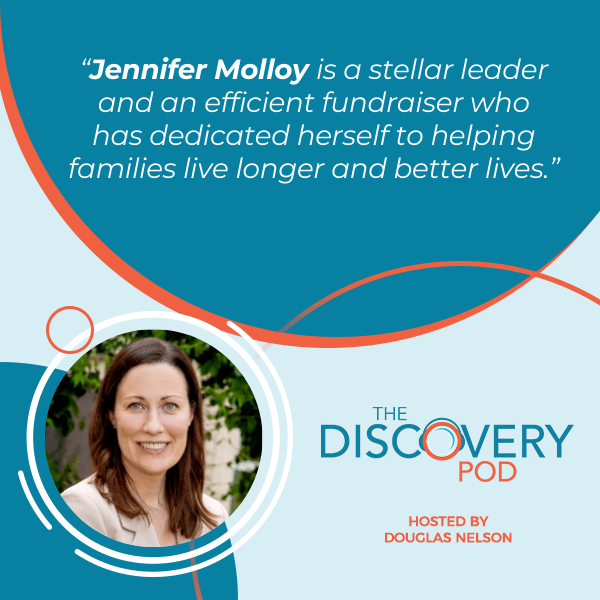
Raising money is one of the lifelines of any hospital foundation. It ensures the organization’s longevity and capacity to save many lives. Douglas Nelson offers a glimpse of what it takes to build successful fundraising models with Jennifer Molloy, CEO of the Royal University Hospital Foundation. She shares the challenges and successes of raising money for the largest clinical teaching and research hospital in Saskatchewan. Jennifer delves into the importance of building meaningful relationships with donors and engaging with the next generation of philanthropists. She also talks about their strategies for recruiting and retaining strong teams who can continue crafting and pushing for effective fundraising programs.
—
Listen to the podcast here
Building Successful Fundraising Models With Jennifer Molloy, CEO, Royal University Hospital Foundation
I’m joined by Jennifer Molloy, CEO of the Royal University Hospital Foundation in Saskatoon, Saskatchewan. Jennifer is a seasoned leader of philanthropy and social profit management. She has more than two decades of experience driving strategic fundraising development and community engagement. Since 2022, she’s been leading the Royal University Hospital Foundation, driving innovation campaigns and partnerships to enhance healthcare. In Saskatchewan. Jennifer brings deep expertise and a passion for advancing communities through philanthropy.
In this episode, she talks about the transition from university fundraising to healthcare philanthropy, transitioning from being in an event space shop to a major gift program, and retaining and building a strong team along the way. If you are looking at moving into leadership in our social profit sector, becoming a CEO yourself, or leading a significant fundraising program, there is a lot to learn from what Jen shares. It’s a great episode. Thanks for reading.
—
Welcome to the show, Jennifer Molloy.
Doug, it’s really nice to be here.
Jennifer Molloy, CEO Of Royal University Hospital Foundation
It is great to have you on the show. We are looking forward to a really great conversation. It’s always a pleasure for me to have someone on who was an outstanding stellar post-secondary university fundraiser who’s transitioned into hospital foundation leadership. It’s like my people coming on the show. I’m really looking forward to what we’re going to cover. As we get started, Jen, tell us a little bit about the Royal University Hospital Foundation, how long you’ve been there as CEO and who you serve.
RUH is the largest clinical teaching and research hospital in Saskatchewan. We handle very serious illnesses and injuries, not just in Saskatoon, which is where we’re located, but really across the whole province of Saskatchewan. There are procedures and services that we provide here that are not provided anywhere else. We have the only PET CT in Saskatchewan. We have a seizure investigation unit. We handle stroke patients from across the province. Really serious traumas. We have a separate mental health center, so I could go on and on, but it really is a very serious, complex care
The role of the foundation there is to raise money to make all that stuff happen, I assume.
That’s right. We want to support innovation. We want people to come to us with really blue-sky ideas. There is this feeling in Saskatchewan that we don’t want to be the last at the table. Everyone is really inspired to make a difference. What’s great about being here is that we have fantastic donors who really want to see that happen.
When you left the University of Saskatchewan and joined RUH Foundation, it wasn’t a lot, much of a difference in terms of commute time, but really a different world when it comes to fundraising. What did you find as you made those first steps from post-secondary into healthcare philanthropy?
What people may not understand from your joke is that we’re really on the same campus as the University of Saskatchewan. I do have a better parking spot, but I am very close to where I was before. I’d been at the University of Saskatchewan for many years. That’s my alma mater. I really believed in education and I still really believe in the University of Saskatchewan, but partly due to my own personal experience.
When I was six, my mom was diagnosed with very advanced cancer. We spent the next thirteen years and through her really strong will and miracles, I guess, in medicine, she was able to spend that extra time with us as a family. When you’ve experienced that and you’ve walked the halls of the family member, there just isn’t anything in my mind as valuable as your health. If I can play a role in that and if the team here can help families live longer, better lives, that’s something I’m very passionate about.
Taking care of your family is just as valuable as taking care of your health. Share on XThat’s a really inspiring reason to come to work and far more important than a good parking spot. This is something that in my travels in my work here at The Discovery Group, we have the chance to talk to leaders across our social profit sector, particularly ones in post-secondary. They’re like, “I’ve always wondered what it’d be like to be in healthcare philanthropy.” Unless they’re a post-secondary client of ours, my advice is always, “You should do it. It’s way better.” What did you find was the difference between conversations you were having with donors in the university context versus what you’re able to have there at the foundation?
What’s interesting about that question is I actually started at Hospital Foundation in Saskatoon. I started volunteering, moved into a part-time role, and then became a fundraiser. It just felt like an instant fit. I was there two and a half years and always said, I’d never go to academics. This opportunity came up at the College of Law.
I went there and then sixteen years later to be back in human healthcare, which I had always said this was my dream job and this was the job I always had my eye on, so it’s very gratifying to be back in that space. The conversations in academia is so important. That’s really setting the future for our province and our nation. There is something really meaningful and I that I feel very passionate about in the conversations that I’m having with people around healthcare.
It is so different. My experiences in healthcare, philanthropy, and donors are willing to share so much about what is most important to reveal their full human selves in those conversations. Has that been your experience?
Yes. There are tears. There are very meaningful conversations. People really open up to you. I actually came from the veterinary school. I was there for ten years. It was an interesting transition because they were also a teaching hospital and we were also talking about healthcare. It was also about animals, I guess, that were very beloved by their owners, so the conversations naturally progressed back there when I started here. It’s just really about people wanting the best for others and they are very emotionally fueled conversations.
Improving RUH Foundation’s Revenue Model
I want to talk a little bit about the transition in the renewal that you’ve undertaken there at the Hospital Foundation. One of the best parts about post-secondary experience is really that deep grounding in major gifts and understanding what it takes to put a case for support together and to build a relationship and to ask for those significant gifts. Many hospital foundations have developed that, but it’s not the natural course of a lot of them. How did you find the revenue model when you got there and what did you do to change it?
I’d say starting at any new organization after you’ve been at one for so long, I would say it was a very humbling experience, but it was also somewhat eye-opening as well, because as is the case sometimes in organizations like Health Hospital Foundations, my reflection on it was that we were spending a lot of time doing transactional fundraising. I think that there was a time and a place for it for sure.
We were doing balls and radiothons and things that were taking up a lot of our time, like golf tournaments and so on. Having come from an organization at the University of Saskatchewan, it was very major gift focus. I had sixteen years of seeing what a major gift program can do for your organization. We have entrepreneurs and business people on our board, and the way that I explain it to them is, if 90% of your revenue is coming from one source, why would you not spend 90% of your time there?

Fundraising Models: If 90% of your revenue comes from only one source, spend 90% of your time there.
I felt that we were spending a lot of time in that area that was raising between 10% and 20% and it wasn’t really building meaningful relationships. What we’ve done instead is we made some really bold, hard decisions. We cut a ball that had existed for 24 years. That was not a popular decision in the community. We ended a golf tournament, we stopped a radiothon. It was big. The board was really like, “We’re going to trust you, but we need to see some results at the end of this.”
What we really did as a team was really started focusing on major gifts and building those relationships and focusing on our priorities and aligning what are the passions of our donors. What are the projects here that would really interest them? We actually did something that was also bold and luckily worked out, but we actually pulled out our number, our major gift solicitations number from our board report.
We really started to focus on the things that we could actually impact upon giving. We all know that’s something where we can focus attention, but in the end we can’t really impact the results. Direct mail, some of those pieces, of course, they’re there and we have a really modest budget because we don’t know how they’re going to do. The number we focus on the most is major gifts because we feel that that’s where we can have the greatest impact.
What was that conversation like with the board? I would imagine there was a fairly significant education process and negotiation around those because those are really significant changes you’re describing.
Yeah, it was really scary the first year. I’d been there a year and the board was like, “Jen, you said you were going to do this. Where are the numbers?” It wasn’t a good year and it was very scary. I thought, “Did I make a mistake?” I was really following my instincts and I felt really confident in the decision that we were making, but the numbers weren’t really following.
You fast forward one year and we stayed on course and we didn’t drift, and we ended up having our best year for major gifts and we’ve existed since 1983. That was really substantial. The following year was also really significant. I think as a board, they could actually see what impact shifting our focus would have. In the end, we’re a fundraising organization and sometimes you can go off in all sorts of directions where you’re adjudicating research and doing some other meaningful work. In the end, our focus is on fundraising.
I want to just underline something you said there. Did it actually take between 12 and 18 months to change the model?
Yeah, it really does. I can tell you. I think we had hoped for a quick turnaround but it does take time and it takes time to build up those relationships with people. It’s very exciting for me now after being here for years to be able to talk about it in the past. Had you talked to me in the moment, I was just like, “I think this is the right thing to do,” but it turned out that my instincts were right.
I’m not surprised, and very glad to hear it, that transition to major gifts is one that so many organizations say this is what they want to do. They often, some of the initial mistakes that come around that are, “What we’re going to do for major gifts is we’re going to ask for larger unrestricted gifts. We’re just going to ask for more money. Instead of asking for $1,000, we’ll ask for $5,000 or instead of $5,000, we’ll ask for $25,000.” That works often enough to be a very dangerous trap for some organizations. It may work once. How did you work to develop the case that supports the shift to major gifts that you undertook?
That was actually very challenging. When I started, there had been a lot of campaigns that the foundation, it was campaign to campaign. That worked at the time, but it was very difficult to articulate who we were. We had to spend a lot of time really diving into that. What people may not understand about Saskatchewan is that I don’t have a CEO of the hospital. We have a provincial health authority and I know that there’s at least one other province that has that as well.
It is a little challenging because there isn’t one leader waking up every day entirely focused on my hospital. That leads to the foundation leading a bit of that work. There’s one communication team for all the hospitals in the province. We took a bit of ownership on that and really started meeting with the decision makers within the hospital, really honed in on who are we as a hospital, what services do we provide, what makes us unique? We also work to become very strategic in our communication. It wasn’t just saying to the community, “This is the one thing we do and this is the one thing we’re raising money for.” It was, “These are our unique areas, these are our pillars of care and this is why you could be interested in supporting us.”
It is more complex when there isn’t the medical or even the administrative lead of the individual hospital. We certainly see that in our work across the country and in Ontario where there is a CEO of the hospital and a board of the hospital and a foundation board. Setting those priorities is still a negotiation. It’s still a bit of a dance, but there is an end result every single time.
Providing The Right Training And Support To Your Team
It’s harder in provinces that don’t have those institutional leaders as part of their system. It may make for better healthcare, I don’t know. It makes it harder to put a case for to, for support together. I know that for sure. You mentioned that the foundation needed to do a little bit more work or lead the conversation around establishing priorities a little more. Can you give us an example of what that may have looked like?
We worked a lot to hone in on what are some of the very innovative priorities within the hospital that would set us apart from other institutions, not just in Saskatchewan, but really across Canada. We started to learn about pieces of equipment that sometimes weren’t even that expensive, but I think sometimes the way that healthcare workers, physicians, and leaders are trained to think is, “How can we save money? How can we operate in a way that’s lean?
Part of the education in that piece around the case for support is, let’s not think that way. Let’s think about what can we do that’s really inspiring. Where can we really make a difference and how can the foundation come in and support that so that, again, we’re not the last ones at the table. We’re also working a bit to align. We support fellowship training. That’s one of our favorite things. We support subspecialists in their training, not just across Canada, across North America and even the world. We’re working to find better alignment.
If we’re training someone in neurosurgery, specifically epilepsy, there’s a return to service component, but yet they will have spent a year working on a piece of equipment that isn’t available in Saskatchewan. Realistically, how do we expect them to stay? Let’s work together to say, “We’re providing this training, we want this specialist to come back because it’s an identified area of need. How can the foundation come in to support that so that we can ensure the long-term sustainability of that program?”

Fundraising Models: Retain the best people in your team by ensuring they have access to long-term sustainability and training.
That’s a great point and one that we hear a lot in our travels, that issue of what’s the role of the hospital foundation in physician recruitment and retention. In some places it’s can you pay for housing? The answer is no or has been in all of the instances that we’ve worked with, but you’ve just put your finger on something I think is really important is that by providing that capacity to do work at the level of their training, it increases the likelihood that they’ll stay.
That’s can be part of the messaging to donors, but really what you’re offering is here’s this margin of excellence that philanthropy can enable. Let’s make it happen here. Your donors say yes and it helps keep the physician teams intact. Does that resonate with donors? Is that something you’ve been that explicit in your conversations with donors?
Absolutely. We just raised money for a seizure robot and the donor involved was just very excited to be a part of something so innovative. At least 10,000 individuals in Saskatchewan live with epilepsy and 30% of those patients don’t respond to medication. Either they live very isolated lives or they potentially, if their case is very severe, could be sent to Ontario for that surgery, which not everyone has access to that type of caregivers that can travel across the country and so on.
Even learning about that piece of equipment and being able to purchase it was very rewarding to the donor to think that potentially, we could cure epilepsy with this one piece of equipment was very meaningful and emotional. He had actually gone to school as a child with someone with epilepsy and had lived through the reality of seizures and how that had really impacted this individual’s life. I think fast forward to where he is now in life, to be able to really have impact on a family like that was extremely meaningful and also meaningful to the specialist who now is willing to stay in Saskatchewan.
Hiring Young People Vs Hiring Senior Folks
It’s a very virtuous circle you’re drawing there and I’m sure there’s lots of examples of that in your work. One of the challenges we’re hearing from a lot of leaders across the healthcare philanthropy spectrum is being able to recruit and retain their own teams and building their own teams and trying to strike that balance between hiring people who are newer to the sector, newer to fundraising and training them up versus hiring more senior folks. How have you approached that at RUHF?
I had a really great chief development officer resign in 2024, and it’s been a real challenge, to be frank, to find someone who has more qualifications than some of the individuals on my team because we’ve done so much training over the last few years on making asks, managing a portfolio of donors and so on. Now we are starting to be a little bit more creative. There’s someone on the team, they’re doing an excellent job, they may not want to move in right now to that chief development officer position. What do we do in the next year to get you to the point where you’re comfortable with that? It is really looking within at the people you have because it is an extremely challenging time to find people who have ten years of experience in fundraising.

Fundraising Models: Always promote people to higher positions within your team first. Today is an extremely challenging time to find people with years of experience in fundraising.
Yeah, ten years of experience that don’t want your job as the CEO.
Nobody wants my job, Doug.
You’re the only one.
Yeah, that’s right. No, but your team is so important. Your leadership team is really important and I feel very close with everyone on the team, especially the fundraisers, because I would say that for RUH Foundation probably that was the area with new leadership that went through the greatest change and the expectations were extremely high.
I feel like we went to war together and we’ve come out very strong. You also don’t want to disrupt this really great culture that you’ve been able to create and you want to make sure that you’re bringing the right person in. That’s where, like you mentioned, you start to look within. As I said, if that person isn’t ready, then what do we need to do to get you to the point where you are comfortable leading a team.
I know in my own career I certainly benefited from someone looking internally when I was at the University of Alberta in the faculty of medicine and having the opportunity to move into the chief development officer’s role. At the time, I thought I was ready. In hindsight, I was not, but had a very steep learning curve. I think one of the truisms of this work is you’re never really ready for that big step or that next step and just leaning into it and embracing what comes in the learning curves that smack you in the face over and over again for those first year or so. Are you done feeling those learning curves?
I think that once you get comfortable with something, especially with the way some of us think in these roles is, I’ve always said once I become really complacent here. I know that my time is done because when you get comfortable with one area, you realize it’s time to move on to the next challenge. That’s where we are now. We feel like we’ve honed in on our major gift skills. We’ve been able to really tidy a few things up and all work really well together. Now what is the next step for RUH Foundation?
Engaging The Next Generation Of Philanthropist
Before we get into what is the next step, I’m curious to get your thoughts on another issue that we’re hearing a lot from clients across the country, that next generation of donors. One of the things that I think a lot of hospital foundation boards or I remind them often when I ever have the chance, when you’re talking about your younger generation of donors at a hospital foundation, you’re talking about people who are in their mi-50s. That’s your younger generation.
It’s not people in their 20s and 30s and they’re like, “No, we need to be doing TikToks maybe,” or whatever, but you look at where the average gifts of $100,000 or more, typically the average age is over 67 years old. A younger generation is not that young. How have you approached that issue that next-gen philanthropist conundrum at your foundation?
I think of it this way. When you go to conferences, there’s always the same topics and no one seems to have the exact right formula. I would put this one in that class as well. We are very aware of this next generation of donors. We think about them a lot. As you said, you have to be really careful where you focus your attention.
One thing that we’re doing at the foundation that has proven to be quite successful, however you want to gauge that, is we have a program here called Women Leading Philanthropy. It’s existed for years and it’s women supporting other women in providing female-led health research. It’s like a Dragon’s Den pitch-style event, but it has not only engaged female donors in our community, but we also have a category for members under 40.
Younger philanthropists are very engaged in talking about an issue and how they want to address it. Share on XI think that it really resonates with that generation because they’re not just being told what to support, it’s very engaged. They attend events, we network and often, younger researchers in their career come and present an issue and how they’d like to address it. It has just proven to be really successful. Our membership continues to grow. Our projects just seem to be getting better and better and the story that we’re sharing is really great. We do have a lot of young female members.
That’s great to hear, very specific, very targeted and executed over a longer period of time. There are some really great elements to take from that. I’d love to come to one of those. Are boys allowed to come?
They are. You can’t be a member, but you can come and attend. I do think it’s nice for men to attend to recognize some of the health issues that are either different for women or just aren’t being necessarily represented in where research dollars are going. It’s like women have identified an issue and they’ve stepped up to solve the problem.
Securing The Right Support System During Challenging Moments
That’s great to hear. Really great program, really encouraging. I’m curious, now that you’ve been in the role for a few years, I’m sure most days have gone very well. You come back at the end of the day and you say, “I just crushed it.” Come through the door at home, everything’s going great. On the off chance or on the odd day when things aren’t perfect, who do you call when you’ve got those moments of challenge or concern?
I’d say my entire life, I’ve had really great mentors. It was actually a mentor who, sadly, passed away, but he was the one who told me many years ago that I should get into fundraising. I’ve always really valued the role that mentors play in our lives. I would say my husband is actually a fantastic person to talk to because he is not involved in this space. He can come at it with a very objective view.
I’ve actually had some board members, past board members. You just really have to collect your team of people that you can reach out to for different questions. I find even having children can be quite humbling because you can have the most fantastic day of work or the worst day of work, and either way, often they don’t care.
It’s helpful to just have, in general, people in your life that see you as you and just want to support you and listen to you and so on. Our jobs are very serious, but we also shouldn’t take ourselves too seriously. I think about that a lot because, in the end, we’re all just trying to do the best work and make the biggest difference and we’re very fortunate to be in these roles.
Stepping Into The CEO Role
It is true. With two teenagers in my house, I can underscore and just agree loudly, both hands open, they don’t care, but I’m sure they’ll turn into lovely human beings. I wanted to come back briefly to the transition that you made from post-secondary into healthcare and maybe not even the sector, just that stepping into the CEO role. As you look back over four years, what was the biggest area of learning? What was your biggest area of growth that you needed to invest in once you stepped into the role
Being a leader, you have your leadership team, but I think of it this way. One day, there was a code blue and it was called right outside my door. It was very emotional and it was actually very inspiring to watch. There was just this moment where everyone was rushing in with their carts. It was chaos, controlled chaos of course. I just remember this moment where someone rolled up with their cart and said, “Who is in charge here?” One person said, “I am in charge.”
I think about that a little bit, that although I can lean on my leadership team or I can call a mentor or I can call other people or the board, but in the end, the decision is mine and I have to make it and I have to be confident and I also have to follow my instincts because there have been times where I have gone against my intuition on a decision because other people thought, “No, that’s what you should do.” I think we have to remember that we’re the ones in charge in the end and we have to make decisions accordingly.
CEOs are the ones in charge. At the end of the day, they have to know how to make decisions accordingly. Share on XJennifer On Launching Her First Full Fundraising Campaign
As we come to the end of our conversation, I get to ask you my favorite question. Jen, what are you looking forward to?
I am incredibly excited to be moving forward in the next couple of years with a really big campaign. We’re still in the early days of finalizing it and making some of those decisions around timing and scope and so on. For me, personally, this will be my first full campaign. As I should, I feel incredibly passionate about it and I’m just being held back at this point around being able to talk about it, but there will be big learning curves for me. I recognize that and it’s going to be stepping into a lot of new challenges. I’m really looking for the opportunity to grow and I’m really excited not just for my organization, but really the difference that will be made hopefully in the province. Even, again, Canada.
You’ve done such great work in building the platform for a large campaign. I can’t wait to be able to break that news about that campaign, maybe even here on The Discovery Pod. We’ll have you back. It has been a real pleasure watching you as you’ve been building the organization and we’ll be watching as you continue to grow.
Thank you, Doug. You did ask me a question around preparing, and I’m not just saying this, but I knew for months that I would be moving into this role. Honestly, I’m a follower of this show and when you talk about mentorship and education and so on, I really leaned into a lot of the people that you had on the show because we all have stories that we can learn from. Even having this available to the social profit community has just been a gift. Thank you.
That means so much. That’s why I love doing this show. It’s conversations like the one you and I are having with others across the sector and being able to share that being CEO being a leader can be quite lonely and it helps to connect people and I really appreciate you connecting and thanks for being on the show.
Thank you so much, Doug.