It is widely acknowledged that philanthropy has played a critical role in both developed and developing societies. However, today philanthropic acts or so-called “do-gooders” are being criticized, mocked, and even attacked by journalists and academics. Where are all these criticisms coming from? And what is the truth about philanthropy’s intentions? Together with Dr. Beth Breeze, this episode examines the validity of criticism against philanthropy and discusses the subject’s real purposes and contributions to society. Dr. Beth Breeze is the Director of the Centre for Philanthropy and a reader in Social Policy at the University of Kent. Join us in addressing the critics and taking an honest look at philanthropy’s role in society!
—
Listen to the podcast here
In Defence Of Philanthropy With Dr. Beth Breeze
This episode has been more than a year in the making. It’s taken a while to schedule because our guest is a very busy and very successful academician, teacher, writer, lecturer, and champion for the social profit sector. Beth Breeze is the Director of the Center for Philanthropy Reader in Social Policy at the University of Kent.
Her 2001 book, In Defence of Philanthropy, is an absolute must-read for all leaders in the social profit sector. It was a privilege to have the chance to speak with her and to listen to her share insights on how organizational leaders can support their organizations and enhance philanthropy with conversations with their board and with their donors. Please enjoy my conversation with Dr. Beth Breeze.
—
Dr. Beth Breeze, welcome to the show.
Hello.
We’ve been looking forward to this conversation for a while now. I want to start with the question we’ve been asking all of our guests on the season, which is to tell us about your first experience of charitable giving or service to a community that you can remember as a child.
I grew up in the North of England in a city called Leeds with a very working-class childhood. Charity and nonprofit action were everywhere. People helped each other very much mutually aid poor to poor. It was very natural for me to donate at church and within the community for people to help each other, but my first experience of philanthropy was slightly different.
It was as a recipient of philanthropy. At the age of about sixteen, I had the extraordinarily good fortune to be funded to go to an international boarding school, entirely paid for by one philanthropic man called Maurice Laing. Laing is a big building company in the UK. I applied to the school and they arranged all of that.
Two years of my life were funded by this individual philanthropist. I suppose that planted a seed of being curious as to why. Why would somebody who didn’t know me be willing to pay a large sum of money to give me this life-changing opportunity? It really did change my life, the education I got there, the opportunities, and the broadening of my horizons.
Later on, as I went to university, I got funded two other times by corporate philanthropy and by basically a giving circle that funded people to go and study at the University of Pennsylvania for a year. I had these three life-changing experiences that have been funded by philanthropy. That’s what got me started thinking, “What’s it all about? It did me a lot of good, but what’s its broader meaning, purpose, and impact?”
It certainly led to some great questions you’ve asked and answers that you’ve provided. I’ve been a longtime admirer of your work and I recommend your latest book, In Defence of Philanthropy, to peers, colleagues, and clients we’re working with all the time. To our audience members who maybe aren’t as familiar with your work, can you tell your story of how you became a researcher, lecturer, and author on philanthropy?
Even though I was this recipient of philanthropy, it never crossed my mind that you could make a career out of studying philanthropy. That doesn’t seem like a particularly normal job when you’re a sixteen-year-old kid in the North of England. I got a proper and normal job. I worked as a fundraiser in a youth homelessness charity in London, and I loved it. It was as close to being a magician or a rich person as I could ever have imagined being.
I wrote appeal letters, organized events, asked people for money, and money appeared and it funded good work. It was quite a small charity, which is a lovely place to begin a fundraising career because you can see with your own eyes the good work that’s being done. If I was having a down day, I could look out the window and see the young people and the young families that we were helping at the homeless hostel. I loved that work, but again, it raised a lot of questions for me, “Why did they give, but they didn’t get? Why do you send out the appeal letters this month and not that month? How does it all work? What are they getting out of it? Why did that ask work and that didn’t work?
I suppose that’s what eventually pulled me back to studying Philanthropy rather than doing it. When I use the word philanthropy, I include fundraising. The asking and the giving. They’re two sides of the same coin, fundraising producer is philanthropy. I spent several years being a fundraiser. I absolutely loved it, but gradually thought, “I want to go and study this and understand it more. Also, provide more training for fundraisers,” because I was sitting there, my lunch breaks trying to learn how to do fundraising, whilst all my colleagues who went into private sector jobs or into public sector jobs have no end of courses, MBAs or high-level training they could do that was available.
People in the charity sector very often make it up as they go along. It’s quite an apprenticeship model, which is good in some ways, but in other ways, it means the sector on the whole is underpowered because we’re not sharing the research and the training. I wanted to come into academia, not to research it but also to teach it. I do both of those things now.
You started with your experiences, the recipient of philanthropy, and then sitting at your lunch breaks thinking about how to raise dollars for the organization that you were working for. I’m curious what the initial motivations for donors that you uncovered through your lived experience. Why were these donors giving?
My first job was at a Catholic homelessness charity. It was founded by Cardinal Basil Hume so most of our donors were Catholics. Therefore, we had quite a constituency of people to appeal to. I used to spend my Sundays going to church and giving the appeal after the sermon. I kept it short because people have enough by the end of a sermon. We’d go into Catholic schools and so on and hold a Thanksgiving Mass.
Religion is often an underrated motivation in North America, but especially in the USA it’s better understood, but in the UK it’s still a very strong driver of giving. It’s not so much theologically driven, it’s community driven. You’re a part of the community of Catholics, Jews, or Muslims and that’s what everyone else is doing. There’s a real strong influence of social norms and also opportunities.
When you go to church, a collecting plate literally comes under your nose. You’ve got an opportunity to give that if you don’t go to church, that’s 52 less opportunities a week to the spare change. All of these motivations, religion, social norms, opportunity, awareness of need, and so on are there in different guises. Another interesting about nonreligious people, they often give because they trust a charity run by a nun. They think it’s trustworthy. Also, people don’t like saying no to nuns. I tend to find some friendly sisters to help me make the ask.
They may have a ruler somewhere close by to wrap your knuckles if you say no so they want to say yes.
They’re very nice nuns.
It’s one of the most fascinating things that I uncover in the work that we do here at the Discovery Group is working with boards and then wanting to understand why donors give. Donor motivation is a big question that comes up. It’s always a bit of a caution flag for us when we hear boards say, “So and so should,” or “Let’s go talk to her. She has,” with the expectation that it’s either naming opportunities, getting your name in lights, or the weight of the gold in someone’s bank account forces them to give. We know that’s not at all how it works. Thinking about the motivations of giving, what is it that you think is most misunderstood either by critics of philanthropy or those who are unfamiliar with it?
I recognize what you’re saying though. If I could wave a magic wand and change one thing about nonprofits, it would be to help boards and chairs of the boards better understand how fundraising works and some basic facts about it. The more you invest in fundraising, the more you raise. If times are tight and cut the fundraising budget, that’s not going to lead to the outcome that you hope for. Motivated and supported fundraisers are your absolute secret ingredients to a successful organization.
To your point about misunderstandings, and you’ve already mentioned some of them, the idea that because you have the money, therefore, it will come the way of the cause. I once knew a chair of a board who was so pleased with themselves. Do you remember when you could first buy domain names for websites? He somehow managed to buy Philanthropy.Co.uk or something like that. He presented this to his fundraising team as if to say, “There you go. Job done. I’ve bought Philanthropy.Co.uk. All you got to do is distribute this and the money will be attached to the charity and it would come in.
It was very well-intentioned but he simply didn’t understand that only providing the mechanism for the gift was not going to provide the motivation and the inspiration for them to come in. Other than that, things like tax breaks, I certainly remember board members, events I organized would want to go heavy on the tax break that would come. You’d have to say, “Nobody wants to think that’s why they give it, even if it’s part of the calculation.” It’s certainly not at the forefront or it doesn’t like a good reason to leave with. The general misunderstanding around tax breaks is that sometimes you can yourself through them and however high the tax break, it still costs you something.
In the UK at the moment, for example, the higher rate of tax is 40%. We do have another band at 45% but more people are in the 40%. To give £1 million if you’re in that tax break that would cost you £600,000. That’s £600,000 down on the deal even if you claim the full tax break. Yet, it’s very easy knee-jerk for people to say, “They only gave because of the tax break.”
That’s one level quite enumerates to think that. What is true though is it’s nice to give £600,000 and become a £1 million donor. There’s something about being a £1 million donor. That feels good. It’s certainly attractive. I don’t dispute that, but it’s not the case that anybody is personally scamming the tax system. It still costs them something. That’s one misunderstanding.
The name in-lights one is quite a difficult one because again, people imagine sticking a name on whatever it might be a building, book, bench, or what have you, but very often the donor themselves is quite worried about that. I’m not sure it’s a good idea. It’s the fundraiser who’s saying, “If you put your name to this, that’s like an advert to all your peers, friends, networks, and to the world at large that, “This person at this organization is enough to give that much money.”
It’s them doing the due diligence for you. “Please come and put your name on it. At least do some press work or some pretty opening event.” Those who criticize philanthropy don’t realize how often it’s the fundraisers who drive the public recognition side of things. I’m not saying always. I’m sure there are some donors who love, but quite often as reluctant donors say, “Do I have to? You don’t have to. Do we want to stand up? Would that really help?”

Philanthropy Defense: Those who criticize philanthropy don’t realize how often the fundraisers drive the public recognition side of things.
I’ve collected in a book a number of examples where people who put their name or shared their story have then inspired their friends, networks, or others who are alumni of the same university to say, “It sounds maybe strange to us who are all in the nonprofit sector, but it’s not always clear to everybody which organizations are seeking funding and who’s open to business and capable of taking in a big donation.” To hear that an organization that you love, whether it’s a theater, university, or hospital, has received let’s say £1 million, at some level clicks that thought of, “I could do that as well.” It’s helpful for fundraising more than it’s helpful for donors’ egos.
“If Beth can do it then I can do it, then maybe I should.”
I can bring it in. I can’t give it. That’s the magic of being a fundraiser. It’s the closest I’ll ever get to being a philanthropist.
The name in lights thing, I can think of donors that I worked with over my career that are very much motivated by that. Those tend to be the funny stories that fundraisers share over a glass of wine at a conference, but I’ll never forget a donor that I worked with who was very cause-motivated. He’s very humble in his approach to giving and very new to giving.
This is someone who late in life had decided that he’d had a bit of a scrooge moment where he realized that he needed to be different and show up differently, and made a very thoughtful gift and a very significant gift. At the end of it, he was quite emotional about being able to do this and what it was going to mean. We were quietly celebrating what this gift would do and that they had finally said yes.
In the end, he paused and said, “What do I get for this?” What was so fascinating to me is we had the conversation that he had been so used to a life of deal-making and value-trading and the transaction of it that he felt like he didn’t want to be taken as a sucker. He’s like, “I should get something for it.” He wanted to talk about naming. As we talked about it, he said, “I realize that the feeling that I have about making this gift is what I’m getting in return. It’s not the naming.” There was a naming but it was quite modest certainly relative to the size of the gift, but he wasn’t used to providing value through his gift and not getting anything back for what the deals he’d made in the private sector.
It was educational for me to hear that story and to walk with that family through that journey. They wanted to do this. They wanted to have the positive impact that their gift was going to make, but they weren’t sure how to do it. Whenever I read some of the critiques of philanthropy and donors giving back, I often think of that couple because they could have done anything with that money and they’d done lots of things with their money that wasn’t very philanthropic or they bought things in boats and fourth house and now they were giving back.
They weren’t sure of the path, but they wanted to do it. For me, an example of our work in the sector done very well is that we provide those opportunities for donors to walk those paths. While there may be a lot to criticize individual donors while they’re giving, in that process of giving, and learning how to give, there is a lot to respect and value.
I recognize that story, especially if it’s a first-time donor. Why would they know how it works? What I hear that donor saying is, “What happens next?” When you buy something in the shop, the yacht gets delivered or it turns up physically. Philanthropy is an intangible transaction. The question is, “How do I get to know how the money is spent? I’m anticipating doing this good in the world. What’s my ongoing connection to it?”
I suppose if your name is on the building that’s a very physical manifestation of that ongoing connection, maybe you feel we have some right to enter the building and be part of it. Often the question that’s being asked isn’t what they mean, they just mean, “How do I stay involved?” The best fundraisers are good at stewardship and making sure that when the donation is made, that’s the start of the relationship or certainly, not the end of it. It’s making sure they know they’re welcome but if they want to know what’s going on without having to be asked, they get updates on what happens. If donors knew that that would be provided, they would be less worried about what happens next.
The other thing to point out, as you were saying, how delighted they were. I’ve interviewed many major donors in my time and some of them stand out more than others. I remember talking about how he was shaking with joy. It was a very physical description and he did in fact have his name on the building. I wanted to mention that to be in the interest of balance that he wanted his name on the building because he had quite an unusual surname and he only had daughters.
For him, it was much about the surname living on and it wasn’t his surname, it was the family surname. That was part of the deal and it was a £2 million gift to a British university. His name is on this music building and that brings great joy to know that his surname will last. Whereas let’s say, your surname was Smith, it might be less appealing because it’s not distinctive. It’s important in all these things to remember that philanthropists are people. Some people care about these things and some don’t, but it doesn’t mean anything about philanthropy, in general. It means that people are different.
It's important to remember that philanthropists are people, and some people care, and some don't. It doesn't mean anything about philanthropy in general. It just means that people are different. Share on XThere is so much that I want to talk to you about. I’ve got pages of notes in front of me. One of the questions that you raise in the book and one of the issues that you’ve talked about in some of your blogs and some of the talks that you’ve given is that misunderstanding on the role of costs or administrative fees in organizations and how that is a conversation around overhead in quotation marks can work against philanthropy in some pretty negative ways.
In our work, we see that issue most challenging for small and medium-sized organizations that are attempting to fill an expanding need or fill a gap in social service, education, or health. In order to invest in their growth, they need to spend more money. Whether it’s the thinking of their board or the thinking of some of their donors, they’re held back from sufficiently investing in the infrastructure of their organizations to be able to deliver an excellent service to more people or an excellent service more deeply to the populations they serve. Through your work, what have you seen around that and what advice do you give to leaders of organizations who may have board members or donors asking about their overhead?
Again, I recognize that. Hopefully, it’s changing. There is growing awareness that you can’t pay for the thing. I’ve heard it’s called projectization. It’s this project and put a price tag on them. It costs something to staff that thing and do all the work around it and bring the money in for it. It is changing slowly but that message is often best delivered by fellow donors because the charity would want to add on 10% or 20%.
This phrase is lovely when I learned it and when I was speaking with some Australian colleagues, they’re campaigning for, “Pay what it takes.” Maybe that’s the common phrase in part of the world, but it was new to me and it’s a much nicer phrase than full cost recovery, capacity building, or these technocratic things. Philanthropy is from the heart. We should use normal language. If you say, “We need to pay what it takes,” even if that includes paying for the fundraiser to have some training, governance costs, and the Wi-Fi connection. You need to pay what it takes to deliver the service that the donor and the charity both care about.
The best advocate for that is fellow major donors. I remember sitting with one when I do my interviews, I always let them choose where to meet. I’m always quite intrigued by where they’re picking off, often it’s their office, or might be their house. I get to have a little snoop around and be nosy because I am and most researchers are quite nosy. This particular philanthropist, in fact, he’s the one I start the book with the example of the funding that needs a center. We were sitting in a greasy spoon cafe. Does that have resonance in North America?
Yes, absolutely.
The good solid basic home-cooked food and we’d ordered our fry up, our English cooked breakfast, and we were talking exactly about this point about donors who only want to pay for the project and not for the overheads. When breakfast arrived, he used that as an example. He said, “I know that this breakfast cost £5 but the actual items on the plate, the sausage, the beans, and the egg didn’t cost £5. I understand that I’m paying for the plates, cutlery, washing up, waitress, table, and lights.”
“I understand there are overheads no matter what you pay for.” He’s somebody who was willing to speak to his fellow donors to say, “Come on. You can’t pay for the sausage. You’ve got to pay for all that comes with it.” That’s a much more powerful message. We need to educate not board men but also our donors to spread that word.
The peer example, whether it’s in the giving, how they give, or what they give is powerful. The other piece of advice I’ve heard that is important for leaders of organizations to keep in mind is in answering that question about what it cost or what’s your dollars to a mission or however people choose to ask that question, it’s important to give a why answer and not a how answer.
You said the technocratic answer of, “We used full cost accounting,” which is going to make no donor ever feel better. It’s going to feel like a trick or a diversion, but I like that pay what it takes because it’s the why and we’re paying what it takes. It centers the conversation on the purpose of the organization, the work that the organization does, and what the donor wants to fund rather than treating the benefit of the gift as somehow separate from the work of the organization or the overall work of the organization. We put it all together in that big square.
It leads to, “Pay what it takes to cure cancer. Pay what it takes to give these kids an opportunity. Pay what it takes to provide decent housing.” It leads to the mission. We need to always bring it back to the mission because we’re not raising money for the sake of it, we’re raising money to do something. Sometimes, especially in the bigger charity, this is why I’m glad I got my start in a small one because it’s so much more obvious, but sometimes I do sympathize with fundraisers who are a very small cog in a very big machine with a big target. It’s important that everybody remembers what money is for.
Fundraising is not just raising money for the sake of it. It's raising money to do something. Share on XOne of your early questions was, “What the board members can do?” Giving the fundraisers a chance to see the work that’s being done and not to presume that they know, especially if they’re a big organization. It’s difficult if it’s overseas, but you can still find ways to make it real, and then that motivates the person who’s doing the asking.
It makes them much more credible when they’re talking to donors as well.
In fact, there’s a nice study that was done on that within a university setting. The fundraisers on a telephone are probably students rather than professional fundraisers. If they had met some of the recipients of the scholarships that were being fundraised on this telephone, they could see what was needed on campus and then hit the phones. They were much better at their jobs than people who had a script to put in front of them. They’re making it real for the askers as well as for the donor is important.
One of our clients has their director of student awards for their university and was a full scholarship bursary student through her undergraduate at the university. She had the chance to work with the donors at the award she received. She’s now working with her donors as a professional. There are no better words with a donor than thank you for the support you gave me that direct experience matters a lot.
Your book, In Defence of Philanthropy, made me sit up straight while I was reading it and I was a little taller after I finished it as someone who has spent my career in the sector. One of the things that I want to touch on as we go through our conversation is, there are criticisms of philanthropy and surely there always have been. I’m wondering if you could talk to us a little bit about the historical elements of the current critique of philanthropy, how it was dealt with then, and how we might respond to it now.
Thank you for what you said about you sitting up straight and feeling taller because that’s exactly the audience. It’s probably worth prefacing before I dive into any of the histories, which is important that a defense of philanthropy is not on behalf of the philanthropists. I don’t think Bill Gates is that thin-skinned that is sitting around waiting for me to come up and defend him. Some people imagine that’s what I’m doing and I’m not.
It’s a defense of the activity of philanthropy as an important and distinctive part of society, but I suppose more pragmatically is for the people who are doing the asking, people who are working with donors for the beneficiaries, and people who are affected. If we do undermine the reputation of philanthropy, we make it harder to do all of those things.
I love it when I hear fundraisers saying, “I was a bit worried that perhaps I wasn’t doing the right job,” or the grant-making foundations, “I was a bit worried that we were causing more harm and good and I read your book,” and I thought, “No. We’re doing some good and I love that.” That makes me very happy. Historically, if you call your book, In Defence of Philanthropy, then the first question you get is, “Who’s attacking philanthropy? Why does it need defending?”
I thought a good answer to that is an entire chapter on the various forms of philanthropy. The oldest I found is 1545 or something, but I’m sure there were more before that. I’m sure the Romans and Greek used to touch and sniff at those egotistical donors and wanted their names on the marble pillars. This is part of life, as I say, these are just people. There’s certainly no shortage of attacks over the centuries.
It depends on what the norms are at the time, but for a while, it was very much about trying to find a way to paradise and salvation. It’s very much about your concern for your own heavenly afterlife and that’s why you’re doing it. You don’t care about the poor person in front of you. You then got the period of you’re doing it to the royals, dukes, princes, or what have you with that social climbing accusation.
You’ve got the social control theory. You only want to put a museum, theater, or amphitheater into the town to stop the poor writing and demand change. Again, huge resonance is with the critiques that you hear now about you trying to stop the world from getting better by providing enough so that people don’t complain too much. These accusations are very longstanding.
Also, the idea is that the donors themselves are a bit unlikeable, “You’re prudish.” Look at Charles Dickens full of humorously but unpleasant people who don’t care about their own kids in front of their feet and are spending all their time and attention on doing good, which maybe not so good far away. This idea of mocking philanthropists at best well-intentioned, but not very nice. There’s nothing at all new in these accusations. Some of the better-known critiques were for John D. Rockefeller and Andrew Carnegie, probably two of the best-known names in philanthropy.
When they started up their foundations, there wasn’t a general celebration and Ticker tape parades in New York because the critics would have you believe, “Philanthropy’s always been celebrated. It’s about time we called them out.” They were condemned and called a menace to society and huge worries about why these people were doing what we were doing and what consequences we would have, which are good questions to ask, but it’s simply not true that all has been well in the garden of philanthropy until the last several years when the critics have piled in.
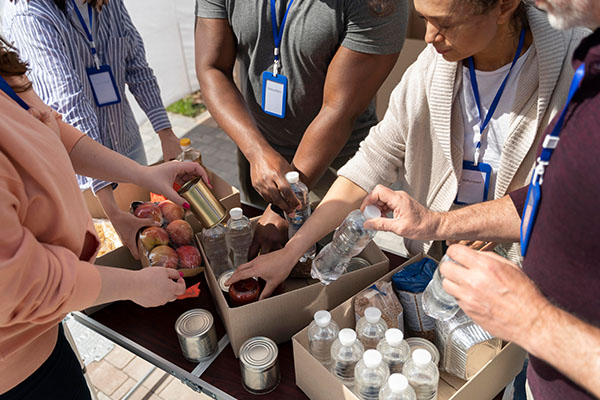
Philanthropy Defense: The critics would have you believe that philanthropy has always been celebrated. It’s about time we called them out.
That was one of my main concerns was to say that these are not new. It doesn’t mean they’re not worth discussing, but it’s at least worth bearing in mind that, “What is it about these criticisms that bear repetition? Which of them can we try and work on and solve? Which of them are inevitable tradeoffs?” If it’s going to bug you that someone’s got their name or something, then that’s going to bug you and there’s nothing I can say that’s going to change it.
Someone else might say, if my kid gets to go into that hospital and get some help, they wouldn’t have got otherwise, or in my case gets a scholarship. I don’t mind if the donor gets a bit of a warm glow on their name. We all have different takes on what tradeoffs are acceptable. We have to accept that we’re never going to please everybody.
That warm glow goes beyond the donor and it reminds me of the story of a donor who gave support to a breast cancer clinic that had supported her through her cancer journey and her name was on the wall. She got a letter from a woman who was a patient a few years after the donor had gone through and had made her gift. She thanked her for making the gift to the clinic and it made her feel as though as a patient someone cared about the outcome.
I’m not a harsh critic of philanthropy. I’m very much an advocate for it. Examples like that are powerful to share. It’s the human connection that philanthropy, whether people have met or not, but that shared interest in a place, in a cause, or in a way of improving life or experience for people extends beyond the transaction.
There’s a word that I’d use to describe that and I don’t think it’s a word that lands as well in North America as it lands in Europe, I’d call it solidarity. Solidarity with fellow cancer sufferers or solidarity with fellow people who’ve experienced whatever the need might be. James Cozy, solidarity with people who equally felt isolated or felt their mental health is suffering. Also, regarding bereavement charities, some people say, “Can’t we pay for it all through tax?” If tax was higher then we wouldn’t need the nonprofit sector.
If I needed to phone a suicide hotline, would I want the phone picked up by a civil servant or public servant who was doing it for their job or would I like it picked up by somebody who’d also been through that experience and was going to be able to relate to me as somebody who was going through it now that they’ve maybe been through several years before? Solidarity between people who’ve experienced things and these things cost money. You can be very rich but bad things can happen to you, whether it’s health, tragedy, or what have you.
I would love to find a way to rehabilitate that word into philanthropy. I wonder if another word that be more acceptable like allyship. How is it possible for people of wealth to be allies? They need to be careful that having wealth put someone in a different position to someone who’s not got wealth, but is it possible if you’re a wealthy woman to show allyship with women who would like access to reproductive services or access to a career or an education? The common bond of being a woman can override the fact that one of you has got a lot of money and one hasn’t, or it can at least can allow you to help each other and support each other. The story you told is a good example of that.
Fellow travelers, whether they’re fellow travelers in life in a metaphorical sense or with the connection to cause that those that benefit and give have an idea of an outcome in mind that is often shared, and the best organizations are shared and celebrated. It is that connection of people. We don’t use solidarity in North America very often. It has trade unionist overtones, but the concept is important for leaders in the social profit sector who are having conversations with donors who are addressing concerns about philanthropy, in general. That idea of human connection is a really important part. It’s a way to start the conversation in response.
Sometimes that connection can be the moral imagination. You don’t have to personally have lived experience. I’m pretty sure the man who funded me to go to that school had not himself needed rescuing from a childhood where this opportunity was very essential. You had empathy with what it might be like to be talented but were not able to fulfill that talent unless somebody helped you. There’s something beautiful about when people had a hard start in life and then do well and then give back.
Sometimes the critics are happier with that kind of philanthropy. They came from the streets so it’s okay for them to fund the kids’ project. I was debating with the critic who made exactly that point. They felt much happier about something like the LeBron James Foundation. I had to learn my North American sports to find that out. Once I looked at it, I could see what they meant, “This was a man of a very similar background to the kids who he has helped.” I can see the beauty in that, but what if you’ve not ever had personal experience of deprivation but you still think, “It’d be awful to be deprived. I’m so glad that my kids in my life weren’t like that.”
We have to give people more credit for empathy and for that, as I say, moral imagination, a phrase that Michael Moody quote often in his writing on philanthropy which has always struck me is important, again, not really spoken often enough, that factor. That’s what takes me to the idea of allyship and solidarity. Why can’t we be in solidarity with people even if our lived experience is quite different from ours?
We can be in solidarity with people even if our lived experience is quite different from theirs. Share on XWhat a great question and conversation to be had. As we come to the end of our conversation, again, I encourage people to pick up In Defence of Philanthropy if they haven’t already. For CEOs or executive directors running social profit organizations who may be reading our conversation, what is an important takeaway that you think they should take away from your book and your perspective that you share In Defense Of Philanthropy?
CEOs and leaders live in the same world as the rest of us. They live in a world in which there’s a growing cause of criticism of philanthropy. You sit and watch a comedy show at night on Netflix and the guy makes a funny joke about philanthropy. You watch a Hollywood movie and the buddy will be disguised as a philanthropist. It’s all around us this idea of people are not good people, especially rich people who are not capable of being good. This is everywhere. It’s hard to avoid it.
What I would love is if all of us including the CEOs could question it a bit more. When we feel ourselves thinking, “They would do that. They would want that.” Where’s that coming from? Where are we getting this idea from tack matters or ego matters? Are we sure that’s the case or are we making assumptions about other people and having conversations with our donors?
When I was a fundraiser, I learned from a very good fundraising manager and we talked about, “What do you do when someone used to give to your charity and stopped giving?” What you really want to do is ask them. “Why have you stopped giving? We still need the money.” He said, “Ask them why they first gave.” Say, “Hello Mr. So and so, I’d love to know what was it about our charity that first prompted you to give?” What that does is it sparks a memory of what it was about your cause that prompted them to open their heart and open their wallet. It reminds them that they probably still feel that way that they care about homelessness or whatever it might be.
Life gets in the way. Sometimes we have tougher times financially or other causes emerge. It’s reminding people why they cared. If boards always worry about being asked to get involved in fundraising, they’d rather poke their eyes out than ask for money. It sounds like an unpleasant thing to do, and I wish they knew that the fundraisers don’t need them to ask for money. That’s what they do. What they need them to do is be friendly and supportive to the donors and talk to them.
Simply asking, “Thanks for coming to our event. What is it about our organization that appeals to you? How did you come to be in touch with us?” It’s an easy question and it’ll provide so much information about that donor and the cause. It’ll take you to a place that moves you an awfully long way away from tax breaks and names on buildings.
The question that I encourage fundraisers to ask is, “Tell me about a gift that you and your family are particularly proud of.” We don’t ask it as fundraisers because we’re afraid they’re going to talk about another organization other than ours or we’ll feel jealous if it was their alma mater or a hospital. Getting people talking about why they give and what brings them joy in their giving really does make them more inspired to give.
Absolutely. It’s not rationed. One of the great things to remember is that most people are not giving at the level they could. I’m not being that person who says because they got the money they should give. It’s true that there’s an awful lot of wealth out there and people are not generally stretching their philanthropy. I agree with you asking them about their other good philanthropic experiences won’t cause them to cannibalize that other gift to give to you.
“I remember them and I like them. I’m going to go give them more money.”
There’s more to give all around. We need to grow the pie rather than think about rationing it. Again, the world of fundraising is wonderful because broadly we’re not in competition with each other. There’s plenty of money to go around. It just needs to be asked for well and the donors need to understand how it was spent and to see that impact, and then we all win.
Thank you so much for making time for the conversation. I enjoyed it. Again, I encourage all leaders to pick up In Defence of Philanthropy by Beth Breeze. Thank you, Beth.
Thank you so much.
Important Links
About Beth Breeze
 Beth worked as a fundraiser and charity manager for a decade before co-founding the Centre for Philanthropy at the University of Kent in 2008 where she now leads a team conducting research and teaching courses on philanthropy and fundraising, including an innovative MA Philanthropic Studies taught by distance learning. She researched and wrote the annual Coutts Million Pound Donor Report from 2008-2017, co-authored Richer Lives: why rich people give (2013), The Logic of Charity: Great Expectations in Hard Times (2015) and co-edited The Philanthropy Reader (2016). Her last two books The New Fundraisers (2017) and In Defence of Philanthropy (2021) have both won the AFP Skystone Research Partners book prize.