The global landscape of humanitarian aid is facing unprecedented challenges, marked by increasingly complex, protracted crises and massive funding disruptions. How do organizations like Médecins Sans Frontières (MSF), or Doctors Without Borders, navigate this new reality, especially when core principles like neutrality are tested and government support is pulled?
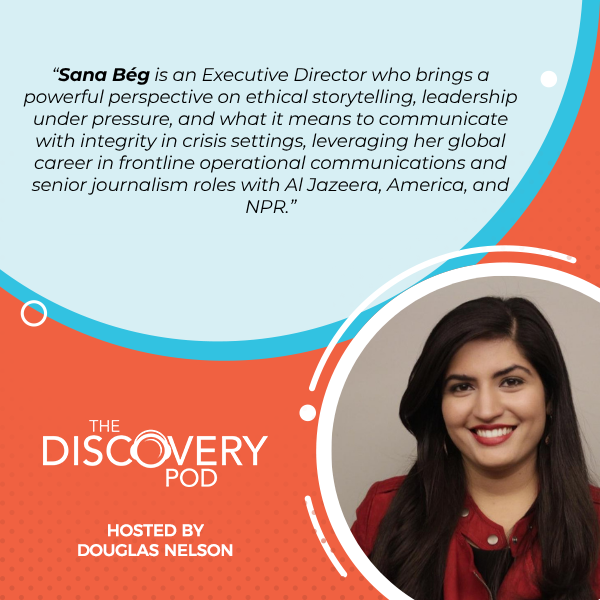
In this powerful conversation, Sana Bég, Executive Director of MSF Canada, offers a compelling perspective on leading through global crisis and funding disruption. She details the profound ripple effects of crises and cuts—such as the disruption in USAID funding—even on independently funded organizations like MSF.
Sana shares her insights on:
- The critical mission to “bear witness” to suffering, balancing impartiality with the responsibility to speak out.
- The moral hazards of having to stretch resources to fill gaps left by others, and challenging the assumption that “growth equals impact”.
- The role of “hopeful optimism” in leadership, and the urgent need to disrupt entrenched mindsets to ignite a new era of truly equitable humanitarianism.
Dive into this essential discussion about strategic leadership, maintaining integrity under pressure, and how MSF Canada is mobilizing global action in a world that is attempting to normalize the removal of humanitarian norms.
—
Listen to the podcast here
Leading Through Global Crisis And Funding Disruption With Sana Bég, Executive Director, MSF Canada
On this episode, we’re joined by Sana Bég, Executive Director of MSF Canada. With global career spending frontline operational communications in complex, crisis settings, and senior journalism roles with Al Jazeera, America, and NPR, Sana brings a powerful perspective on ethical storytelling, leadership under pressure, and what it truly means to communicate with integrity when the stakes are the highest.
In this episode, she talks about the incredible energy that is put into maintaining the movement elements of MSF across the globe. The critical role that MSF Canada plays in that global movement and the challenge of delivering services in a world of increasing complexity and greater need. This is a leader who is thought deeply about the way to have the greatest impact on purpose. She shares that all in our conversation. Please join me in my conversation with Sana Bég, Executive Director of MSF Canada.
—
Welcome to the show, Sana.
Thank you for having me.
It is going to be a wide-ranging conversation as a part of this season of the show. We’ve had a number of leaders from the international aid and the international development sector that has been so profoundly disrupted. Both by public events and conscious decisions made by funders particularly in the United States. We’re looking forward to better understanding the experience that you and your colleagues at MSF have had over the last number of months and how you are responding to it. As we get started, please tell our readers or give our readers a quick overview of what MSF is. How do you serve? How do you do it?
MSF’s Founding & Core Principles
It’s such a pleasure to be here and have this conversation. MSF stands for our French name, Médecins Sans Frontières or commonly known as Doctors Without Borders. We’re an organization that started in 1971. A few doctors and journalists realized that a man-made famine happening in a part of Africa was something that they were very compelled to speak out about. The doctors recognize that what they were witnessing was something that no one else perhaps had access to.
In addition to providing the emergency medical care that they did, they made a decision, “We want to make bearing witness a key part of what we do.” We’re so in the seats of what is an organization that works in over 70 plus countries. It has over 68,000 staff. Eighty percent of those are locally higher. What we do is we provide emergency medical humanitarian aid to people. Regardless of race, religion or political affiliation while also bearing witness to what we see.
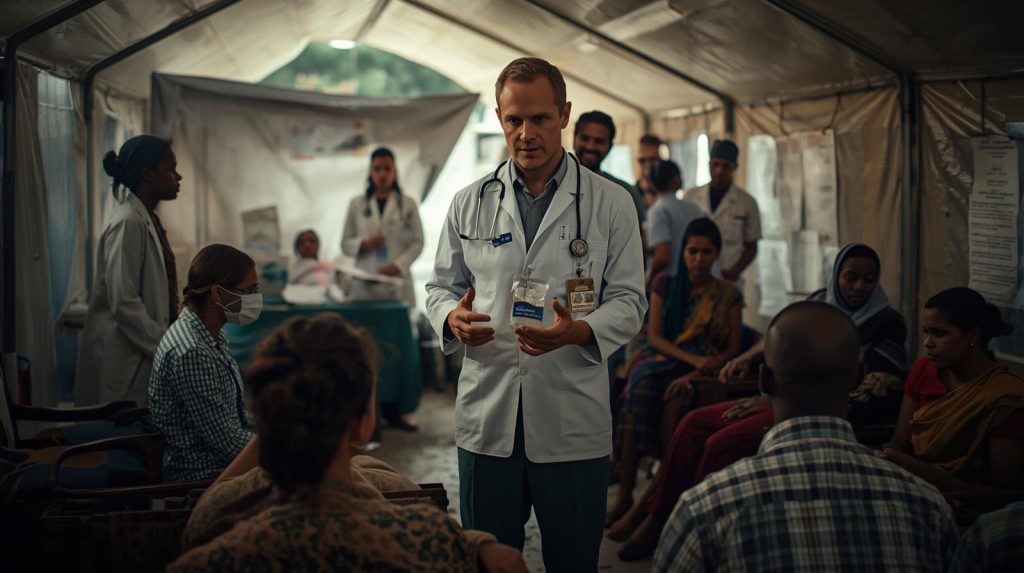
Crisis Leadership: We provide emergency medical humanitarian aid to people, regardless of race, religion, or political affiliation, while also bearing witness to what we see.
We provide medical assistance to the most vulnerable people in situations of natural or man-made disasters, in war and conflict, pandemics and epidemics. In other cases, where the most vulnerable may fall through the cracks of existing healthcare Systems. In these 50 years of our existence, we’ve tried to model what we believe are very strong principles. That of neutrality, impartiality, independence, and témoignage bearing witness to the suffering of the patients.
We are independent. Approximately 97% of our income comes from private donors from private individuals. That ensures that we can maintain independence from government agendas. It also means that we can quickly dive in assessing needs independently and see where they are needed the most and quickly act.
It is a powerful organization and one that I think so many in our sector are very aware of as doing important work. That combination of doing the work and telling the world about it and that bearing witness is probably the beauty and the challenge of the organization. Those governments or those situations where there are people falling through the cracks. People who don’t have access to care often have governments that aren’t particularly inclined to support them. That’s why they’re in that situation. MSF is there. Thinking as the Executive Director in Canada. How do you balance that mission to tell the world about it with that desire to be viewed as political?
We ground every decision that we do in the evidence that we have. It’s evidence-based témanouge. We only speak out about what we see firsthand. To us, that is political. Being political or being impartial and neutral is not necessarily synonymous with silence for us. We see that as a key responsibility when we have access to patients that are most vulnerable. We see them being presented with medical conditions and situations where they bear witness about what they have been through. We see that as a core responsibility for us to be able to speak out in the most grounded in evidence way as possible in our medical data.
That is fascinating. That insight of being neutral isn’t silence seems obvious when you say it. Certainly, that’s what a number of organizations have been struggling with in the space as what was previously seen as the good work of the sector. It has become politicized in a number of conflicts around the world in 2025, or even more politicized than it is typically. How is the disruption, particularly in the USAID funding and the ripple effects from that? How has that affected the work of MSF around the world?
Impact Of US Aid Funding Disruption
In the early days of when we heard the news from the US government and the disruptions in the USAID space and beyond, we would often say that we’re not funded by the US government. Therefore, we are not impacted. When you zoom in and now through the protracted length of the impacts of this, quite honestly, we are impacted. For MSF to be able to do the work that it does, it relies on the functioning ecosystem of other partners to do what they do effectively.
In the absence of that and the massive disruption that this has caused, it’s leading to a real dilemma, to real moral injury on the choices that we may have to make. Where do we stretch ourselves too? We’re seeing clear gaps because of other actors having pulled out because of the lack of funding. Do we stretch into those areas or not? Do we maintain the scope that we have? Those are daily decisions that we’re confronted by in many of the contexts that we work in.
I speak to our colleagues often who work in South Sudan, in Sudan, and in Ethiopia. A lot of examples of this that we continue to see the ripple effect of. We were not directly impacted because we don’t take funding from the US government. The impacts are massive. All the more reason why we need other governments, including the Canadian government, to be able to step up and play an important role in the global health landscape.
Being privately funded and not funded by governments, I’m sure you’ve had a number of conversations with donors over the last number of months about these implications. What are you hearing from your donors when you’re explaining these changes, these pressures and these moral hazards as you described it?
I would say the same sense of alarm and indignation on what we’re seeing. Long before the USAID rupture, it has been evident over the past few years that the crises are lasting longer. They’re becoming more complex to solve. There are governments that are actively undermining global foundations. Including those on international humanitarian law and global human rights. They’re turning their backs to the rights and the dignity of the most vulnerable people.
This has been going on for several years now. We’re confronted with that on a regular basis. We’re finding ourselves in an unfortunate new normal. This is an age where many of the things that were once deemed universally unacceptable are now either consciously or unconsciously being overlooked or tolerated. I will say, as MSF, we were refusing to accept this. We’re coming in with indignation.
We’re finding ourselves in an unfortunate new normal—an age where many things once deemed universally unacceptable are now consciously or unconsciously overlooked or tolerated. Share on XWe’re refusing this needs to be what the most vulnerable populations have to rely on broken systems. We see this as a critical moment for us to think differently, to rethink our strategies and how we want to support action. Also, how we want to inspire and mobilize populations around the world to be able to amplify our messaging, to donate to us and work for us in the field. For us, this is a critical moment unlike any that we have seen in recent memory.
It’s the normalization for the removal of norms in terms of international related support for vulnerable people. From my perspective in having conversations with the number of people in the sector is that the funding is an outcome of that. The removal of funding is an outcome or even in aid of that denormalization. Does that resonate? Does that reflect what MSF is seeing on the ground?
Indeed. It’s the authoritarian political zeitgeist that we are seeing spread across more and more countries. This is indeed one of the outcomes there. We will only find that these fault lines will continue to get deeper across issues of societal polarization. Also, across climate change issues that are on technological risks that may exist. The lack of funding or the funding being pulled out is a direct reflection of the political zeitgeist that we are in.
I would say that global humanitarian action has been at this pivotal juncture in many ways. We have data already that the gap between what aid costs and what funding is available has grown five times in just the past ten years. Protracted crises have been straining global response capacities for a while. When we refer to unprecedented needs, we’re going to have to come up with a different word now because those needs are no longer unprecedented. The status quo of some of these decisions by governments have served as catalysts to the further dismantling of the 8th Sector. The data has shown that we have indeed been at this pivotal juncture for some time.
Deciding Where to Intervene: Balancing Urgent Needs, Resources, and Ethical Responsibility
One of the things that is always fascinating to me about the sector is that there is no shortage of places where the work of MSF would make a difference for individuals or populations communities. How does the organization decide where to deploy resources or concentrate resources?
We have a specific intervention logic when we look into where we want to intervene from a medical operational perspective. The first step usually is always what we do at what is called an exploit or an independent assessment of what are the needs on the ground. What is the impact in terms of the most vulnerable populations? Are they truly underserved? Do they not have other resources that they can access? What is the government ecosystem like?
One piece that we’re constantly confronted with is, do we have adequate funding to make a meaningful impact if we were to decide to intervene in a particular location? The intervention logic that we have been using I would say is one that is also increasingly under strain. As much as we may be in over 70 countries, that’s not the ideal situation we would want. We are not a developmental organization. We are an emergency medical humanitarian organization.
Unfortunately, what we’re finding to be the reality now is that those emergencies are acute. Some of them are what we call invisible emergencies and they prolong for much larger than what you would typically consider to be an emergency. While we arrive at a location and we support with the medical humanitarian aid that we provide, we often find it difficult to leave. In order for us to leave in an ethical way, we should be able to responsibly hand over a continuity of care to the ministries of health. In some locations that we work, we have become the Ministry of Health. South Sudan, for example.
We have a massive presence in South Sudan. All of our operational centers that run operations are present in that location. It’s one that’s an intractable piece for us, and it would take decades for there to be a functioning healthcare system that we could begin to think of handing over. That is an acute emergency and one that we don’t see ourselves departing from anytime soon.
There’s so much there. As an emergency response, that is interactable. It’s an emergency for the foreseeable future. In terms of resourcing and how you support your colleagues on the ground, it must pose very different challenges than what would be an immediate or an emergency response. Where there is someone to hand over that care in the foreseeable future in a number of months or even a number of years. How does that change the way MSF is structured or is that clear yet?
We are a complicated structure I would say. Is what we’re seeing on the ground changing? How are we structured or how do we operate? Incrementally so. There are moments that are perhaps internal milestones or internal a-ha moments where we realize that the way that we’ve been operating may not be fit for purpose for the future. If we were to look at the non-high-risk context that we operate in, for example, in parts of South Asia.
We have been running dark resistant tuberculosis projects or looking at palliative care for those living with advanced stages of HIV and AIDS. In those projects, when you are in those contexts that are not high risk, it’s not a conflict zone or not an earthquake or a disaster. We tend to also do research alongside the work that we’re doing. Research to develop a unique model of care that we can then prove while we are interviewing on the ground.
We then hand that over to the Ministry of Health with the intent and the hope that they would take that forward as an effective model of care for the patients that they serve. That’s not always the case. Certainly, when we are parachuting into and navigating earthquakes and such, we have a clear formula. We’re able to equip ourselves to unpack and quickly set up our mobile tents and provide the care that we need to provide.
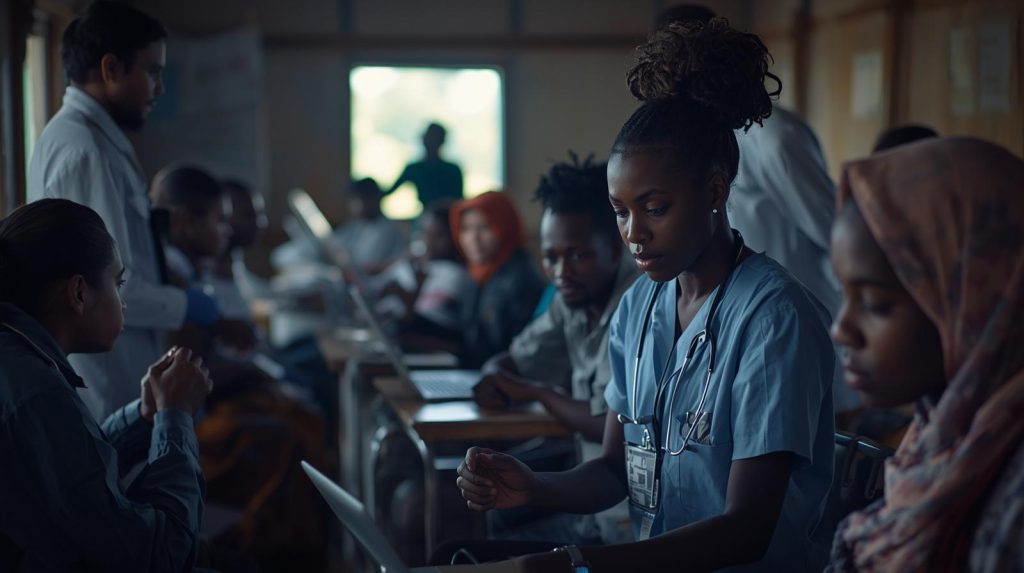
Crisis Leadership: MSF is a global organization that strives to constantly innovate and learn.
That is with the assumption and a difficult pill to swallow for us. Once we leave, there are systems in place in the government to carry on the work that needs to be done to provide medical assistance to the vulnerable there. In the places that we find ourselves to continue to stay on, it does change a bit of our structure. It confronts us with questions constantly on often the projects that we closed.? What projects do we need to close in order to enable us to open new ones?
Again, it goes back to the previous point that we made about seeing a visible gap in the 8th Sector of who the actors are on the ground due to funding cuts or restrictions or whatever else. We’re confronted with problems. If we want to stretch here, do we make a decision on closing a project elsewhere in order to enable that? Those are pieces that come to us regularly.
No easy choices. How does MSF Canada relate or connect to the global movement?
We consider ourselves to be a critical link between the medical activities that we do across the world. We have a network of supporters. We have a network of humanitarians, medical and non-medical professionals in Canada who make our global work possible. We send what we would call internationally mobile staff across the world to some of the high priority contexts that we have. We have Canadians working with MSF in Sudan, in Gaza, in Haiti, and in many of the other contexts around the world.
We also provide a very important added value to our medical work because we pursue medical research, development and innovations. We build capacities to support teams to be able to effectively innovate on a field level. Canada is a unique context for MSF in particular because of the potential for research and development and biomanufacturing. When MSF received the Nobel Peace Prize in the 1990s, we use that money to create something called the access campaign. It’s known as Simply MSF access now.
It was driven out of what our field team saw firsthand that matches the medicines, medical products and healthcare products that our patients needed. They were out of reach simply because of the exorbitant prices put on them from big pharmaceutical companies. The MSF access campaign was born to challenge that. This is a group of lawyers, intellectual property experts, researchers, pharmacists, and others who work actively.
They go to courts. We challenge patent laws. We work actively to bring the cost down of healthcare products and medicines to ensure that they are most accessible to the ones in need. In Canada, how that translates is us doing advocacy towards R&D sectors. Also, towards those that might be developing these drugs. Before the drug is even developed, how can we work with you to ensure that the price of that drug is made affordable for when it goes to the most vulnerable population?
That’s a key role that we play in that space as well. I will also say that MSF globally is an organization that wants to constantly be innovating and learning. Canada also hosts on behalf of our movement something called the Transformational Investment Capacity. If you’re somebody that works with MSF anywhere in the world, you have a bright idea on something that can catalyze real impact for the communities that we serve. Tell us the idea and we’ll help fund it. That’s a piece that MSF Canada supports amongst many others.
It is remarkable the scope and scale of the organization. Every layer that you’re sharing with us in this conversation makes perfect sense. There is only so much you can stretch. One of the big challenges we often see broadly to find the social profit sector is in the minds of some boards and some leaders. The growth in and of itself is a measure of success. We’re doing more as evidence. As you’re taking on these priorities related to research in countries that are transformational initiatives that you’re talking about in working for pharmaceutical companies. What do you think about growth in your organization?
Challenging The Assumption That Growth Equals Impact
I’m glad you asked that question, because we think about it quite a bit. If we zoom out a bit. This is what one would call a watershed moment in the foreseeable trajectory of global risks. As MSF, we’ve made bold commitments to transform who we are globally as an MSF movement. I would challenge the assumption. At MSF Canada, we’re challenging the assumption that growth equals impact. I don’t believe that it does.
Say more.
We were never designed or built to be the Coca-Cola of the nonprofit space. I don’t think that having more MSF projects or having more international nonprofits with their flags in multiple countries is going to make a dent in solving issues. There’s something to be said that the future of global humanitarian aid is going to have to reckon with how we balance what we do as international nonprofits with emerging local actors in many of these spaces.
It’s the localization of aid. There are many actors in addition to us that are working in the locations that we work. It should always mean exponential growth for an organization or can impact to look different. We have meaningful Partnerships with civil society or locally rooted organizations. It can be a redefinition of growth. At this stage, that is something that we are looking to transparently and objectively examine as it relates to our contributions to the work that we do globally as MSF.
What a fascinating issue in most organizations, but particularly in yours. It’s telling the world what you see firsthand on the ground. A little bit more in every situation is going to make a little bit more difference. There is a direct correlation between more work and more benefits. Logically, you can’t expand to meet the need and the hard choices that you’ve shared with us over the course of this conversation. As the executive director, how do you think about that growth versus impact or that healthy tension between those two things in your role?
In my role, I see a strong responsibility to steward both our financial and our human resources in a manner that can drive clear impact for the work we do. We lived hundreds of thousands of miles away from where we do the medical humanitarian work that we do sitting here in Canada. What’s the most meaningful role that MSF Canada can play towards advancing our objectives towards the patients in the communities that we assist? That requires a real understanding of the responsibility of our financial and our human resources.
Where best to do what we want to put our energies in? It’s a tough balance to strike. I will say that some of the past few years, we’ve been experimenting on a few things. The growth versus impact piece is not as binary as I would like it to be. There are costs to not growing. There are real human costs to not growing. There is a burnout of excellent teams that happens when you choose not to grow, but still keep your ambitions High.
There are real human costs to not growing. Burnout can affect even excellent teams when you choose not to grow but still keep your ambitions high. Share on XThere’s also a cost to unmanaged growth that we’ve also seen in history. Unmanaged growth to invest in areas where we may not be seeing a clear return. We have to understand that many of our strategies are intersecting with the sign of the times with the economies. Canadian pockets are getting tighter. Their ability to give in particular for international causes may be reducing at this stage. We are looking to challenge that but at some point, we are going to have to balance. Essentially, come in with a bit of a cautious optimism on how best can we be enabled to have meaningful impact while growing at a responsible rate as an organization.
You find that place on the dial and you’ll be fine. It is so challenging. I see that in our work with clients across the country and anywhere. There is a benefit to doing more and there is a cost to not growing. There is a cost to growth, to doing a little bit more, and finding that balance. It’s never the same on any given day. That’s one of the real challenges of leadership. Not just in your specific sector, but the broader social profit sector in general.
One of the things I wanted to get to because this is something having grown up in the social profit sector and as a fundraiser. I always thought it was interesting. I thought it was a rumor until you confirmed. There are terms in these leadership positions at MSF. Where you’re in the role for a period of time, and then you’re out. Tell us a little bit about what those limits are and the rationale behind them.
I would say we have a diversity of approaches to this in our larger global movement. Some of our entities do indeed have term limits. Specifically for senior director positions and senior management positions. Some of them do not. How we approach it as MSF, Canada is one of our key areas that we’re looking to prioritize in this strategic period. It’s how best can we equip our leaders to help advance the social mission and to advance the core work that MSF is doing. It’s how best can we move from what would be considered transactional leadership towards a culture where we can have transformational leadership.
People are core part of that such as having people centered strategies, people centered approaches and equity driven mindset to that. Our values of being an equitable diverse. Inclusive organization alongside our principles of wanting to have a people-focused approach to our culture. It has cemented for us the need to have term limits. MSF Canada has a four-year term for all directors, including myself up for renewal for an additional four years. That is often a conversation that happens at the end of those four years.
We’ve often seen in organizations a rolling over of people and an acceptance of the multiple issues that one may one may engage with a leader. These are questions that we get from staff. Where does effective performance management come in the higher up you go? Should we be tolerating less than ideal performance? Simply because you are in a senior role and its inevitability and eventuality that you will roll over into your next term. We’re going to have to wait it out and see you to the end of your term.
There’s a lot of issues that have come up when you put a magnifying lens to the permanence of a senior director. I believe it’s called the Peter Principle. At a certain point, you reach a certain level where you have done everything that you can do. There’s either an impasse that you reach or a scaliness in a sense. It’s very common for us being an emergency medical organization. This is what happens all the time in the field.
A constant renewal of people coming in and out emboldened by our locally hired staff. That is common practice on the ground for the core work that we do. We’re trying to infuse that into our headquarters setups as well. Having a regular cadence of renewal, fresh ideas and fresh approaches alongside continuity and institutional stability where possible. We’re strong believers in that and I’m a big supporter of it.
One of the things that comes through in this conversation and getting ready for this conversation was how committed MSF is to being, viewing itself and being viewed as a movement. Not as an institution. The term limits and the turnover of leadership on a regular basis I would imagine contributes to that sense of it’s a movement. You’re here to serve for a period of time and you will roll off the limits. Probably it doesn’t eliminate but limits that self-preservation that can happen in leaders when things are going well.
Don’t get me wrong, we are a massive organization. Wrapping up in one particular role doesn’t have to mean the end of your career in MSF. We are not just doctors without borders. We are nurses, logisticians, journalists, lawyers, pharmacists, and cultural mediators. We have such a wide range of skills that we need in the organization. Oftentimes, one would find that once they wrap up a term that they may be best suited elsewhere or another opportunity might be a good fit.
I appreciate you adding that at the end and sharing that. One of the things that you have come back to a couple of times in our conversation is the phrase hopeful optimism. You can open your phone or open your computer or some readers may even open a newspaper occasionally. The headlines can be pretty scary. The state of the world is concerning to anyone paying close attention, or even casual attention. What does that role of hopeful optimism play in your view of the state of the world?
Hope As A Moral Imperative
We see hope not just as a concept. It’s a moral imperative. To us, as MSF, Canada and indeed MSF as a whole, we believe that we owe it to the people that we work with and the people that we assist. These are people who face each day with unimaginable courage and dignity themselves. It is our imperative to embody that hope ourselves. I would say that we are challenging every day and wanting to propel into action blueprints for transformational impact.
Our vision as MSF Canada for the next few years is rooted in that promise to the people and communities that we assist. We will always prioritize their needs and dignity. Regardless of the circumstance that would have seemed like a given. We find ourselves having to reinforce that more and more. We find ourselves having to reinforce that person-centered care should be a default. Abiding by international norms should be a default. Humanitarian aid is a right. It’s not a political bargaining chip.
The quote that I often find myself coming back to is Paul Farmer, “If access to health care is considered a human right. Who is considered human enough to have that right?” We find ourselves, as MSF, confronted with that question. We’re also refusing to accept the broken foundations of humanitarian aid, the broken foundation of the Northern stars that we’ve long upheld ourselves to. We find ourselves refusing to accept that these are the foundations on which the most vulnerable people should depend. It should not be.
We are committed and propelled with that hope to amplify the voices of our patients and staff to inspire and mobilize people here in Canada and beyond. We are compelled, motivated and are coming with hope to overcome passive acceptance with collective action. One that is towards a future, where upholding people’s dignity is indeed universal. That’s how we see hope and how we are hoping to tread forward into the future.
We are compelled, motivated, and are coming with hope to overcome passive acceptance with collective action. Share on XHow can Canadians engage in these global issues? It is a big world. There are lots of places that are in trouble. As Canadians, they see the world is a big place. How can Canadians get involved?
We already have a wonderful community of supporters in Canada that are already deeply involved. We’d love to see more of that. There’s many ways that Canadians can get involved. One is to consider working for us in the many locations that we operate in. Canadians are highly valued in the global ecosystem that we find ourselves in as MSF.
As I said previously, we find ourselves to be in the highest priority context for MSF. We need a wide range of profiles beyond the medical profession as well. I would encourage those reading to go to our website DoctorsWithoutBorders.ca. Check out or work with us and see if there’s anything there that might fit with your experiences, skills and ambitions. In addition to that, you can also of course consider supporting us monetarily through financial contributions.
As I said previously, we are an organization that prides itself in being nearly 97% independently funded as an organization. It is through donations of regular individuals that were able to make the work possible. That’s something that we would love to see more Canadians doing. Last but not least, you can always amplify our messaging and our témanouge. I keep saying this as well. The scarcest resource in the 21st century is human attention.
The more that we can inspire and mobilize Canadians to stop their thumb scrolling and look through and meaningfully engage with some of our important messaging. That would be meaningful itself. That’s an important way to engage with us. We also do a lot of advocacy towards the Canadian government. We are often coming out with letters that you can send to your local officials and petitions to sign. Those are many ways that people find as meaningful engagements for the work that we do.
We don’t do commercials on this, but that was a pretty good one you got in there. I appreciate that. Sana, what are you looking forward to?
As MSF Canada, we’ve been racking our brains on this concept of hope. Also, the fatigue that we’ve all understandably have been feeling with what a whirlwind of events that we’ve had to confront ourselves with. The very real challenges that we’re seeing as MSF in Sudan and in Haiti, the increased criminalization of aid and the increased instrumentalization of aid. The work that we do is getting harder and harder. Yet what I’m looking forward to is disrupting some of the entrenched mindsets that may exist on how humanitarian aid should operate.
What should that look like? How can we inspire and mobilize people towards the work that we’re looking to do? The ruptures that we’re seeing in society, as worrisome as they may be, we choose to believe that there is within that rupture, a moment of opportunity to rethink. We flip the narrative on how to meaningfully support the most vulnerable people in a way that is truly equitable and inclusive. We’re getting there as MSF.
I see that with some of the decisions that we may make at a global level with the non-traditional partnerships that we are engaging in with civil society, influencers and others. I’m hopeful because the biggest moment of pride for us is when we hear others standing up for what MSF vouches for. We have seen Cs of people across the streets of Toronto, Vienna, Berlin, Sydney, and across the world all asking for some of the most basic fundamentals of human rights that we all deserve. There is a hope for a new world and a hope for us to ignite a new era of humanitarianism.
Sana, thank you so much for the work that you and your colleagues do every day. Thank you for being on the show.
Thank you. It was a pleasure.