In the world of sports leadership, few organizations embody dedication, impact, and pure joy like Special Olympics Canada. But what does it take to lead a movement of over 40,000 athletes and 20,000 volunteers across a country as vast as Canada?
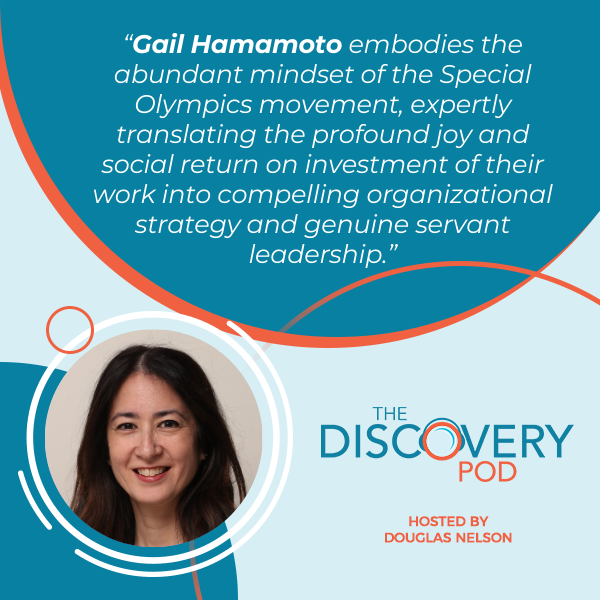
In this exclusive conversation, we sit down with Gail Hamamoto, CEO of Special Olympics Canada, to explore her leadership journey. Gail shares how she centers the athletes’ experience, not just on the field of play, but as a catalyst for health, employment, and inclusion across the entire community. Discover how Special Olympics Canada leverages a powerful Social Return on Investment (SROI) of 8.76:1 to transform “charity thinking” into “abundance thinking,” making a compelling case for investment, not just donation.
Join us as Gail reveals the power of authentic storytelling, the surprising impact of their Healthy Athletes program, and why a culture rooted in joy and supported by a solid foundation allows her team to boldly say “yes” to new opportunities. This is a masterclass in servant leadership, abundance mindset, and building an organization where the ultimate metric of success is the life-changing impact on every athlete.
—
Listen to the podcast here
Leading With Purpose, Evidence, And Care With Gail Hamamoto, CEO, Special Olympics Canada
In this episode, I’m joined by Gail Hamamoto, CEO of Special Olympics Canada. Gail stepped into the role in 2023, bringing decades of experience across sports leadership and disability sport in Canada. In addition to leading Special Olympics Canada, she’s deeply involved at the international level, serving on the Special Olympics International board of directors, the Special Olympics Canada Foundation Board, and as a member of the Special Olympics International Advisory Committee.
In our conversation she shares what it means to step into the role leading an organization you’ve admired from afar, how to center the athletes as the core purpose of the organization, and how to build a brand and build an organization around that purpose. It’s a great look at what leadership looks like and stepping into a new role as CEO, please enjoy my conversation with Gail Hamamoto.
—
Welcome to the show, Gail.
Thanks so much, Douglas.
Overview Of Special Olympics Canada & Motivation Of The CEO
Gail, I am really looking forward to our conversation, learning more about the Special Olympics, the movement that you serve. As we get started, tell us a little bit more about Special Olympics, the size of the organization I think our readers will be really impressed by, and what motivates you to do your work as the CEO?
Those are all the things I love to talk about. Special Olympics Canada is a national organization. We serve more than 40,000 athletes across our country, and those athletes are supported by more than 20,000 volunteers, so a volunteer-run organization. We have 12 provincial and territorial chapters, with staff who lead some of that work, and we have 19 different sports, both on the summer and winter side. A lot of people think about Special Olympics as one point in time, as a games, and certainly we do have games all the way from regional up to world games, but as important are our grassroots programs across our country.
For 365 days a year, in our 19 sports, you can get involved in your community, in recreational programming, and if you desire to train and aspire to a world games, there is a pathway for you to do that, and if you don’t, as little as 2 years old all the way up to 70 or 80 years old, you can participate in sport for all of the wonderful benefits that we know come from that.
I was just going to say in terms of my own motivation for getting involved in sport, and specifically in sport for athletes with disabilities, for me it’s about impact. I’m at a point in my career where I really want to make sure that all of the time and effort and work that I’m putting in is about impact and changing lives, and Special Olympics Canada, I’m just greatly appreciative and I feel privileged to be able to work in this organization because of the impact.
Volunteer Engagement & Impact Beyond Volunteering
I really appreciate that that context about your personal experience. I want to go back to that number 20,000 volunteers. Across our social profit sector across our country, organizations are dealing with a crisis of volunteerism. How do you get how do you motivate people who you could have counted on maybe ten years ago to be there to support your organization? What role are volunteers playing and how are you getting them to continue to play that role?
That’s a great question and it’s a very important point. I’ve been struck by some of the volunteers who’ve been with our movement for 45 years, who are lifetime volunteers and who’ve been running community-level clubs for that amount of time. As we saw COVID come and go and the change in the paradigm of volunteering, those kinds of volunteers are harder to come by. What we’re learning is that people want maybe shorter or less intense volunteer opportunities, so event-related or specifically program-related, coming to volunteer maybe once a week as opposed to running an entire club.
Our strategic plan really identified how did we need to shift and adapt this new paradigm and certainly we still have those volunteers who are willing to do that huge volume of work, but also we’re learning about how do we support some of those volunteers who want to really hone in on coaching and not have to administer the entire club. We’re looking at maybe paid volunteer managers that can take some of that administrative burden off of those volunteers so they can really focus on what they’re most interested in where they get the most return. What I mean by that is all of our volunteers have told me that Special Olympics gives them so much more than they give in return.

Leading With Purpose: All of our volunteers say that Special Olympics gives them so much more than they give in return.
I’ve had volunteers with tears in their eyes saying how much Special Olympics has meant to them, how it has transformed them. I’ve had lifelong volunteers in able-bodied sport, let’s call it, so an example was an international cross-country volunteer who I spoke to at our games in 2025, our national games in Calgary, and she said, “I was burnt out of volunteering. I didn’t want to do another event ever again, and then I came to Special Olympics and I’m completely reignited. These athletes bring me joy, I love what I’m doing and now I want to volunteer for Special Olympics all the time.”
Those are some of the stories. We also have this army of volunteers across our country who come from law enforcement and a lot of people don’t know this about our movement, so the law enforcement torch run, they not only raise money for Special Olympics, so in 2025 alone, they raised $4 million in support of Special Olympics across our country, but also they volunteer. They coach, they volunteer in community, they volunteer with our athletes. In Ontario, they run the multisport games, so they completely take responsibility for and run the summer spring and winter games, it’s phenomenal.
Impact Of Sport Beyond The Field & Social Return On Investment (SROI)
I’ve had lifetime law enforcement come to me, again some with tears in their eyes, and say, “If not for Special Olympics, I could not have stayed in law enforcement. The day-to-day work is so difficult, it’s so stressful, it’s so draining. If not to be able to go to Special Olympics in the evening after a really tough day on the job, I couldn’t have had the mental health and the capacity to continue to do my work.” It’s pretty powerful.
Gail, one of the things I heard you talk about is the benefit of sport beyond the field of play and just starting with that for volunteers there’s some really great examples of the restorative power of being connected to your movement. What is that benefit of sport beyond the field of play mean for the athletes and the families that support those athletes?
It’s absolutely phenomenal. One of the things that I got to do or that I made a commitment of doing in my first year with this organization was I traveled the country and tried to visit all of our chapters and to really understand the movement and understand the realities on the ground. As you can imagine, we have a very diverse country, and so each of those visits was different, but my favorite part was speaking to the athletes and speaking to their families and the stories that they shared with me, and those quiet moments when they would take me aside and talk to me.
In those anecdotal stories came up, an athlete saying, “Special Olympics is the one place where I don’t experience my anxiety. It is the place where I belong.” A parent coming to me and saying, “This is the place where we felt hope for our child.” Oftentimes, when you have a child who’s born with a disability, the first thing that the doctor says to you is, “I’m sorry,” followed up with, “I don’t think they’re going to be able to do this or this.”
Imagine as a parent, your most joyful moment and everybody’s saying, “I’m sorry, they’re not going to be able to do all these things.” They find and they discover Special Olympics. More than one family, many families have said to me, “Then we found hope. We could see these amazing athletes doing amazing things.” Having wonderful friend groups, having all of this peer support, improving their health, traveling to competitions, getting jobs.
All of this comes out of participating in sport. We’ve actually been able to quantify it, so with the support of Bain and Company who’ve done this work for us pro bono, they have created what we call the social return on investment study. What we’ve discovered is that for every dollar invested in Special Olympics through a donor, through government whatever, we get an 8.76 return on that investment.
The data underneath that talks about this benefit beyond the field of play. What we know is through longitudinal health studies is that if you are a Special Olympic athlete, you have a 49% less likelihood of being diagnosed with depression. You have a 15% less likelihood of being diagnosed with diabetes. Your employment rate goes from somewhere in the range of 28% to 44% for people with intellectual and developmental disabilities. Your lifespan is extended by two and a half years, and then there’s the economic impact and savings to healthcare. The impact beyond the field of play is real, it’s tangible and we’ve measured it and something we’re proud of.
That is very powerful. We worked with a number of organizations through our work here at The Discovery group that use that social return on investment in their area that addresses their purpose or the reason for being. I’m curious how do you communicate that 8.76 to 1 ratio when you’re talking to funders or donors?
That’s where it’s really landed well because and I’ve worked my entire career in sport for athletes with disabilities, and so when I learned that Special Olympics had this data I was so excited, because you can tell the story and the story is important, but having the data to back it up is really powerful. Being able to share, whether it’s a donor whether it’s a foundation whether it’s government, to flip it on its head that this is an investment, you’re making an investment which has a real return and it’s tangible and you can see your investment in action. It used to be more of a, “It’s the right thing to do,” or, “It feels good,” or, “These things that mean a lot to me,” but people want tangible data on what the impact is and so it’s really valuable for us to have that.
You can tell the story—and the story is important—but having the data to back it up is really powerful. Share on XIt gives a different picture to rather than this is a nice thing to do or, as you say, this is something we should do. It really does empower that abundance thinking rather than the scarcity thinking.
It does. Traditionally, people would say, “We’re funding sport,” or, “We’re funding people with disabilities.” This tells the story of you’re funding health, you’re funding education, you’re funding employment, employability, and so you’re able to talk to different kinds of funders and different aspects of government to say yes, the initial investment is in sport but we’re translating that into cost savings benefits for budgets across healthcare, across education, across employment and those things, so they can see that that investment is multifaceted.
I’m sure different supporters, different donors that you talk to are motivated by different parts of it. One of the challenges can be when you can tell such a society-wide story around the benefits of health, the benefits of inclusion, some donors may find it hard to narrow it down to their area that they care most about. As CEO, how do you find that sweet spot when you’re having conversations with supporters or potential supporters?
I think it’s two things. I think it’s really understanding the organization well and the breadth of the work that we do and also really listening to the donor or to the representative of the foundation of government. Understand what it is that matters most to them, understand perhaps what their pain point is or what they’re trying to solve for, and then in a very authentic way, find the link between that and what it is that we do.
They might have had maybe a singular view of what we do, nineteen sports summer and winter coaching that thing. They may not be aware of our healthy athletes program. This is another thing that absolutely blew my mind when I came to Special Olympics Canada. Internationally, Special Olympics International states that they are the largest healthcare provider for people with intellectual and developmental disabilities in the world.
How that translates within Canada is we’ve done 35,000 free health screenings across 8 different disciplines over the last number of years, and those disciplines include hearing tests, vision tests, podiatry, mental health, nutrition, a breadth of services. If you’re an athlete and you can come to our program and you come to, let’s say, national games, you can come to the healthy athletes area. Oftentimes, it’s in a conference center where you’ll have a separate room for each of these disciplines.
We have a clinical leader who will be an ophthalmologist who will come in and bring all of the equipment that you might see if you were going to your optometrist and come and you’ll sit behind that machine and they’ll assess your vision and then you can go home or be sent prescription glasses for free. You’ll get your hearing test, you’ll get dentistry, so these are things that people don’t understand about our movement.
These are where a lot of the really powerful stories lie because you can imagine if you’re a person with an intellectual and developmental disability in our country. What I didn’t understand was that there is a huge barrier to access of healthcare. I thought we’re Canadian, we all can access healthcare, it’s free. However, the degree of barrier for somebody with an intellectual disability is profound.
Either it’s because the practitioner hasn’t had sufficient training in how to serve that population and so we provide training, or that individual has fear and apprehension about accessing healthcare. When you bring it to a sport event and they’re able to go with their friends on their sport team with their coach that they trust, suddenly, they’re going to let a dentist look in their mouth where they never would have before.
We’ve got stories of athletes who have never ever been to a dentist not because their caregivers didn’t want to take them or couldn’t but they would not allow someone to look in. In one case, we had this joyful athlete who had, again, had never been and they took him to our healthy athlete screening to a dental screening, he had four impacted wisdom teeth.
Suddenly, their caregiver understood why there was such a significant behavior change in this athlete every time they ate. Imagine every time you eat, you’ve got four impacted wisdom teeth and how your behavior’s going to change and you can’t explain that and you don’t know what to do about it. Special Olympics can solve for that. No one understands that. That’s the match that we can make between potential supporters, potential funders and the stories we can tell.
Storytelling, Joy, & Authentic Representation
Those are great stories. I would imagine you do very well in those conversations with potential donors.
It’s interesting, I hope you can tell I care very deeply about this. It’s very easy to be excited about sharing the story when you care this deeply and when you have so many amazing stories to tell. I’m just incredibly grateful to those athletes families and volunteers for sharing these stories with me because they do so very generously and it allows us to gain more support for the movement.
How important would you say that storytelling is in terms of communicating the purpose and the value of the Special Olympics?
It’s everything. As you can tell, the storytelling is quite complex. On the one hand, we have the pure sport story because these are athletes. Our members are athletes and they train hard and they achieve and some of them go to a world championship and they’ve had to earn their way through regional games, national games and world games to get there and we treat that story with the respect that it deserves and honor that athletic achievement.
You also have the storytelling that I’ve been sharing a little bit around impact beyond the field of play and the impact to the volunteer and the impact to the athlete. One of the things that we’ve talked to our chapters about, what would you say encapsulates this movement and we’ve talked to members we’ve talked to and the word that comes up over and over again is joy.
You can’t help but feel that joy when you are in a room with our athletes, when you experience what they’re doing and the stories they share. Our storytelling, a common thread through most of what we do is joy. Special Olympics is really everything that’s good about sport. People in it for the right reasons and that joy that they experience through the activity.
Special Olympics is really everything that’s good about sport. Share on XGail, I rarely regret that we don’t video use the video for these interviews, but I really do now and I wish our readers could see the look on your face when you’re talking about the joy that comes from the work that you and your colleagues do. It is heartwarming and really compelling. On that storytelling, one of the challenges, of course, is that the it’s not a story of sympathy. It is a story of achievement, it is a story of becoming.
Of course, you’ve been in the been in the movement you’re the CEO, you know how to find that balance. Someone new to the movement or someone wanting to understand it better from the outside, how do you walk that line between those stories that may be considered exploitative or singling folks out versus those that are joyful, that are compelling?
That’s a really good question and it’s really important. One of the things that we’ve done that I think has been really important is we have a Special Olympic athlete on our staff. His name’s Caleb and he is a graduate of TMU in Journalism and he tells our stories. Who better than a Special Olympics athlete to interview other athletes, to share their story to interpret what’s that key element of the story that you want to elevate? Caleb tells those stories.
It’s both the understanding of the whole human as we’ve talked about and the athletic achievement. That’s storytelling that happens whether you’re talking about a Special Olympic athlete or a generic athlete, oftentimes people want that human interest piece. As long as it’s done respectfully and it’s done in the context of this is an athlete and a whole human being, then I think you can be successful. We listen to what Caleb has to say. He doesn’t hold back in all staff meetings to share his point of view which we really value and it’s been a really essential part of our staff team to have him there.
It is that issue of how to tell the stories of the people that are served by organization is across the social profit sector, and needing to find that balance in particular dealing or working with individuals where equity and inclusion are part and parcel of the purpose of the organization. Finding that balance can be challenging, or even supporters who come and want to may not have the most progressive or the most fully formed view of the organization can present those challenges. One of the things that comes through so clearly as you talk about the organization and your role there, you use words like hope belonging investment and sustaining. It is all abundance.
I think that one of the greatest challenges of our Canadian social profit sector is rather than being rooted in scarcity, how do we anchor in abundance and build from there? As CEO, I’m sure you reflect the abundant attitude of the members of the team and the members of the movement, but as an individual, did that come naturally? Does that that abundant mindset come naturally?
I’m laughing because if you knew me in my history you probably would characterize me as risk-averse. I’ve been called the queen of what-if. A there’s a lot there. All that to say several years ago, I left an organization I had been with for 29 years and a home I’d lived in for 24 years and picked up my life and moved to Toronto to join this amazing organization. If that’s not embracing risk, I don’t know what is.
It’s rooted in, as you say, that that hope, that abundance, that core belief that this work is important, it matters it’s proven everywhere you turn you can see evidence of the benefit of Special Olympics. Yes, I do have a fairly high-risk monitor, so I’d say the foundation is always to make sure we’re mitigating risk. Everything we do every day, all the way along, what are we doing to mitigate risk?
What are we doing to make sure we have a really solid foundation whether it’s financially, whether it’s policy, whatever it might be that can underpin the organization so then we have the freedom to make other choices or to make innovative steps or to take chances because we’ve got a foundation that let’s say something fails because really, if you’re going to innovate, you’re probably going to fail a certain percentage of the time. If you’ve got a solid foundation and you can fall back on that, that’s okay.
How are you going to grow and change and innovate? If you had asked me when I first became an executive director provincial, I actually warned my staff when I became executive director provincial because I’d been with the organization for a long time so I knew everybody. I said I’m going to say no for a year. I’m going to say no until we have enough money in the bank and everything is solid and then I’m going to say yes. That’s how I tried to do it.
That’s sounds very hard, Gail. That sounds like a very difficult year for you and your team.
I probably said yes a fair amount of time. All that to say we need to start from a position of strength as much as we can, especially now when there is so much change in the ecosystem, there’s so much geopolitical uncertainty. We came through a year of phenomenal headwinds. Constantly assessing how are we bolstering ourselves and our movement against that while still being able to take some risks, still being able to take some chances, still being able to grow and innovate and say yes to new programs.
I’ll give you an example. My staff came in and asked about an opportunity that would directly impact our athletes and their opportunities to compete at a higher level. It was going to cost a fair chunk of money that wasn’t in the budget. We all looked at each other with a little smile on our face and I’m like, “You know what I want to say,” and they’re like, “Yeah, because we’re all sport people.”
I’m like, “I’m going to say yes. I don’t know how we’re going to do it but we have to start with yes.” In that case where it was a clear opportunity for our athletes, we had to start with yes. We have and now we have to figure out how to raise the funds but I think we can tell a really good story and I think people will get behind it.
Leadership, Growth, & Future Plans
Watch this space right for what that looks like. The pressures facing social profit organizations, I’m sure in terms of rising costs, the increased demand, looking for sustainable funding, all of that, your movement is no doubt equally affected by that. One of the things that really fascinates me getting to work with a number of really high-functioning exceptional organizations is they have a clear sense of what growth means. It’s not for its own sake, it doesn’t mean more, so more is not a strategy. You’ve talked about growth a couple of times in our conversation so I’m curious to ask, what does growth look like for the Special Olympics?
Of course we have in our strategic plan KPIs around increase in athlete numbers and increase in volunteer numbers and that drives what we do because we want more benefit to more people in our country. Underneath that is really a look at what communities are not currently represented in the Special Olympics movement to the extent that they should be. That motivated us to look at what we were doing in terms of indigenous engagement.
We began with our own education. Ensuring that all of our staff, all of our coaches, we started with our national team program, our board of directors. We all took training, gained better cultural awareness, reached out to indigenous communities, to organizations serving indigenous communities and said, “Help us learn what do we need to do to be more aware and then how can we co-create with community with organizations,” because the last thing we would want to do is to say, “We have a program that we think is going to solve your problems because that’s not our right to say. That’s a very colonial approach.

Leading With Purpose: The last thing we would want to do is say, ‘We have a program that we think will solve your problems,’ because that’s not our right to say. That’s a very colonial approach.
While we know we have programs that greatly benefit individuals, what does that need to look like in an indigenous community for it to bring opportunity to indigenous folks with intellectual and developmental disabilities? We’ll only know that by learning and listening from those with lived experience. We’ve been on a bit of a journey. We embedded it in our national team program as they prepared for the World Winter Games in 2025. We had wonderful educators and elders come to our training camps and embed with our athletes and really teach them the knowledge that they had.
We had them come work with our leadership team. One of the ways in which I knew that it had become deeply meaningful and a part of our movement was we had the very tragic thing that happened to us where we lost one of our athletes. One of our athletes passed away suddenly and unexpectedly on the Friday before the team was gathering in Toronto to stage for our games.
Grief was something that was very present that we needed to provide support to our athletes, to our coaches, to our team, not least of which the family. What happened was the leadership in the team fell back on their indigenous teachings that had been shared with them at one of the training camps and it centered around an eagle feather. The indigenous fellow who shared that with us had used the eagle feather as a symbol and said, “As you go through life’s challenges, it becomes frayed, and what are the supports that are going to help you smooth it out and help you carry on?”
As each of the athletes entered that ballroom for their staging and the session that we were going to speak about the athlete that we lost, they were all given a symbolic feather. That teaching was used to help them understand their grief and to help them understand the support that they had around them in dealing with that grief. That’s the moment where I knew that this was not just lip service or something on the surface. This was something that was our intention. It had become part of who we are.
We continue that work we continue to have a ton to learn we continue partnership and the big audacious goal in all of this is not only to be present in indigenous communities across our country but also to expand to the territory of Nunavut. That is the one territory in Canada where we don’t have Special Olympic programming and so we’ve also embarked on a learning journey about what would it take to be able to expand there and to really understand the significant barriers to delivering sport in the territory.
Twenty-something flying communities, huge barriers in terms of facility access and just all kinds of things but we’re excited about the opportunity we’re talking to as many people as we can about it to garner support and go in there and again create community partnership, talking to leaders that live in those communities to say how can we make this happen.
There is so much to jump into in your answer to that. I asked how you think about growth and you ended up telling very powerful stories about individuals and then brought it back up to the level of the organization. One of the common themes of organizations that are successful is being able to see growth as nuanced and often incremental. There are very few home runs in the social profit sector where we were doing it one way but we come up with a good idea and six months later, everything’s fixed or everything’s totally different.
There is so much incrementalism in our work and I think there’s actually a lot of strength in that, there’s a lot of resilience and beauty in the value of incrementalism. You outline growth in some pretty significant but incremental steps, if that’s a way of thinking about it. At the end of any given week or any given month, Gail, how do you think about your success as CEO of your organization?
I like to think of myself as more of a servant leader and so success for me is have I supported my team? We have a team of about 30 staff in our office in in Toronto. You extend that team to our chapters because really, they are the ones doing the phenomenal work day to day on the ground across our country and they are the backbone that support then those volunteers.
Have I done everything that I can to support my staff, to support our chapters to remove barriers to their success? Sometimes I think the best thing a leader can do is get out of the way, and the next thing they can do is make sure that there’s enough support in place for the people in your team to do their great work.
The best thing a leader can do is get out of the way. The next is to make sure there’s enough support in place for the people on your team to do their great work. Share on XI was so lucky I inherited a phenomenal team, a phenomenal staff team from our senior vice president all the way to our new coordinators who come on who are young and passionate and care about this. My job is to make sure they have everything they can have to do the work that they want to do. Motivation is not a problem in our organization, I never have to motivate our staff. They are fired up all the time. Success for me is did I do everything I could do to help them?
Also, a lot of what I do is represent the movement to the broader world. Did I share to everyone who will listen about how amazing Special Olympics is? Everyone needs to know this everyone needs to get behind it. I’m chief cheerleader so I’m the person out there just saying, “This is the best thing ever you need to understand. You probably don’t know about healthy athletes. You probably don’t know about unified sport, which we should talk about. You probably don’t know about the social return on investment,” and so my job is to make sure everybody knows.
You seem ideally suited for that role, Gail, particularly that chief cheerleader in charge. As we come to the end of our conversation, Gail, what are you looking forward to?
So much. We do have our Medicine Hat summer games, our 2026 summer games happening in Medicine Hat this August 11th to 15th, so all of our athletes have gone through their provincial games and qualified and earned a spot and are working very hard to compete. The host organizing committee is doing a fantastic job getting all of the elements in place.
There will be 1,700 participants, including athletes, coaches mission staff, who will be on the ground. We expect about 3,500 fans, family, friends to come into Medicine Hat, which you can imagine is going to explode that town with so many people there. It’s going to be a phenomenal showcase of talent, of athletic ability, of camaraderie, all of the good things that the movement is known for, so really looking forward to that. It’ll be a celebration of sport so that’s something exciting on our horizon.
Wonderful. Gail, thank you so much for taking the time to be on the show.
Thank you so much for having me.